From Homestays to Hospitality GPT: Dr Suborno Bose on How the Sector Can Power 10% of India’s GDP

Share via:

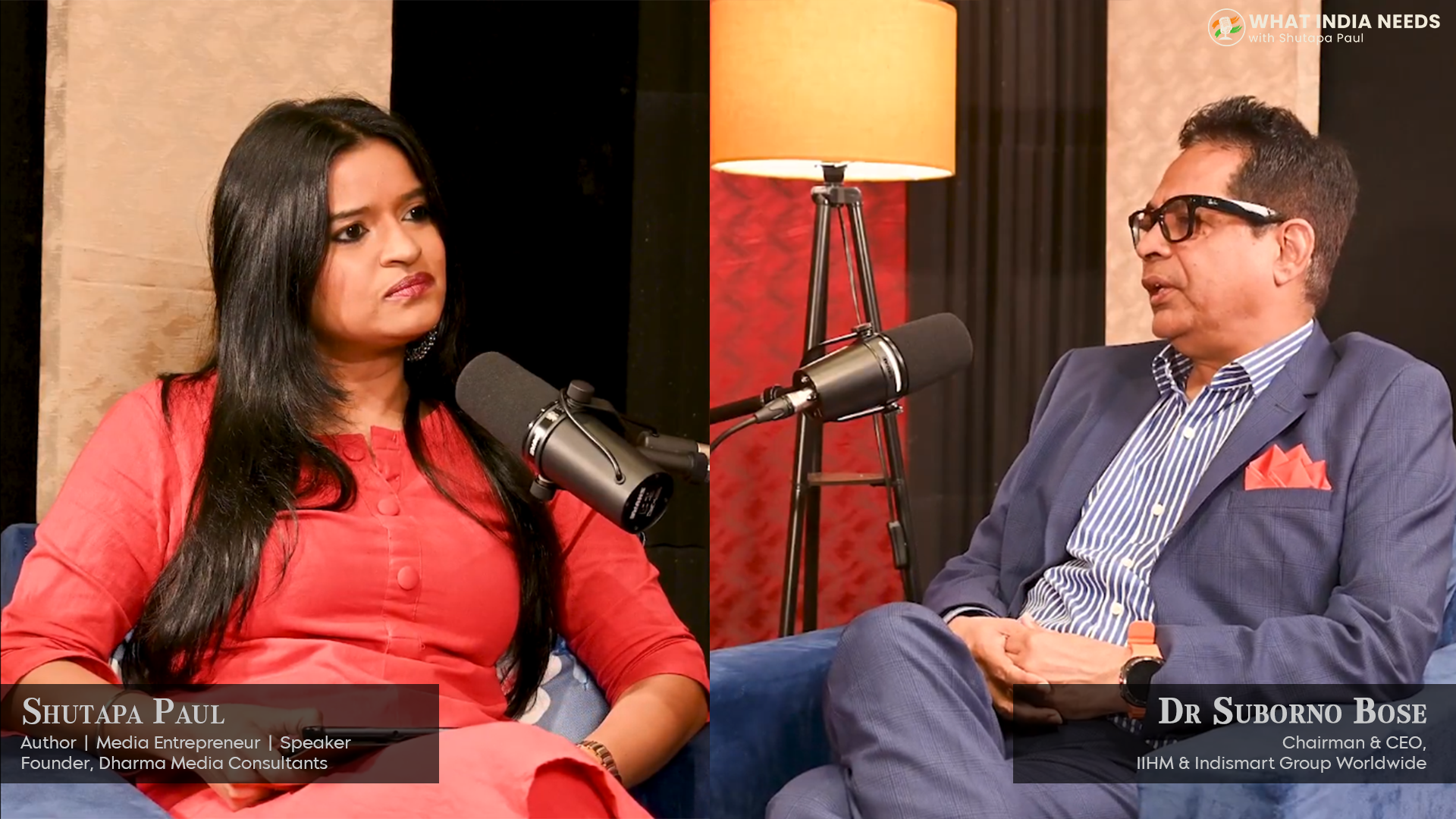
The Indian hospitality industry employs nearly 37 million people, yet only 1% of them receive proper training and possess the necessary skills. In the latest episode of the “What India Needs!” podcast, media entrepreneur and author Shutapa Paul sat down with veteran educator in hospitality, Dr Suborno Bose, to discuss how the sector can bridge this skill gap, retain talent, and position tourism as a major driver of the nation’s economy.

“Hospitality in India grew inorganically,” said Dr Bose. “The big brands came in fast, but the skill base didn’t grow at the same pace. For years, hotel management was seen as the ‘third choice’ career. That’s changing, but we still lose too many trained professionals to jobs abroad.” 

With over three decades in hospitality education, Dr Bose has seen the industry expand rapidly and helped train thousands of students who now work in leading hotels worldwide.

The Skill Gap and the First-Choice Shift

Once dismissed as an unglamorous profession, hospitality is now emerging as the first choice for many young professionals. However, the talent pipeline remains thin. Dr Bose pointed out that better work policies, coupled with improved entry-level salaries of ₹24,000 to ₹35,000 per month—often higher than for non-IIT engineering jobs—are helping retain more hospitality graduates in India.

Hands-on training is key. “Hospitality cannot be learnt only from classrooms,” Dr Bose said, highlighting the importance of rotational on-the-job training across departments to build both skill and passion.

He further emphasised that while retention is improving, many graduates still look overseas for opportunities, creating a persistent challenge of brain drain for the Indian hospitality industry.

Paul reflected on the profession’s evolution: “It’s a tough profession. I’ve seen friends in hospitality work incredibly long hours and tough shifts. To retain talent, lifestyle and working conditions will have to keep improving alongside pay.”

From Homestays to Agro-Tourism: New Growth Engines

With more people travelling again post-pandemic, the government has set a $3 trillion goal for tourism and hospitality by 2047, aiming for the sector to contribute almost 10% to India’s total economic output. Dr Bose believes the fastest growth will come from homestays and agro-tourism.

“Hospitality is about the heart, not a plastic smile. A homestay in Darjeeling serving you fresh, estate-brewed tea is as much a part of our growth story as a five-star resort,” he said, adding that tea tourism, coffee tourism, and small-town hospitality are ripe for investment.

Paul added, “The real charm of homestays is that they’re close to nature, to local culture. These are experiences that connect travellers to the heart of India.”

Women in the Workforce

Citing a report that projects 6.1 million new hospitality jobs by 2036–37—with only 1.5 million likely to be filled by women—Paul pointed out the gender disparity: “We need more women in the workforce, and there’s no reason they shouldn’t be part of this sector.”

Dr Bose noted that the number of women general managers in leading hotel chains is on the rise, and that there are training programmes designed specifically for women. “More women means better hospitality. Their natural ability to connect and their dedication to service raise the bar for the entire industry,” he said.

Technology and Innovation in Hospitality

Dr Bose also underlined that technology will play an important role in the future of hospitality. He spoke about NamAIste – IIHM Hospitality GPT, the first artificial intelligence platform created specifically for the sector. “AI is not for tomorrow, AI is for today. And AI will never replace human beings, it will only help us perform better,” he said. His book, AI in Hospitality and Tourism: Harmonising Technology and Human Values, looks at how combining technology with human touch can create better outcomes for both employees and guests.

Policy, Pay, and Perks

The conversation also examined the inconsistency in regulations that have hit the sector, from sudden closures of nightlife establishments to shifting compliance rules.

“The sector has often faced very erratic and complex regulation,” Paul observed. “This has happened across the country, and it has cost the industry greatly, especially after the pandemic, when so many businesses are still fighting to recover.”

Dr Bose agreed that stability in policy is essential to sustain investor confidence, while also emphasising the need for better work conditions. “This is a people industry, for the people, by the people who work here. Along with pay, the small things matter: duty meals, staff accommodation, a free week’s stay at a partner hotel,” he said.

The conversation underscored that achieving the government’s $3 trillion target for the sector will require a stable policy environment, a greater focus on skilling initiatives, and a workforce that pays attention to authentic experiences that showcase the true spirit of Indian hospitality. As Dr Bose and Paul noted, India’s hospitality growth story will rest just as much on clear policies and investment in people as on the expansion of global chains and luxury brands.

About the “What India Needs!” Podcast

“What India Needs!” is a thought-provoking podcast dedicated to exploring key topics crucial to India’s development. Our mission is to delve into pressing issues, engage with experts and thought leaders, and uncover actionable solutions for a more sustainable and prosperous future. Join us as we navigate the complexities of India’s growth, from policy and governance to technology and innovation, fostering informed discussions that inspire change and drive progress. 

To know more, check out our channel.

Disclaimer

We strive to uphold the highest ethical standards in all of our reporting and coverage. We StartupNews.fyi want to be transparent with our readers about any potential conflicts of interest that may arise in our work. It’s possible that some of the investors we feature may have connections to other businesses, including competitors or companies we write about. However, we want to assure our readers that this will not have any impact on the integrity or impartiality of our reporting. We are committed to delivering accurate, unbiased news and information to our audience, and we will continue to uphold our ethics and principles in all of our work. Thank you for your trust and support.

Popular

More Like this

From Homestays to Hospitality GPT: Dr Suborno Bose on How the Sector Can Power 10% of India’s GDP

The Indian hospitality industry employs nearly 37 million people, yet only 1% of them receive proper training and possess the necessary skills. In the latest episode of the “What India Needs!” podcast, media entrepreneur and author Shutapa Paul sat down with veteran educator in hospitality, Dr Suborno Bose, to discuss how the sector can bridge this skill gap, retain talent, and position tourism as a major driver of the nation’s economy.

“Hospitality in India grew inorganically,” said Dr Bose. “The big brands came in fast, but the skill base didn’t grow at the same pace. For years, hotel management was seen as the ‘third choice’ career. That’s changing, but we still lose too many trained professionals to jobs abroad.” 

With over three decades in hospitality education, Dr Bose has seen the industry expand rapidly and helped train thousands of students who now work in leading hotels worldwide.

The Skill Gap and the First-Choice Shift

Once dismissed as an unglamorous profession, hospitality is now emerging as the first choice for many young professionals. However, the talent pipeline remains thin. Dr Bose pointed out that better work policies, coupled with improved entry-level salaries of ₹24,000 to ₹35,000 per month—often higher than for non-IIT engineering jobs—are helping retain more hospitality graduates in India.

Hands-on training is key. “Hospitality cannot be learnt only from classrooms,” Dr Bose said, highlighting the importance of rotational on-the-job training across departments to build both skill and passion.

He further emphasised that while retention is improving, many graduates still look overseas for opportunities, creating a persistent challenge of brain drain for the Indian hospitality industry.

Paul reflected on the profession’s evolution: “It’s a tough profession. I’ve seen friends in hospitality work incredibly long hours and tough shifts. To retain talent, lifestyle and working conditions will have to keep improving alongside pay.”

From Homestays to Agro-Tourism: New Growth Engines

With more people travelling again post-pandemic, the government has set a $3 trillion goal for tourism and hospitality by 2047, aiming for the sector to contribute almost 10% to India’s total economic output. Dr Bose believes the fastest growth will come from homestays and agro-tourism.

“Hospitality is about the heart, not a plastic smile. A homestay in Darjeeling serving you fresh, estate-brewed tea is as much a part of our growth story as a five-star resort,” he said, adding that tea tourism, coffee tourism, and small-town hospitality are ripe for investment.

Paul added, “The real charm of homestays is that they’re close to nature, to local culture. These are experiences that connect travellers to the heart of India.”

Women in the Workforce

Citing a report that projects 6.1 million new hospitality jobs by 2036–37—with only 1.5 million likely to be filled by women—Paul pointed out the gender disparity: “We need more women in the workforce, and there’s no reason they shouldn’t be part of this sector.”

Dr Bose noted that the number of women general managers in leading hotel chains is on the rise, and that there are training programmes designed specifically for women. “More women means better hospitality. Their natural ability to connect and their dedication to service raise the bar for the entire industry,” he said.

Technology and Innovation in Hospitality

Dr Bose also underlined that technology will play an important role in the future of hospitality. He spoke about NamAIste – IIHM Hospitality GPT, the first artificial intelligence platform created specifically for the sector. “AI is not for tomorrow, AI is for today. And AI will never replace human beings, it will only help us perform better,” he said. His book, AI in Hospitality and Tourism: Harmonising Technology and Human Values, looks at how combining technology with human touch can create better outcomes for both employees and guests.

Policy, Pay, and Perks

The conversation also examined the inconsistency in regulations that have hit the sector, from sudden closures of nightlife establishments to shifting compliance rules.

“The sector has often faced very erratic and complex regulation,” Paul observed. “This has happened across the country, and it has cost the industry greatly, especially after the pandemic, when so many businesses are still fighting to recover.”

Dr Bose agreed that stability in policy is essential to sustain investor confidence, while also emphasising the need for better work conditions. “This is a people industry, for the people, by the people who work here. Along with pay, the small things matter: duty meals, staff accommodation, a free week’s stay at a partner hotel,” he said.

The conversation underscored that achieving the government’s $3 trillion target for the sector will require a stable policy environment, a greater focus on skilling initiatives, and a workforce that pays attention to authentic experiences that showcase the true spirit of Indian hospitality. As Dr Bose and Paul noted, India’s hospitality growth story will rest just as much on clear policies and investment in people as on the expansion of global chains and luxury brands.

About the “What India Needs!” Podcast

“What India Needs!” is a thought-provoking podcast dedicated to exploring key topics crucial to India’s development. Our mission is to delve into pressing issues, engage with experts and thought leaders, and uncover actionable solutions for a more sustainable and prosperous future. Join us as we navigate the complexities of India’s growth, from policy and governance to technology and innovation, fostering informed discussions that inspire change and drive progress. 

To know more, check out our channel.

Disclaimer

We strive to uphold the highest ethical standards in all of our reporting and coverage. We StartupNews.fyi want to be transparent with our readers about any potential conflicts of interest that may arise in our work. It’s possible that some of the investors we feature may have connections to other businesses, including competitors or companies we write about. However, we want to assure our readers that this will not have any impact on the integrity or impartiality of our reporting. We are committed to delivering accurate, unbiased news and information to our audience, and we will continue to uphold our ethics and principles in all of our work. Thank you for your trust and support.

Website Upgradation is going on for any glitch kindly connect at office@startupnews.fyi

More like this

These travel influencers don’t want freebies. They’re AI.

Radhika's thick black hair falls in artfully imperfect...

Would you accept this compromise for the 20th anniversary...

There have been persistent rumors that Apple will...

Apple iPhone 16 Pro price slashed by up to...

Flipkart’s End of Season Sale, running from 12...

Popular
