
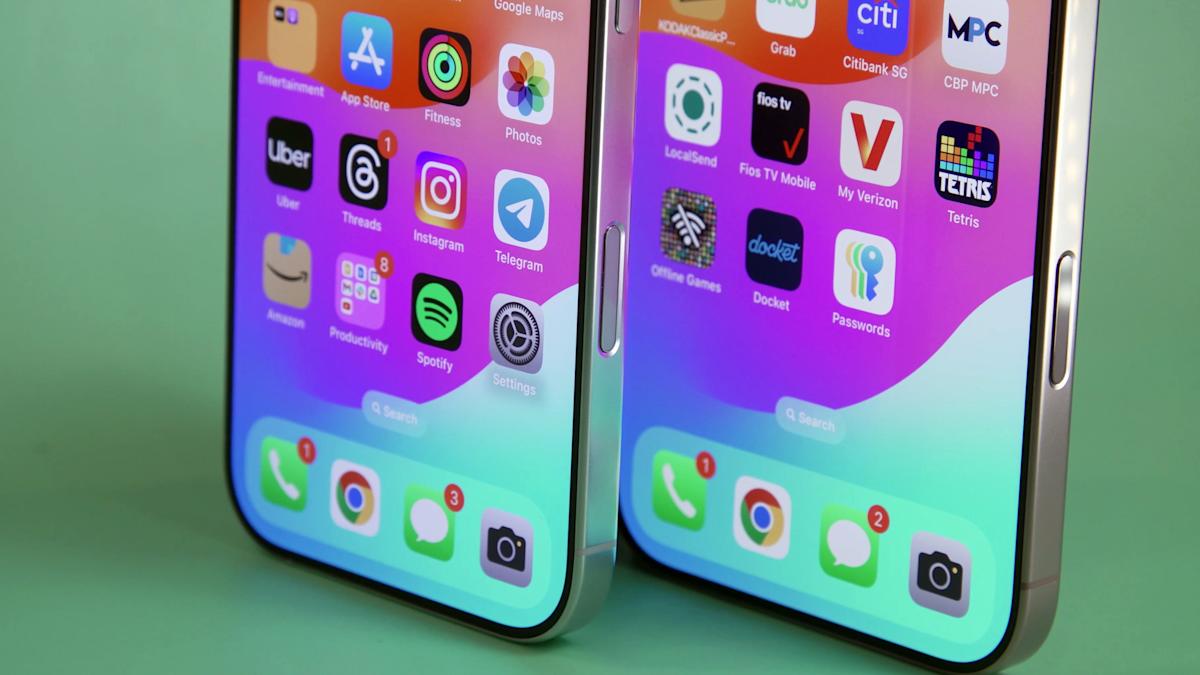
In 2020, I bought an data-i13n=”cpos:1;pos:1″ href=”https://www.engadget.com/apple-iphone-12-12-pro-review-cameras-5g-performance-price-214630744.html” data-ylk=”slk:iPhone 12;cpos:1;pos:1;elm:context_link;itc:0;sec:content-canvas” class=”link “> to replace my aging data-i13n=”cpos:2;pos:1″ href=”https://www.engadget.com/2018-10-15-google-pixel-3-pixel-3-xl-review-android-pie.html” data-ylk=”slk:Pixel 3;cpos:2;pos:1;elm:context_link;itc:0;sec:content-canvas” class=”link “>, and nearly five years later, I’m still using that same device because it works fine and Apple has yet to bring the feature I want most on a regular iPhone: a ProMotion display. If you’re not familiar with the company’s marketing lingo, ProMotion is its way of describing a high-refresh rate display.
Apple introduced ProMotion with the data-i13n=”cpos:3;pos:1″ href=”https://www.engadget.com/iphone-13-pro-and-pro-max-review-120-hz-promotion-screen-macro-camera-cinematic-mode-samples-battery-life-143041678-143041273.html” data-ylk=”slk:iPhone 13 Pro;cpos:3;pos:1;elm:context_link;itc:0;sec:content-canvas” class=”link “>. Since then, every Pro model has offered a 120Hz refresh rate display with the ability to scale down to 1Hz for always-on…


