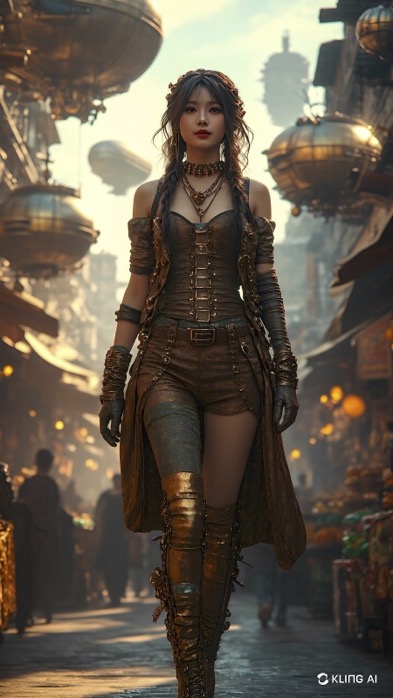
Can AI Revolutionize Your Image Creation Process?

Share via:

In today’s fast-paced digital landscape, graphic designers face mounting pressure to produce more visual content in less time. Creative professionals often hit roadblocks when juggling multiple projects, struggling to maintain both quality and originality while meeting tight deadlines. Enter AI image generators – revolutionary tools that promise to transform how we create and manipulate visual content. These emerging technologies offer particular appeal to design teams handling high-volume projects, agencies seeking to scale their creative output, and independent designers looking to enhance their productivity. By leveraging artificial intelligence, these solutions not only address the challenge of creating multiple variations quickly but also open new frontiers of creative possibility. This article explores how AI image generation is reshaping the creative landscape, offering practical insights into implementing these tools effectively while maintaining artistic integrity and professional standards.

Understanding AI Image Generators: The New Frontier

Artificial Intelligence image generators represent a quantum leap in digital content creation, fundamentally different from traditional image editing tools. These systems utilize deep learning neural networks trained on vast datasets of images to understand and generate new visual content. Unlike conventional photo editing software that applies predetermined filters or effects, AI generators can interpret text descriptions and create entirely original images or transform existing ones with remarkable sophistication. The technology builds upon complex mathematical models that analyze patterns, styles, and visual elements across millions of training images to synthesize new compositions. Major breakthroughs in computer vision and natural language processing have enabled these systems to understand increasingly nuanced creative directions. We’re already seeing impressive real-world applications, from generating product photography variations for e-commerce to creating concept art for entertainment projects. Fashion brands are using AI generators to visualize new designs, while architectural firms employ them to rapidly prototype different building aesthetics. This technology marks a pivotal shift from tools that simply manipulate existing pixels to ones that can understand and execute creative intent, opening unprecedented possibilities for visual content creation.

Transformative Benefits for Graphic Designers

Accelerating Creative Workflows

AI image generators are revolutionizing how designers approach their creative process, dramatically reducing the time from concept to final execution. Teams can now generate dozens of visual variations in minutes rather than hours, allowing for rapid prototyping and iteration. A recent brand campaign that traditionally required weeks of photoshoots and editing can now be completed in days through AI-assisted asset generation, with consistent quality across all deliverables.

Democratizing Advanced Visual Techniques

The technology removes traditional barriers to creating complex visual effects, making sophisticated design techniques accessible to creators at all skill levels. Tasks that once required extensive technical expertise, such as realistic lighting adjustments or seamless background removal, are now automated through intelligent algorithms. This democratization enables smaller design teams to compete with larger studios, leveling the creative playing field.

Unlocking Unprecedented Creative Freedom

Perhaps the most exciting benefit is the ability to explore creative directions that were previously impractical or impossible. Designers can now seamlessly blend multiple artistic styles, experiment with unconventional combinations, and generate unique variations that spark fresh creative directions. This capability particularly shines in client work, where designers can quickly produce multiple customized versions of concepts while maintaining brand consistency. The technology’s ability to understand and execute abstract creative concepts has opened new avenues for artistic expression, allowing designers to push beyond conventional boundaries while meeting commercial requirements.

Practical Implementation: AI Image Transformation Workflow

Tool Selection Criteria

When selecting AI image generation tools, focus on platforms offering robust batch processing capabilities that can handle multiple images simultaneously. Leading solutions like Kling AI have set new standards with their integration capabilities with industry-standard design software like Adobe Creative Cloud, processing speed for large image sets, and output quality consistency. Consider tools that provide API access for automation and custom workflow development, ensuring seamless incorporation into existing design pipelines.

Multi-Image Processing Protocol

Begin by organizing source images in standardized folders with clear naming conventions. Optimize images to recommended specifications: typically 1024×1024 pixels for best AI processing results, saved in PNG format to preserve quality. Create comprehensive metadata tags describing desired transformations, style elements, and brand guidelines. Implement version control systems to track iterations and maintain original assets.

Transformation Execution Steps

Craft precise prompts using clear, descriptive language that specifies desired artistic styles, mood, and technical requirements. Start with test batches to calibrate parameters like style strength, composition balance, and color harmony. Fine-tune settings to maintain brand consistency across all outputs, paying special attention to logo placement and brand color accuracy. Establish a post-processing workflow to address any inconsistencies, including automated checks for brand compliance and manual quality control for critical elements. Implement feedback loops to refine prompt engineering based on results, creating a library of successful transformation recipes for future use.

Ethical Considerations and Future Evolution

As AI image generation becomes increasingly prevalent in professional design, important ethical considerations demand attention. Copyright concerns arise around the training data used to develop these systems and the ownership status of AI-generated artwork. Best practices are emerging that encourage designers to verify image rights, maintain transparent attribution practices, and document AI assistance in commercial projects. The industry is actively working to address bias in training datasets, with leading platforms implementing diversity checks and balanced representation protocols. Looking ahead, AI image generation is rapidly expanding beyond 2D creation. Breakthrough developments in 3D model generation and real-time animation promise to further transform creative workflows. Early adopters in architecture and product design are already leveraging AI to generate detailed 3D prototypes from text descriptions. Industry analysts predict widespread adoption across creative sectors within the next three years, with AI becoming an integral part of standard design tools rather than a separate technology. This evolution suggests a future where AI amplifies rather than replaces human creativity, enabling designers to focus on strategic and conceptual aspects while automating technical execution.

The Future of AI-Powered Design

The integration of AI image generators into modern design workflows represents more than just a technological advancement – it marks a fundamental shift in how creative professionals approach visual content creation. These tools have proven their worth by dramatically reducing production time, democratizing advanced design techniques, and expanding creative possibilities beyond traditional boundaries. While the technology continues to evolve rapidly, success lies in striking the right balance between AI automation and human creative direction. Forward-thinking designers are already leveraging these tools to handle routine tasks while focusing their expertise on strategic creative decisions and client relationships. As we look ahead, the synergy between human creativity and AI capabilities will likely deepen, leading to even more innovative visual solutions. For graphic designers willing to embrace this evolution, AI image generators offer not just efficiency gains but a pathway to enhanced creative expression and professional growth. The future of design lies not in choosing between human or artificial intelligence, but in masterfully combining both to achieve unprecedented creative results.


Disclaimer

We strive to uphold the highest ethical standards in all of our reporting and coverage. We StartupNews.fyi want to be transparent with our readers about any potential conflicts of interest that may arise in our work. It’s possible that some of the investors we feature may have connections to other businesses, including competitors or companies we write about. However, we want to assure our readers that this will not have any impact on the integrity or impartiality of our reporting. We are committed to delivering accurate, unbiased news and information to our audience, and we will continue to uphold our ethics and principles in all of our work. Thank you for your trust and support.

Team SNFYI
Hi! This is Admin.

Popular

More Like this

Can AI Revolutionize Your Image Creation Process?

In today’s fast-paced digital landscape, graphic designers face mounting pressure to produce more visual content in less time. Creative professionals often hit roadblocks when juggling multiple projects, struggling to maintain both quality and originality while meeting tight deadlines. Enter AI image generators – revolutionary tools that promise to transform how we create and manipulate visual content. These emerging technologies offer particular appeal to design teams handling high-volume projects, agencies seeking to scale their creative output, and independent designers looking to enhance their productivity. By leveraging artificial intelligence, these solutions not only address the challenge of creating multiple variations quickly but also open new frontiers of creative possibility. This article explores how AI image generation is reshaping the creative landscape, offering practical insights into implementing these tools effectively while maintaining artistic integrity and professional standards.

Understanding AI Image Generators: The New Frontier

Artificial Intelligence image generators represent a quantum leap in digital content creation, fundamentally different from traditional image editing tools. These systems utilize deep learning neural networks trained on vast datasets of images to understand and generate new visual content. Unlike conventional photo editing software that applies predetermined filters or effects, AI generators can interpret text descriptions and create entirely original images or transform existing ones with remarkable sophistication. The technology builds upon complex mathematical models that analyze patterns, styles, and visual elements across millions of training images to synthesize new compositions. Major breakthroughs in computer vision and natural language processing have enabled these systems to understand increasingly nuanced creative directions. We’re already seeing impressive real-world applications, from generating product photography variations for e-commerce to creating concept art for entertainment projects. Fashion brands are using AI generators to visualize new designs, while architectural firms employ them to rapidly prototype different building aesthetics. This technology marks a pivotal shift from tools that simply manipulate existing pixels to ones that can understand and execute creative intent, opening unprecedented possibilities for visual content creation.

Transformative Benefits for Graphic Designers

Accelerating Creative Workflows

AI image generators are revolutionizing how designers approach their creative process, dramatically reducing the time from concept to final execution. Teams can now generate dozens of visual variations in minutes rather than hours, allowing for rapid prototyping and iteration. A recent brand campaign that traditionally required weeks of photoshoots and editing can now be completed in days through AI-assisted asset generation, with consistent quality across all deliverables.

Democratizing Advanced Visual Techniques

The technology removes traditional barriers to creating complex visual effects, making sophisticated design techniques accessible to creators at all skill levels. Tasks that once required extensive technical expertise, such as realistic lighting adjustments or seamless background removal, are now automated through intelligent algorithms. This democratization enables smaller design teams to compete with larger studios, leveling the creative playing field.

Unlocking Unprecedented Creative Freedom

Perhaps the most exciting benefit is the ability to explore creative directions that were previously impractical or impossible. Designers can now seamlessly blend multiple artistic styles, experiment with unconventional combinations, and generate unique variations that spark fresh creative directions. This capability particularly shines in client work, where designers can quickly produce multiple customized versions of concepts while maintaining brand consistency. The technology’s ability to understand and execute abstract creative concepts has opened new avenues for artistic expression, allowing designers to push beyond conventional boundaries while meeting commercial requirements.

Practical Implementation: AI Image Transformation Workflow

Tool Selection Criteria

When selecting AI image generation tools, focus on platforms offering robust batch processing capabilities that can handle multiple images simultaneously. Leading solutions like Kling AI have set new standards with their integration capabilities with industry-standard design software like Adobe Creative Cloud, processing speed for large image sets, and output quality consistency. Consider tools that provide API access for automation and custom workflow development, ensuring seamless incorporation into existing design pipelines.

Multi-Image Processing Protocol

Begin by organizing source images in standardized folders with clear naming conventions. Optimize images to recommended specifications: typically 1024×1024 pixels for best AI processing results, saved in PNG format to preserve quality. Create comprehensive metadata tags describing desired transformations, style elements, and brand guidelines. Implement version control systems to track iterations and maintain original assets.

Transformation Execution Steps

Craft precise prompts using clear, descriptive language that specifies desired artistic styles, mood, and technical requirements. Start with test batches to calibrate parameters like style strength, composition balance, and color harmony. Fine-tune settings to maintain brand consistency across all outputs, paying special attention to logo placement and brand color accuracy. Establish a post-processing workflow to address any inconsistencies, including automated checks for brand compliance and manual quality control for critical elements. Implement feedback loops to refine prompt engineering based on results, creating a library of successful transformation recipes for future use.

Ethical Considerations and Future Evolution

As AI image generation becomes increasingly prevalent in professional design, important ethical considerations demand attention. Copyright concerns arise around the training data used to develop these systems and the ownership status of AI-generated artwork. Best practices are emerging that encourage designers to verify image rights, maintain transparent attribution practices, and document AI assistance in commercial projects. The industry is actively working to address bias in training datasets, with leading platforms implementing diversity checks and balanced representation protocols. Looking ahead, AI image generation is rapidly expanding beyond 2D creation. Breakthrough developments in 3D model generation and real-time animation promise to further transform creative workflows. Early adopters in architecture and product design are already leveraging AI to generate detailed 3D prototypes from text descriptions. Industry analysts predict widespread adoption across creative sectors within the next three years, with AI becoming an integral part of standard design tools rather than a separate technology. This evolution suggests a future where AI amplifies rather than replaces human creativity, enabling designers to focus on strategic and conceptual aspects while automating technical execution.

The Future of AI-Powered Design

The integration of AI image generators into modern design workflows represents more than just a technological advancement – it marks a fundamental shift in how creative professionals approach visual content creation. These tools have proven their worth by dramatically reducing production time, democratizing advanced design techniques, and expanding creative possibilities beyond traditional boundaries. While the technology continues to evolve rapidly, success lies in striking the right balance between AI automation and human creative direction. Forward-thinking designers are already leveraging these tools to handle routine tasks while focusing their expertise on strategic creative decisions and client relationships. As we look ahead, the synergy between human creativity and AI capabilities will likely deepen, leading to even more innovative visual solutions. For graphic designers willing to embrace this evolution, AI image generators offer not just efficiency gains but a pathway to enhanced creative expression and professional growth. The future of design lies not in choosing between human or artificial intelligence, but in masterfully combining both to achieve unprecedented creative results.

Disclaimer

We strive to uphold the highest ethical standards in all of our reporting and coverage. We StartupNews.fyi want to be transparent with our readers about any potential conflicts of interest that may arise in our work. It’s possible that some of the investors we feature may have connections to other businesses, including competitors or companies we write about. However, we want to assure our readers that this will not have any impact on the integrity or impartiality of our reporting. We are committed to delivering accurate, unbiased news and information to our audience, and we will continue to uphold our ethics and principles in all of our work. Thank you for your trust and support.

Website Upgradation is going on for any glitch kindly connect at office@startupnews.fyi

Team SNFYI
Hi! This is Admin.

More like this

Electric mobility startup Drivn secures $80 million commitment from...

Drivn, an electric mobility platform focussed on large...

Ather Energy Q3 operating revenue jumps 50% to Rs...

Electric two-wheeler maker Ather Energy reported a 50.2%...

Budget 2026 boosts science R&D spend to ₹66,785 cr,...

The Union Budget 2026, on Sunday, February 1,...

Popular

iptv iptv iptv iptv iptv iptv iptv iptv iptv iptv iptv iptv iptv iptv iptv iptv iptv iptv iptv iptv iptv iptv iptv iptv melhor iptv portugal lista melhor iptv portugal lista melhor iptv portugal lista melhor iptv portugal lista melhor iptv portugal lista melhor iptv portugal lista melhor iptv portugal lista melhor iptv portugal lista melhor iptv portugal lista melhor iptv portugal lista melhor iptv portugal lista melhor iptv portugal lista melhor iptv portugal lista melhor iptv portugal lista melhor iptv portugal lista melhor iptv portugal lista melhor iptv portugal lista melhor iptv portugal lista melhor iptv portugal lista melhor iptv portugal lista melhor iptv portugal lista melhor iptv portugal lista melhor iptv portugal lista melhor iptv portugal lista melhor iptv portugal lista melhor iptv portugal lista melhor iptv portugal lista melhor iptv portugal lista melhor iptv portugal lista melhor iptv portugal lista melhor iptv portugal lista melhor iptv portugal lista melhor iptv portugal lista melhor iptv portugal lista melhor iptv portugal lista melhor iptv portugal lista melhor iptv portugal lista melhor iptv portugal lista melhor iptv portugal lista melhor iptv portugal lista melhor iptv portugal lista melhor iptv portugal lista melhor iptv portugal lista melhor iptv portugal lista melhor iptv portugal lista melhor iptv portugal lista melhor iptv portugal lista melhor iptv portugal lista melhor iptv portugal lista melhor iptv portugal lista melhor iptv portugal lista melhor iptv portugal lista melhor iptv portugal lista melhor iptv portugal lista melhor iptv portugal lista melhor iptv portugal lista melhor iptv portugal lista melhor iptv portugal lista melhor iptv portugal lista melhor iptv portugal lista melhor iptv portugal lista melhor iptv portugal lista melhor iptv portugal lista melhor iptv portugal lista melhor iptv portugal lista melhor iptv portugal lista best iptv best iptv best iptv best iptv best iptv best iptv best iptv best iptv best iptv best iptv best iptv best iptv best iptv best iptv best iptv best iptv best iptv best iptv best iptv best iptv best iptv best iptv best iptv best iptv best iptv best iptv best iptv best iptv best iptv best iptv best iptv best iptv best iptv best iptv best iptv best iptv best iptv best iptv best iptv best iptv best iptv best iptv best iptv best iptv best iptv best iptv best iptv best iptv best iptv best iptv best iptv best iptv best iptv best iptv best iptv best iptv best iptv best iptv best iptv best iptv best iptv best iptv best iptv best iptv best iptv best iptv best iptv best iptv best iptv best iptv best iptv best iptv best iptv best iptv best iptv best iptv best iptv best iptv best iptv best iptv best iptv best iptv best iptv best iptv best iptv best iptv best iptv best iptv best iptv best iptv best iptv best iptv best iptv best iptv best iptv best iptv best iptv best iptv best iptv best iptv best iptv best iptv best iptv best iptv best iptv best iptv best iptv best iptv best iptv best iptv best iptv best iptv best iptv best iptv best iptv best iptv best iptv best iptv best iptv best iptv best iptv best iptv best iptv best iptv best iptv best iptv best iptv best iptv best iptv best iptv best iptv best iptv best iptv best iptv best iptv best iptv best iptv best iptv best iptv best iptv best iptv best iptv best iptv best iptv best iptv best iptv best iptv best iptv best iptv best iptv best iptv best iptv best iptv best iptv best iptv best iptv best iptv best iptv best iptv best iptv best iptv best iptv best iptv best iptv best iptv best iptv best iptv best iptv best iptv best iptv best iptv best iptv best iptv best iptv best iptv best iptv best iptv best iptv best iptv best iptv best iptv best iptv best iptv best iptv best iptv best iptv best iptv best iptv best iptv best iptv best iptv best iptv best iptv best iptv best iptv best iptv best iptv best iptv best iptv iptv iptv iptv iptv iptv iptv iptv iptv iptv iptv iptv iptv iptv portugal iptv portugal iptv portugal iptv portugal iptv portugal iptv portugal iptv portugal iptv portugal iptv portugal iptv portugal iptv portugal iptv portugal iptv iptv iptv iptv iptv iptv iptv iptv iptv iptv iptv iptv