
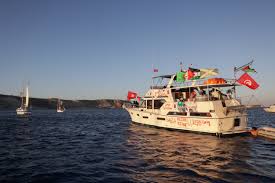
The international spotlight is once again focused on the Middle East as the Sumud Flotilla, a convoy of over 40 civilian boats carrying more than 500 activists, approaches the Gaza shoreline. The mission, widely referred to simply as the flotilla, has the stated aim of delivering humanitarian aid and challenging Israel’s long-standing blockade of Gaza. With participants including parliamentarians, lawyers, and climate activist Greta Thunberg, the sumud flotilla has drawn worldwide attention and ignited debate over the legality and morality of the blockade.
Italy withdraws military escort as flotilla nears Gaza
In a significant development, Italy announced that it would no longer provide naval support for the flotilla once the convoy reached 150 nautical miles from Gaza. The Italian defense ministry confirmed that the frigate shadowing the convoy would halt its tracking operations around midnight GMT. Italy urged participants of the sumud flotilla to reroute to Cyprus and deliver the aid through an intermediary channel to avoid a direct confrontation with Israeli forces.
Flotilla organizers firmly rejected the proposal, stating: “We say again: the flotilla sails onwards. The Italian navy will not derail this mission. The humanitarian demand to break the blockade cannot be walked back to port.”
Escalating risks for the Sumud Flotilla
Activists on board the sumud flotilla are on high alert after reporting drone attacks last week in international waters off Greece. The convoy was reportedly targeted with stun grenades and chemical irritants, though no state has officially claimed responsibility. Flotilla representatives allege Israeli involvement, while Israel has remained silent on the accusations but reiterated its right to enforce the blockade, describing it as a security measure against Hamas.
Maria Elena Delia, an Italian spokeswoman for the flotilla, warned that activists were preparing for another potential strike. “Israel will probably attack us tonight, because all the signals point to this happening,” she said in a video message.
Israel’s stance on the flotilla
The Israeli government has consistently argued that its blockade of Gaza is legal under international law, framing it as part of its ongoing conflict with Hamas. Officials have made it clear that the flotilla will not be allowed to dock in Gaza and suggested that any attempt to breach the blockade will be met with interception at sea. Past flotilla missions, most notably the 2010 Mavi Marmara incident, ended in deadly confrontations, raising fears of renewed violence.
Italian Defense Minister Guido Crosetto echoed these concerns, saying he expected flotilla boats to be stopped in open waters and participants arrested. Prime Minister Giorgia Meloni added that continuing the mission could jeopardize international peace efforts, including a 20-point peace plan backed by the United States.
Global reaction and growing support
Despite political pressure, the sumud flotilla continues to receive backing from civil society organizations, human rights groups, and activists worldwide. The presence of Greta Thunberg has amplified international media coverage, framing the mission not only as a humanitarian cause but also as part of a broader movement linking climate justice, human rights, and peace advocacy.
Even the Vatican weighed in, with Pope Leo expressing deep concern for the safety of those aboard. “From all sides, people are saying, ‘let’s hope that there will not be violence, that people are respected’. That’s very important,” he told reporters.
The symbolism of the Sumud Flotilla
Beyond its immediate humanitarian objectives, the sumud flotilla carries a powerful symbolic weight. The word “sumud,” meaning “steadfastness” in Arabic, reflects the resilience of the Palestinian people under blockade. By sailing under this banner, organizers hope to send a global message that ordinary citizens will continue to challenge what they see as unjust restrictions on Gaza.
The flotilla’s persistence in the face of threats and diplomatic pressure underscores the growing role of grassroots movements in international conflicts. Whether or not the convoy reaches Gaza, the mission has already succeeded in reigniting global debate over the blockade and its humanitarian consequences.
Conclusion: uncertain but historic journey
As the sumud flotilla draws closer to Gaza, the risks of confrontation with Israeli forces increase by the hour. Italy’s withdrawal of naval support, the warnings from political leaders, and the heightened state of alert among activists all point to a volatile situation at sea. Still, the determination of the flotilla members reflects a broader struggle for visibility, justice, and change.
For now, the world watches closely as the flotilla sails into history, testing both international law and the political will of global powers.
For more breaking global updates and startup insights, visit Startup News


