
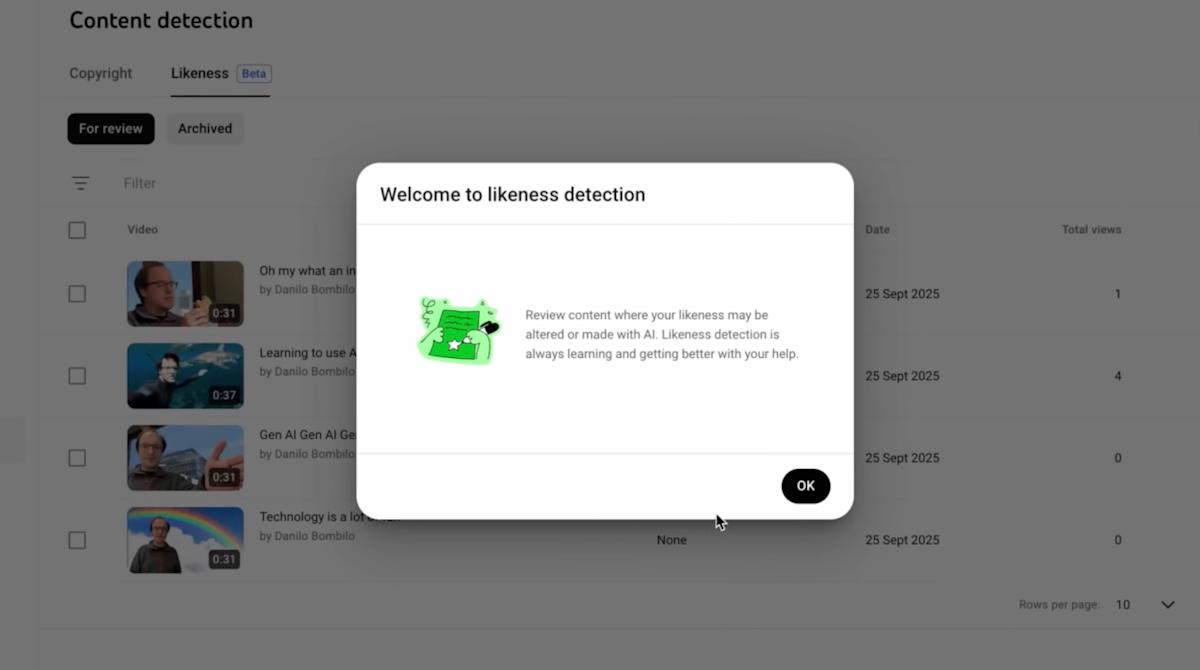
When AI tools first began proliferating around the web, worries about deepfakes quickly rose alongside them. And now that tech such as OpenAI’s recently released Sora 2 is getting more capable and more widely available (and being used class=”link ” href=”https://www.engadget.com/ai/openai-suspends-sora-depictions-of-martin-luther-king-jr-following-a-request-from-his-family-110100581.html” data-i13n=”cpos:1;pos:1″ data-ylk=”slk:exactly as irresponsibly;cpos:1;pos:1;elm:context_link;itc:0;sec:content-canvas”>exactly as irresponsibly as you might have guessed), both famous and ordinary people may want more control over protecting their likenesses. After class=”link ” href=”https://www.engadget.com/ai/youtube-is-making-tools-to-detect-face-and-voice-deepfakes-191536027.html” data-i13n=”cpos:2;pos:1″ data-ylk=”slk:teasing;cpos:2;pos:1;elm:context_link;itc:0;sec:content-canvas”>teasing the feature last year, YouTube is starting to launch a class=”link ” href=”https://www.youtube.com/watch?v=zVqQiBb0F-w” data-i13n=”cpos:3;pos:1″ rel=”nofollow noopener” target=”_blank” data-ylk=”slk:likeness detection tool;cpos:3;pos:1;elm:context_link;itc:0;sec:content-canvas”>likeness detection tool to combat unwanted deepfakes and have…


