Interstellar Comet 3I/ATLAS: NASA Observes Visitor from Beyond to Protect Earth

Share via:

The newly discovered interstellar comet 3I/ATLAS has captured the attention of astronomers worldwide — not because it poses any threat to Earth, but because it could help protect our planet from future asteroid impacts. According to a report by Space.com, NASA and the International Asteroid Warning Network (IAWN) are launching an extensive observation campaign to study the comet as it travels through our solar system.

What Is 3I/ATLAS?

3I/ATLAS — officially designated C/2025 N1 — is the third known interstellar object ever detected passing through our solar system, after Oumuamua (2017) and comet Borisov (2019). Unlike regular comets that originate within our Sun’s gravitational influence, interstellar comets are cosmic wanderers — visitors from other star systems that travel enormous distances before briefly entering our neighborhood.

The comet is expected to reach its closest point to the Sun (perihelion) between November 27, 2025, and January 27, 2026, coming within 1.8 astronomical units of Earth (roughly 270 million kilometers). While that’s far enough to ensure safety, it’s close enough for telescopes around the world to capture valuable data.

NASA’s Mission: Learning to Track Cosmic Threats

The IAWN and NASA’s Minor Planet Center are coordinating a global observation campaign. The goal is to improve Earth’s ability to track and predict the paths of potentially hazardous asteroids and comets.

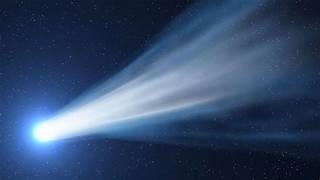
Unlike asteroids, comets like 3I/ATLAS have bright, hazy atmospheres (comas) and long tails, making their paths more difficult to calculate accurately. By studying how these visual characteristics affect brightness and trajectory, astronomers hope to refine prediction models — crucial when dealing with any object that might one day come close to Earth.

NASA emphasizes that tracking such interstellar visitors is not just about curiosity — it’s a training exercise for planetary defense. Understanding how to quickly and accurately determine the orbits of fast-moving objects can be vital if a future body were ever found on a collision course with our planet.

Citizen Scientists Invited to Participate

In a unique move, citizen astronomers are being invited to take part in this project. NASA encourages enthusiasts to register with the Minor Planet Center before November 7, as the campaign includes virtual workshops and data-sharing sessions throughout the observation period.

These participants will help measure the comet’s brightness, motion, and composition, contributing to an international dataset that could shape how we respond to cosmic hazards.

No Threat to Earth — Only Opportunities

Experts assure that 3I/ATLAS poses absolutely no danger to Earth. Instead, its appearance provides an extraordinary scientific opportunity. Observations of 3I/ATLAS will give insight into how interstellar bodies form and evolve — offering clues about planetary systems beyond our own.

NASA continues to monitor thousands of known near-Earth objects (NEOs) as part of its planetary defense initiative, with no imminent threats detected so far. Still, each event like this strengthens our preparedness.

Why This Matters

The arrival of 3I/ATLAS reminds us that Earth exists in a dynamic, interconnected cosmic environment. By leveraging international cooperation and advanced observation technologies, NASA and global scientists aim not only to learn from this interstellar traveler but also to protect our planet from future dangers.


For more breaking space and technology updates, visit StartupNews.fyi.

Disclaimer

We strive to uphold the highest ethical standards in all of our reporting and coverage. We StartupNews.fyi want to be transparent with our readers about any potential conflicts of interest that may arise in our work. It’s possible that some of the investors we feature may have connections to other businesses, including competitors or companies we write about. However, we want to assure our readers that this will not have any impact on the integrity or impartiality of our reporting. We are committed to delivering accurate, unbiased news and information to our audience, and we will continue to uphold our ethics and principles in all of our work. Thank you for your trust and support.

Popular

More Like this

Interstellar Comet 3I/ATLAS: NASA Observes Visitor from Beyond to Protect Earth

The newly discovered interstellar comet 3I/ATLAS has captured the attention of astronomers worldwide — not because it poses any threat to Earth, but because it could help protect our planet from future asteroid impacts. According to a report by Space.com, NASA and the International Asteroid Warning Network (IAWN) are launching an extensive observation campaign to study the comet as it travels through our solar system.

What Is 3I/ATLAS?

3I/ATLAS — officially designated C/2025 N1 — is the third known interstellar object ever detected passing through our solar system, after Oumuamua (2017) and comet Borisov (2019). Unlike regular comets that originate within our Sun’s gravitational influence, interstellar comets are cosmic wanderers — visitors from other star systems that travel enormous distances before briefly entering our neighborhood.

The comet is expected to reach its closest point to the Sun (perihelion) between November 27, 2025, and January 27, 2026, coming within 1.8 astronomical units of Earth (roughly 270 million kilometers). While that’s far enough to ensure safety, it’s close enough for telescopes around the world to capture valuable data.

NASA’s Mission: Learning to Track Cosmic Threats

The IAWN and NASA’s Minor Planet Center are coordinating a global observation campaign. The goal is to improve Earth’s ability to track and predict the paths of potentially hazardous asteroids and comets.

Unlike asteroids, comets like 3I/ATLAS have bright, hazy atmospheres (comas) and long tails, making their paths more difficult to calculate accurately. By studying how these visual characteristics affect brightness and trajectory, astronomers hope to refine prediction models — crucial when dealing with any object that might one day come close to Earth.

NASA emphasizes that tracking such interstellar visitors is not just about curiosity — it’s a training exercise for planetary defense. Understanding how to quickly and accurately determine the orbits of fast-moving objects can be vital if a future body were ever found on a collision course with our planet.

Citizen Scientists Invited to Participate

In a unique move, citizen astronomers are being invited to take part in this project. NASA encourages enthusiasts to register with the Minor Planet Center before November 7, as the campaign includes virtual workshops and data-sharing sessions throughout the observation period.

These participants will help measure the comet’s brightness, motion, and composition, contributing to an international dataset that could shape how we respond to cosmic hazards.

No Threat to Earth — Only Opportunities

Experts assure that 3I/ATLAS poses absolutely no danger to Earth. Instead, its appearance provides an extraordinary scientific opportunity. Observations of 3I/ATLAS will give insight into how interstellar bodies form and evolve — offering clues about planetary systems beyond our own.

NASA continues to monitor thousands of known near-Earth objects (NEOs) as part of its planetary defense initiative, with no imminent threats detected so far. Still, each event like this strengthens our preparedness.

Why This Matters

The arrival of 3I/ATLAS reminds us that Earth exists in a dynamic, interconnected cosmic environment. By leveraging international cooperation and advanced observation technologies, NASA and global scientists aim not only to learn from this interstellar traveler but also to protect our planet from future dangers.


For more breaking space and technology updates, visit StartupNews.fyi.

Disclaimer

We strive to uphold the highest ethical standards in all of our reporting and coverage. We StartupNews.fyi want to be transparent with our readers about any potential conflicts of interest that may arise in our work. It’s possible that some of the investors we feature may have connections to other businesses, including competitors or companies we write about. However, we want to assure our readers that this will not have any impact on the integrity or impartiality of our reporting. We are committed to delivering accurate, unbiased news and information to our audience, and we will continue to uphold our ethics and principles in all of our work. Thank you for your trust and support.

Website Upgradation is going on for any glitch kindly connect at office@startupnews.fyi

More like this

I wanted to buy a duplex printer on Amazon,...

I reached a point where printing single sided...

WhatsApp Testing Status and Channels Merge in the Updates...

WhatsApp is working on bringing the Updates tab...

Google Hints at Letting You Change Your Gmail Address...

If you've outgrown the Gmail address you created long...

Popular
