Farmers’ Almanac Announces Final Publication After 208 Years

Share via:

After more than two centuries of predicting weather patterns, offering gardening tips, and sharing folklore, the Farmers’ Almanac has announced that its upcoming edition will be its final publication. The decision marks the end of an American institution that has guided generations of farmers, gardeners, and weather enthusiasts since its first release in 1818.

According to ABC News, the Farmers’ Almanac editors revealed that the 2026 issue will serve as a farewell to its loyal readers, closing a 208-year-long legacy of printed wisdom. The publication cited changing reader habits, digital transformation, and declining print demand as key reasons for its closure.

The End of an Era for Farmers’ Almanac

Founded in 1818 by David Young and later edited by Caleb Weatherbee, the Farmers’ Almanac has long been cherished for its annual long-range weather forecasts, astronomical predictions, and practical life advice. Over the decades, it became a staple in American households and farm communities, offering insights into planting schedules, moon phases, and traditional home remedies.

The publication’s unique blend of meteorology, astrology, and folklore has always set it apart. For many, the Farmers’ Almanac wasn’t just a weather guide — it was a cultural artifact that connected modern America to its agrarian roots.

However, with the digital age reshaping how people consume information, the Almanac struggled to maintain its readership. Younger audiences increasingly turned to online weather platforms, smartphone apps, and social media for forecasts and agricultural guidance.

“We’re proud of the legacy we’ve built, but it’s time to close this chapter,” said the publication’s current editor in a statement. “The Farmers’ Almanac has served its purpose — uniting people through shared knowledge, curiosity, and a respect for nature’s rhythms.”

A 208-Year Legacy of Predicting the Seasons

The Farmers’ Almanac became famous for its long-range weather predictions, often claiming up to 80% accuracy. Using a secret formula known only to its lead forecaster, “Caleb Weatherbee,” the Almanac combined solar science, climatology, and planetary positions to make its forecasts.

While meteorologists sometimes criticized its methods as pseudoscientific, the Farmers’ Almanac maintained a devoted following who swore by its predictions. Many farmers planned crop rotations and harvests according to its seasonal guidance, while households referenced its charts for moon phases, tides, and eclipses.

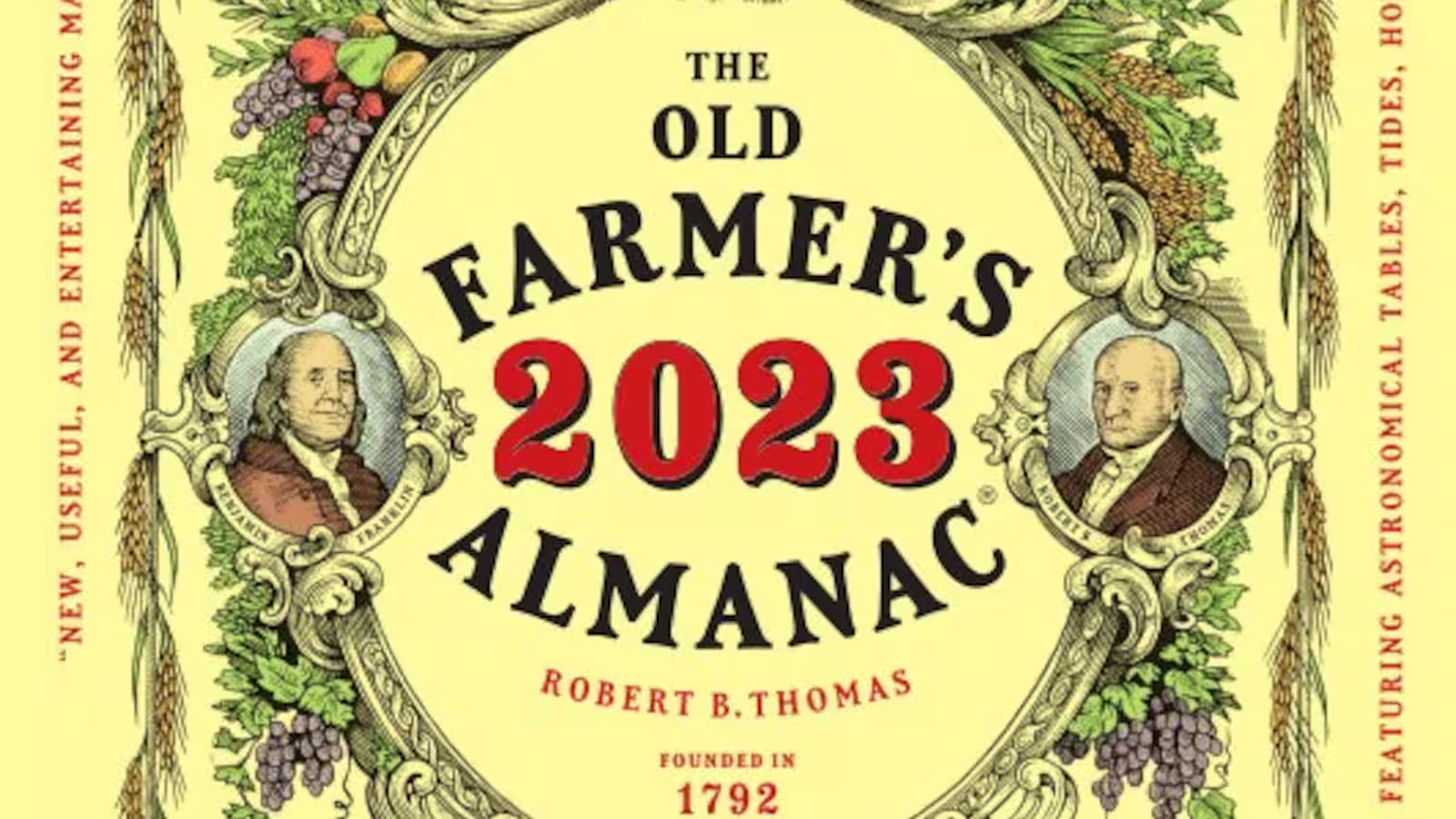
Its rival, the Old Farmer’s Almanac, published since 1792, remains in circulation — meaning traditional readers will still have a source for their long-range forecasts. Yet for millions of readers, the end of the Farmers’ Almanac represents the fading of a beloved American tradition.

How Digital Transformation Changed the Game

The end of the Farmers’ Almanac underscores how the digital revolution has transformed publishing. Where once families eagerly awaited the annual print edition, modern audiences now access real-time, hyper-local weather updates through apps and smart devices.

The publication did attempt to adapt — launching an online version, social media presence, and newsletters — but print subscriptions continued to decline. Experts say the decision to end the print version was inevitable as digital convenience replaced nostalgia for many readers.

Still, the Farmers’ Almanac remains symbolic of a slower, simpler era — one where handwritten forecasts and celestial charts guided rural life.

What’s Next for the Farmers’ Almanac Brand

While the printed Farmers’ Almanac will end after its 2026 release, the editorial team hinted that the brand may continue digitally. Plans are reportedly in motion for an archival website that will preserve past forecasts, historical editions, and the Almanac’s signature “wisdom of the ages” columns.

The editors also confirmed that some special content, such as its long-range 2026–2027 weather outlook, will be made available online for free, ensuring its forecasting spirit lives on even after print publication ceases.

Fans of the Almanac are already expressing nostalgia across social media, sharing stories of family traditions tied to the annual book. Many recall their grandparents consulting the Almanac each winter to prepare for planting, harvests, and holidays.

A Farewell to an American Classic

The Farmers’ Almanac’s conclusion marks the end of one of America’s longest-running publications. For 208 years, it captured the country’s agricultural heartbeat, combining practicality with charm. As the world moves further into the digital era, its retirement reminds us of how deeply intertwined print media once was with daily life and culture.

As one editor poignantly remarked, “The Farmers’ Almanac was never just about predicting the weather — it was about understanding our place in nature’s grand design.”

Though the printed pages may stop turning, the spirit of the Farmers’ Almanac — its optimism, curiosity, and reverence for the natural world — will remain a lasting legacy for generations to come.


Stay updated with more cultural and business insights shaping the world of innovation.
Read the latest global startup and tech stories at StartupNews.fyi.


Disclaimer

We strive to uphold the highest ethical standards in all of our reporting and coverage. We StartupNews.fyi want to be transparent with our readers about any potential conflicts of interest that may arise in our work. It’s possible that some of the investors we feature may have connections to other businesses, including competitors or companies we write about. However, we want to assure our readers that this will not have any impact on the integrity or impartiality of our reporting. We are committed to delivering accurate, unbiased news and information to our audience, and we will continue to uphold our ethics and principles in all of our work. Thank you for your trust and support.

Popular

More Like this

Farmers’ Almanac Announces Final Publication After 208 Years

After more than two centuries of predicting weather patterns, offering gardening tips, and sharing folklore, the Farmers’ Almanac has announced that its upcoming edition will be its final publication. The decision marks the end of an American institution that has guided generations of farmers, gardeners, and weather enthusiasts since its first release in 1818.

According to ABC News, the Farmers’ Almanac editors revealed that the 2026 issue will serve as a farewell to its loyal readers, closing a 208-year-long legacy of printed wisdom. The publication cited changing reader habits, digital transformation, and declining print demand as key reasons for its closure.

The End of an Era for Farmers’ Almanac

Founded in 1818 by David Young and later edited by Caleb Weatherbee, the Farmers’ Almanac has long been cherished for its annual long-range weather forecasts, astronomical predictions, and practical life advice. Over the decades, it became a staple in American households and farm communities, offering insights into planting schedules, moon phases, and traditional home remedies.

The publication’s unique blend of meteorology, astrology, and folklore has always set it apart. For many, the Farmers’ Almanac wasn’t just a weather guide — it was a cultural artifact that connected modern America to its agrarian roots.

However, with the digital age reshaping how people consume information, the Almanac struggled to maintain its readership. Younger audiences increasingly turned to online weather platforms, smartphone apps, and social media for forecasts and agricultural guidance.

“We’re proud of the legacy we’ve built, but it’s time to close this chapter,” said the publication’s current editor in a statement. “The Farmers’ Almanac has served its purpose — uniting people through shared knowledge, curiosity, and a respect for nature’s rhythms.”

A 208-Year Legacy of Predicting the Seasons

The Farmers’ Almanac became famous for its long-range weather predictions, often claiming up to 80% accuracy. Using a secret formula known only to its lead forecaster, “Caleb Weatherbee,” the Almanac combined solar science, climatology, and planetary positions to make its forecasts.

While meteorologists sometimes criticized its methods as pseudoscientific, the Farmers’ Almanac maintained a devoted following who swore by its predictions. Many farmers planned crop rotations and harvests according to its seasonal guidance, while households referenced its charts for moon phases, tides, and eclipses.

Its rival, the Old Farmer’s Almanac, published since 1792, remains in circulation — meaning traditional readers will still have a source for their long-range forecasts. Yet for millions of readers, the end of the Farmers’ Almanac represents the fading of a beloved American tradition.

How Digital Transformation Changed the Game

The end of the Farmers’ Almanac underscores how the digital revolution has transformed publishing. Where once families eagerly awaited the annual print edition, modern audiences now access real-time, hyper-local weather updates through apps and smart devices.

The publication did attempt to adapt — launching an online version, social media presence, and newsletters — but print subscriptions continued to decline. Experts say the decision to end the print version was inevitable as digital convenience replaced nostalgia for many readers.

Still, the Farmers’ Almanac remains symbolic of a slower, simpler era — one where handwritten forecasts and celestial charts guided rural life.

What’s Next for the Farmers’ Almanac Brand

While the printed Farmers’ Almanac will end after its 2026 release, the editorial team hinted that the brand may continue digitally. Plans are reportedly in motion for an archival website that will preserve past forecasts, historical editions, and the Almanac’s signature “wisdom of the ages” columns.

The editors also confirmed that some special content, such as its long-range 2026–2027 weather outlook, will be made available online for free, ensuring its forecasting spirit lives on even after print publication ceases.

Fans of the Almanac are already expressing nostalgia across social media, sharing stories of family traditions tied to the annual book. Many recall their grandparents consulting the Almanac each winter to prepare for planting, harvests, and holidays.

A Farewell to an American Classic

The Farmers’ Almanac’s conclusion marks the end of one of America’s longest-running publications. For 208 years, it captured the country’s agricultural heartbeat, combining practicality with charm. As the world moves further into the digital era, its retirement reminds us of how deeply intertwined print media once was with daily life and culture.

As one editor poignantly remarked, “The Farmers’ Almanac was never just about predicting the weather — it was about understanding our place in nature’s grand design.”

Though the printed pages may stop turning, the spirit of the Farmers’ Almanac — its optimism, curiosity, and reverence for the natural world — will remain a lasting legacy for generations to come.


Stay updated with more cultural and business insights shaping the world of innovation.
Read the latest global startup and tech stories at StartupNews.fyi.

Disclaimer

We strive to uphold the highest ethical standards in all of our reporting and coverage. We StartupNews.fyi want to be transparent with our readers about any potential conflicts of interest that may arise in our work. It’s possible that some of the investors we feature may have connections to other businesses, including competitors or companies we write about. However, we want to assure our readers that this will not have any impact on the integrity or impartiality of our reporting. We are committed to delivering accurate, unbiased news and information to our audience, and we will continue to uphold our ethics and principles in all of our work. Thank you for your trust and support.

Website Upgradation is going on for any glitch kindly connect at office@startupnews.fyi

More like this

Popular

iptv iptv iptv