Sun Unleashes Strongest Solar Flare of 2025, Disrupting Communications Across Continents

Share via:

A Fiery Outburst from the Sun

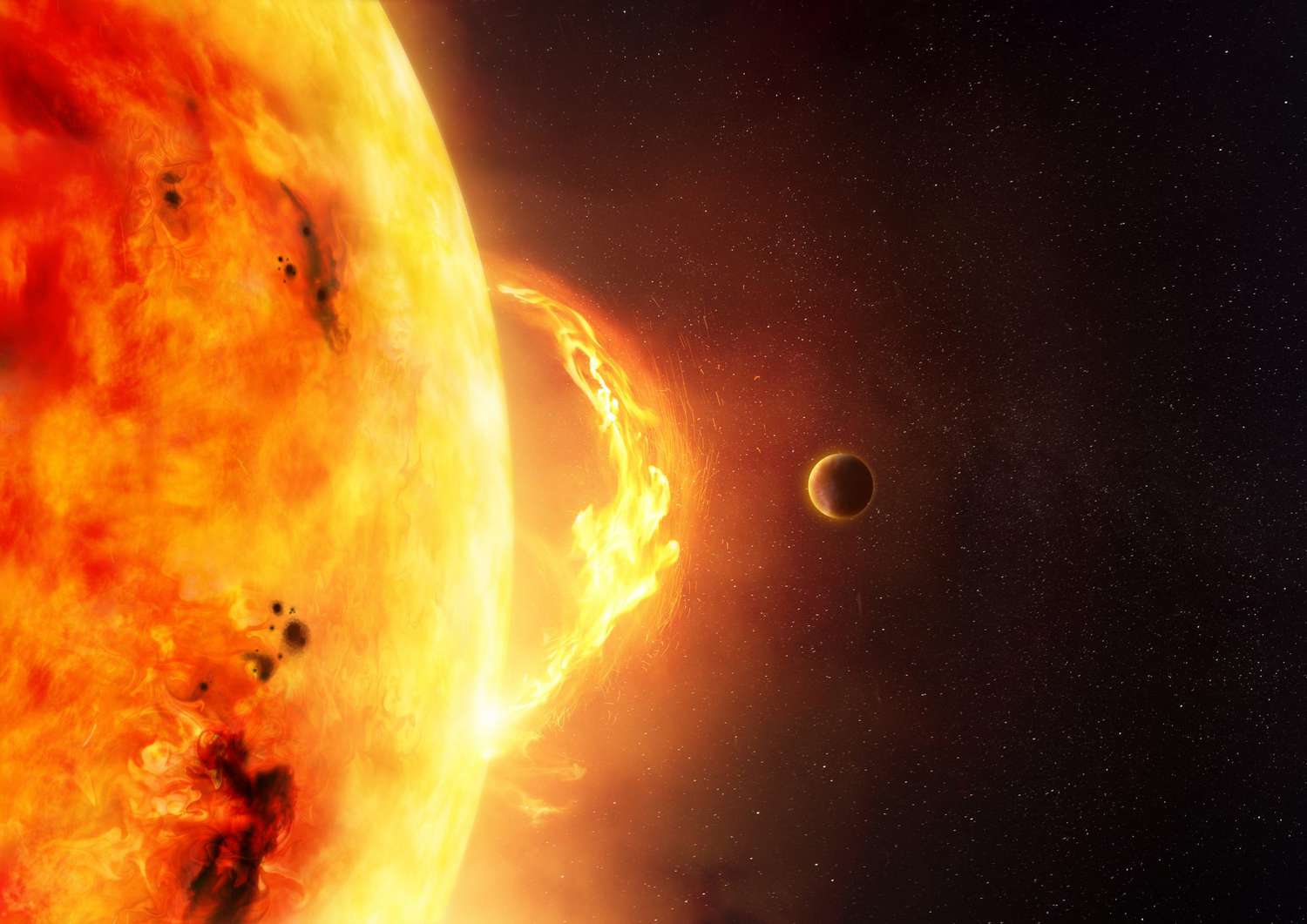
In a dramatic event early on November 11, the Sun released its most powerful solar flare of 2025 — an intense X5.1-class eruption from the active sunspot region AR4274. This solar flare marks one of the strongest solar events since October 2024, sending massive waves of electromagnetic energy directly toward Earth. According to the National Oceanic and Atmospheric Administration (NOAA), the explosion generated severe radio blackouts across Africa and Europe, impacting communications, navigation, and even shortwave radio frequencies.

The flare was accompanied by a series of coronal mass ejections (CMEs), vast bursts of plasma and magnetic field from the Sun’s corona. Traveling at nearly 4.4 million miles per hour, these CMEs are predicted to collide with Earth’s magnetic field, potentially triggering G4-class geomagnetic storms. Such storms can disrupt satellite systems, GPS signals, and even power grids.

NOAA and NASA Issue Warnings

Experts from NOAA’s Space Weather Prediction Center and NASA’s solar observation teams are closely monitoring this solar flare event. They warn that the CMEs produced by the recent eruptions could merge, intensifying the effects on Earth’s atmosphere. NASA’s M2M SWO model estimates the CME speed at over 1,800 km/s, categorizing it among the fastest in recent years.

Daisy Dobrijevic from Space.com reported that the solar flare today has set a new record for Solar Cycle 25. It has already caused significant ionization in the upper atmosphere, leading to widespread signal degradation across several regions. With multiple CMEs converging, scientists predict spectacular aurora sightings in northern latitudes tonight.

Understanding Solar Flares and Their Impact

Solar flares are classified into five categories — A, B, C, M, and X — each one ten times more powerful than the last. The latest solar flare today, rated X5.1, sits at the upper end of the intensity scale. These eruptions release tremendous amounts of energy, equivalent to billions of nuclear bombs, sending radiation and charged particles into space.

When this energy interacts with Earth’s magnetic field, it can cause radio blackouts, interfere with aviation communications, and produce stunning auroras near the poles. For airlines, such as those crossing polar routes, rerouting may become necessary due to communication risks.

A Peak in Solar Cycle 25

Solar Cycle 25, which began in December 2019, has been more active than initially predicted. The AR4274 region alone has produced multiple X-class flares in the past week, including X1.2 and X1.7-class eruptions. Space weather scientists believe we’re approaching the solar maximum — the period of greatest solar activity — which could last through 2026.

This means Earth could experience more frequent solar flare today events, geomagnetic storms, and satellite disruptions in the coming months. However, it also offers incredible opportunities for skywatchers to witness breathtaking auroras borealis farther south than usual.

How to Stay Prepared

Governments, space agencies, and private satellite operators are enhancing monitoring systems to detect solar flare activity early. Power companies are also advised to strengthen grid resilience against geomagnetic surges. Individuals who rely heavily on satellite-based technologies should expect occasional disruptions and stay updated through NOAA’s Space Weather Alerts.

Meanwhile, the scientific community views this as a valuable learning moment. Each solar flare today helps researchers better understand solar dynamics, improve prediction models, and safeguard vital communication infrastructure.

A Reminder of the Sun’s Power

This latest solar flare serves as a powerful reminder of how interconnected our planet is with the Sun’s behavior. As humanity continues to advance technologically — from global communications to satellite navigation — understanding solar weather becomes increasingly critical. The solar flare today not only disrupted radio waves but also illuminated our dependence on monitoring the cosmos.

For ongoing updates on technology, science, and startup innovations that help build resilience against such cosmic events, visit StartupNews.fyi.


Disclaimer

We strive to uphold the highest ethical standards in all of our reporting and coverage. We StartupNews.fyi want to be transparent with our readers about any potential conflicts of interest that may arise in our work. It’s possible that some of the investors we feature may have connections to other businesses, including competitors or companies we write about. However, we want to assure our readers that this will not have any impact on the integrity or impartiality of our reporting. We are committed to delivering accurate, unbiased news and information to our audience, and we will continue to uphold our ethics and principles in all of our work. Thank you for your trust and support.

Popular

More Like this

Sun Unleashes Strongest Solar Flare of 2025, Disrupting Communications Across Continents

A Fiery Outburst from the Sun

In a dramatic event early on November 11, the Sun released its most powerful solar flare of 2025 — an intense X5.1-class eruption from the active sunspot region AR4274. This solar flare marks one of the strongest solar events since October 2024, sending massive waves of electromagnetic energy directly toward Earth. According to the National Oceanic and Atmospheric Administration (NOAA), the explosion generated severe radio blackouts across Africa and Europe, impacting communications, navigation, and even shortwave radio frequencies.

The flare was accompanied by a series of coronal mass ejections (CMEs), vast bursts of plasma and magnetic field from the Sun’s corona. Traveling at nearly 4.4 million miles per hour, these CMEs are predicted to collide with Earth’s magnetic field, potentially triggering G4-class geomagnetic storms. Such storms can disrupt satellite systems, GPS signals, and even power grids.

NOAA and NASA Issue Warnings

Experts from NOAA’s Space Weather Prediction Center and NASA’s solar observation teams are closely monitoring this solar flare event. They warn that the CMEs produced by the recent eruptions could merge, intensifying the effects on Earth’s atmosphere. NASA’s M2M SWO model estimates the CME speed at over 1,800 km/s, categorizing it among the fastest in recent years.

Daisy Dobrijevic from Space.com reported that the solar flare today has set a new record for Solar Cycle 25. It has already caused significant ionization in the upper atmosphere, leading to widespread signal degradation across several regions. With multiple CMEs converging, scientists predict spectacular aurora sightings in northern latitudes tonight.

Understanding Solar Flares and Their Impact

Solar flares are classified into five categories — A, B, C, M, and X — each one ten times more powerful than the last. The latest solar flare today, rated X5.1, sits at the upper end of the intensity scale. These eruptions release tremendous amounts of energy, equivalent to billions of nuclear bombs, sending radiation and charged particles into space.

When this energy interacts with Earth’s magnetic field, it can cause radio blackouts, interfere with aviation communications, and produce stunning auroras near the poles. For airlines, such as those crossing polar routes, rerouting may become necessary due to communication risks.

A Peak in Solar Cycle 25

Solar Cycle 25, which began in December 2019, has been more active than initially predicted. The AR4274 region alone has produced multiple X-class flares in the past week, including X1.2 and X1.7-class eruptions. Space weather scientists believe we’re approaching the solar maximum — the period of greatest solar activity — which could last through 2026.

This means Earth could experience more frequent solar flare today events, geomagnetic storms, and satellite disruptions in the coming months. However, it also offers incredible opportunities for skywatchers to witness breathtaking auroras borealis farther south than usual.

How to Stay Prepared

Governments, space agencies, and private satellite operators are enhancing monitoring systems to detect solar flare activity early. Power companies are also advised to strengthen grid resilience against geomagnetic surges. Individuals who rely heavily on satellite-based technologies should expect occasional disruptions and stay updated through NOAA’s Space Weather Alerts.

Meanwhile, the scientific community views this as a valuable learning moment. Each solar flare today helps researchers better understand solar dynamics, improve prediction models, and safeguard vital communication infrastructure.

A Reminder of the Sun’s Power

This latest solar flare serves as a powerful reminder of how interconnected our planet is with the Sun’s behavior. As humanity continues to advance technologically — from global communications to satellite navigation — understanding solar weather becomes increasingly critical. The solar flare today not only disrupted radio waves but also illuminated our dependence on monitoring the cosmos.

For ongoing updates on technology, science, and startup innovations that help build resilience against such cosmic events, visit StartupNews.fyi.

Disclaimer

We strive to uphold the highest ethical standards in all of our reporting and coverage. We StartupNews.fyi want to be transparent with our readers about any potential conflicts of interest that may arise in our work. It’s possible that some of the investors we feature may have connections to other businesses, including competitors or companies we write about. However, we want to assure our readers that this will not have any impact on the integrity or impartiality of our reporting. We are committed to delivering accurate, unbiased news and information to our audience, and we will continue to uphold our ethics and principles in all of our work. Thank you for your trust and support.

Website Upgradation is going on for any glitch kindly connect at office@startupnews.fyi

More like this

FCC approves 7,500 additional Starlink Gen2 satellites — service...

The Federal Communications Commission has partially approved a significant...

Popular

iptv iptv iptv