
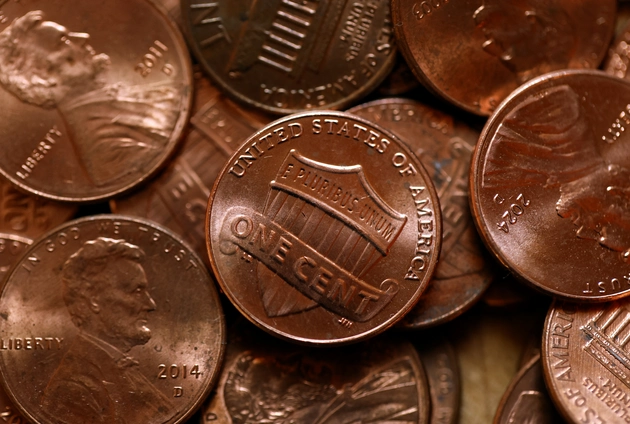
The Penny’s Fate Under Review as Lawmakers Revisit Costs and Consumer Impact
The iconic penny is once again at the center of national discussion as new economic reports and federal debates highlight the long-standing question: Are pennies going away? According to recent coverage, the U.S. government is reassessing whether to continue producing penny coins, sparking renewed conversation about inflation, tradition, and the cost of minting America’s smallest denomination.
The conversation resurfaced after new analysis revealed that the cost to make the penny has remained above its face value for nearly two decades. As the nation examines ways to modernize its currency system, many now wonder whether the penny will finally be discontinued.
Why the Penny Is Being Reconsidered
For years, critics have argued that the penny no longer holds meaningful purchasing power. Today, the U.S. Mint spends more than a cent to produce each coin — a fact that has intensified calls to phase it out.
Key reasons the government is reviewing the penny include:
- Rising manufacturing costs
- Inefficiency in cash transactions
- Low purchasing value due to inflation
- Minimal usefulness in the digital-payment era
This has reignited discussions about whether pennies are being discontinued and if keeping them in circulation still makes economic sense.
Financial Cost: Making a Penny Costs More Than One Cent
One of the strongest arguments for discontinuation lies in pure economics. Reports show that the Mint spends about 2.2 cents to create a single penny. This means taxpayers lose tens of millions of dollars annually on production alone.
Supporters of discontinuation argue that eliminating the penny could save the government hundreds of millions over time — money that could be redirected toward modernizing currency systems or digital infrastructure.
Are Pennies Going Away?
While no final decision has been made, lawmakers and economists are signaling that the conversation is gaining momentum. Several countries — including Canada, Australia, and New Zealand — have already eliminated their one-cent coins with minimal public disruption.
The U.S. is now analyzing whether similar steps could work domestically. Convenience stores, banks, and cash-heavy businesses have reported increasing support for rounding systems if no more pennies are produced.
This raises major questions:
- Did they stop making pennies?
No — production is still ongoing as of 2025. - Are pennies being discontinued soon?
Possibly — discussions are active, but no legislation has passed yet. - Would rounding create price increases?
Studies suggest rounding has negligible impact, due to competition and digital payments.
The Cultural Legacy of the Penny
Beyond economics, the penny carries emotional and historical weight for many Americans. Featuring Abraham Lincoln since 1909, the coin has become a symbol of thrift, nostalgia, childhood savings, and charitable drives.
Collectors and historians argue that removing the penny erases a small but meaningful part of American identity. Charitable organizations that rely on penny drives also express concern about potential fundraising declines.
Still, many consumers say pennies slow down transactions and clutter wallets, adding fuel to the debate about modernizing the currency.
What Happens If the Penny Is Discontinued?
If the government decides to eliminate penny coins, several changes would follow:
1. Cash transactions would round to the nearest 5 cents
This system works effectively in Canada, with minimal pricing impact.
2. Existing pennies would remain legal tender
Consumers could still use their existing coins or redeem them at banks.
3. Coin collectors may see rising value
Older pennies, especially copper-era coins, could increase in worth.
4. Businesses would need minor cash-handling adjustments
Point-of-sale systems would adopt new rounding rules.
Digital payments — now dominating consumer spending — would remain exact and unaffected.
Public Reaction: Mixed, but Leaning Toward Change
Recent surveys show growing support for discontinuing the penny, especially among younger Americans and businesses that rely on fast transactions. Meanwhile, older generations and collectors tend to oppose the change.
The mixed sentiment reflects a broader cultural debate: modernization vs. tradition.
Conclusion
As federal discussions escalate, the future of the penny remains uncertain — but pressure is building. Rising production costs, inflation, and shifting consumer behavior have all intensified the national conversation about whether pennies are going away for good.
While the penny isn’t discontinued yet, its long-term survival is clearly in question.For more updates on business, finance, and policy changes, visit StartupNews.fyi.


