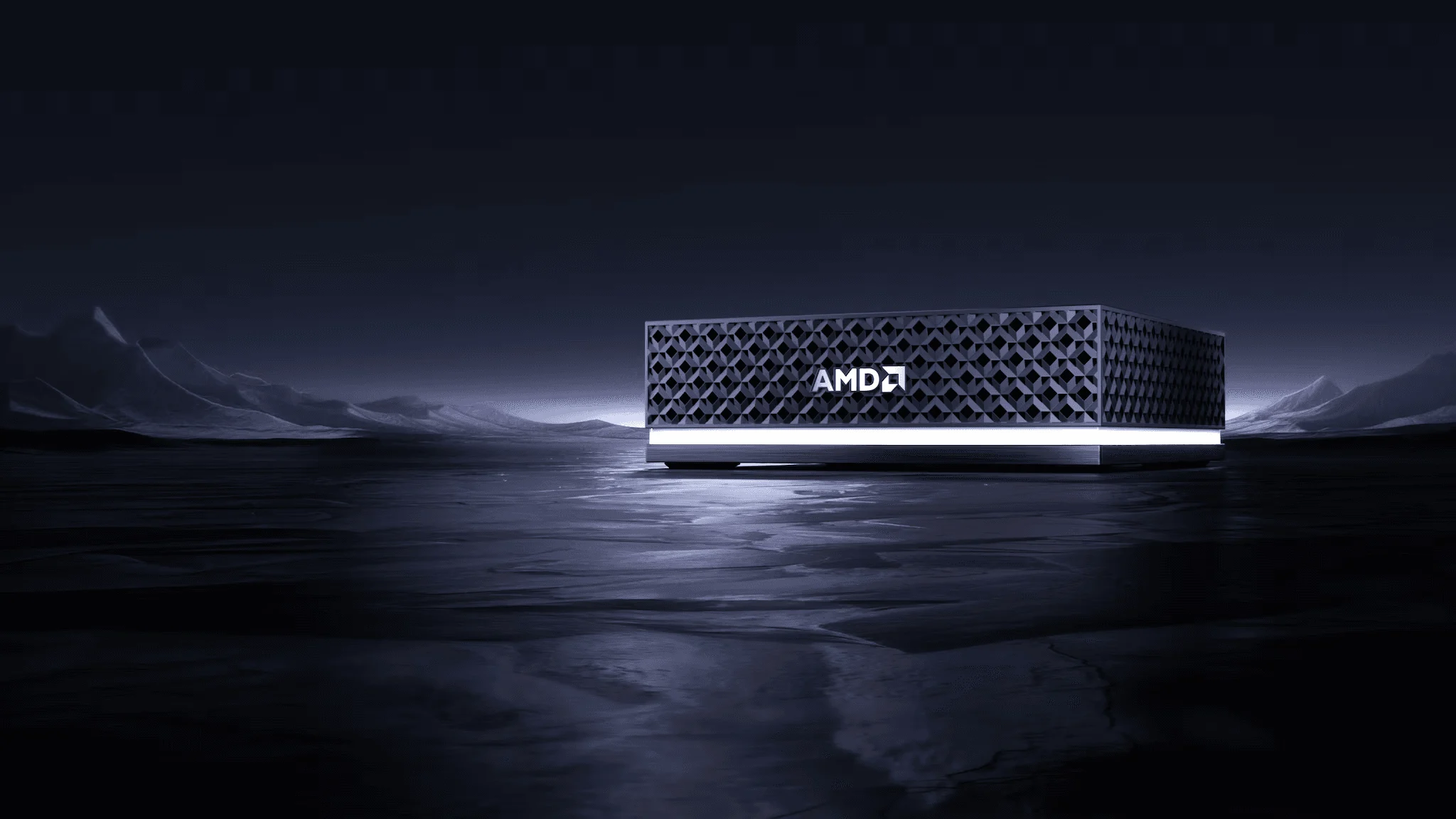
Advanced Micro Devices signaled its growing ambitions in artificial intelligence hardware at Consumer Electronics Show (CES) 2026, where CEO Lisa Su showcased a new generation of AI processors designed to push AMD deeper into data centers, enterprise infrastructure, and AI-powered personal computing. The announcements underline AMD’s strategy to expand beyond traditional CPUs and GPUs and compete more aggressively in a market still dominated by Nvidia.
Speaking during AMD’s keynote in Las Vegas, Su highlighted the company’s latest data center accelerators, including the advanced MI455 processors, while also unveiling a new enterprise-focused chip aimed at bringing AI workloads into conventional business infrastructure.
MI455 and the Push Into Data Centers
At the center of AMD’s CES announcements was the MI455, part of the company’s evolving MI400 series of AI accelerators. These chips are designed to serve as core components in large-scale data center server racks and are already being sold to major customers, including OpenAI, the maker of ChatGPT.
The MI455 is positioned as a high-performance alternative for companies building massive AI training and inference systems. AMD sees this segment as critical to its long-term growth, especially as hyperscalers and AI labs continue to invest heavily in computing capacity to support larger and more capable models.
Su emphasized that performance improvements at the chip level remain essential as AI systems grow in complexity, scale, and energy demand.
Introducing the MI440X for Enterprise AI
Alongside the data center-focused MI455, AMD announced the MI440X, an enterprise variant of its MI400 series tailored for on-premise deployment. Unlike chips designed specifically for tightly integrated AI clusters, the MI440X is built to fit into existing enterprise infrastructure that was not originally designed with AI workloads in mind.
This makes the MI440X particularly relevant for businesses looking to adopt AI internally—such as for analytics, automation, or proprietary models—without overhauling their data center architecture. AMD noted that the MI440X is derived from an earlier chip design that the US government plans to use in a supercomputing system, lending it credibility for high-performance and mission-critical workloads.
Competing With Nvidia, One Step at a Time
AMD remains one of Nvidia’s strongest competitors in AI hardware, but the gap between the two remains significant. Nvidia continues to sell every AI chip it can manufacture, generating tens of billions of dollars in quarterly revenue from AI accelerators alone—a scale AMD has yet to match.
Still, AMD’s progress has not gone unnoticed. In October, the company signed a major deal with OpenAI, a move analysts described as both a financial boost and a vote of confidence in AMD’s AI chips and software ecosystem. While the agreement is unlikely to immediately dent Nvidia’s dominance, it positions AMD as a credible second source for high-performance AI compute.
At the CES event, Greg Brockman joined Su on stage and stressed that continued advancements in chip technology are critical to meeting OpenAI’s rapidly expanding computing needs.
Looking Ahead: MI500 and Exponential Gains
Beyond current products, Su offered a glimpse into AMD’s longer-term roadmap. She previewed the upcoming MI500 series, stating that it would deliver 1,000 times the performance of an older generation of AMD AI processors. According to the company, the MI500 chips are expected to launch in 2027, targeting the next wave of large-scale AI systems.
If delivered as promised, such gains would be aimed squarely at the most demanding AI workloads, including frontier model training and advanced inference at scale.
AI Beyond Chips: Humanoid Robots on Stage
CES also gave AMD an opportunity to highlight how AI hardware is enabling new applications. Su was joined on stage by Daniele Pucci, CEO of Italian AI developer Generative Bionics, who unveiled GENE.01, a humanoid robot powered by advanced AI systems.
Pucci said the company’s first commercial humanoid robot is expected to enter manufacturing in the second half of 2026, underscoring how AI compute advances are increasingly tied to robotics and embodied intelligence.
Expanding Into AI PCs
In addition to data center and enterprise chips, AMD also launched its Ryzen AI 400 Series processors for AI-powered PCs, along with Ryzen AI Max+ chips aimed at advanced local inference and gaming. These products reflect AMD’s push to bring AI acceleration closer to end users, enabling on-device workloads without relying entirely on the cloud.
The announcements came as competitors also made moves at CES. Earlier in the day, Nvidia showcased its next-generation Vera Rubin platform, while Intel introduced its upcoming Panther Lake processors.
A Gradual but Strategic Climb
With new AI accelerators, enterprise-focused chips, and AI PC processors, AMD is methodically expanding its presence across the AI compute stack. While Nvidia remains firmly in the lead, AMD’s CES 2026 showcase made one thing clear: the company is positioning itself for sustained competition in an AI market that shows no signs of slowing.