Why More Gamers Than Ever Are Returning to the 2000s Classic RuneScape

Share via:

Imagine calling friends on a landline, ordering a pizza, and booting up RuneScape on a desktop PC. For many players who grew up in the early 2000s, that ritual is inseparable from memories of dial-up internet, MSN Messenger, and file-sharing services like Napster. What’s surprising is not that RuneScape evokes nostalgia—but that, in 2025, it is attracting more players than at any point in its 25-year history.

According to Jagex, the studio behind RuneScape, the game’s paid membership base grew to well over one million in 2025, marking a 30% increase from the start of the year. Millions more continue to play for free. At its peak, RuneScape recorded more than 240,000 concurrent players, the highest number ever logged simultaneously. To put that in perspective, at the time of writing, only three games on Steam regularly exceed that level of concurrent activity.

Old School RuneScape and the Power of Nostalgia

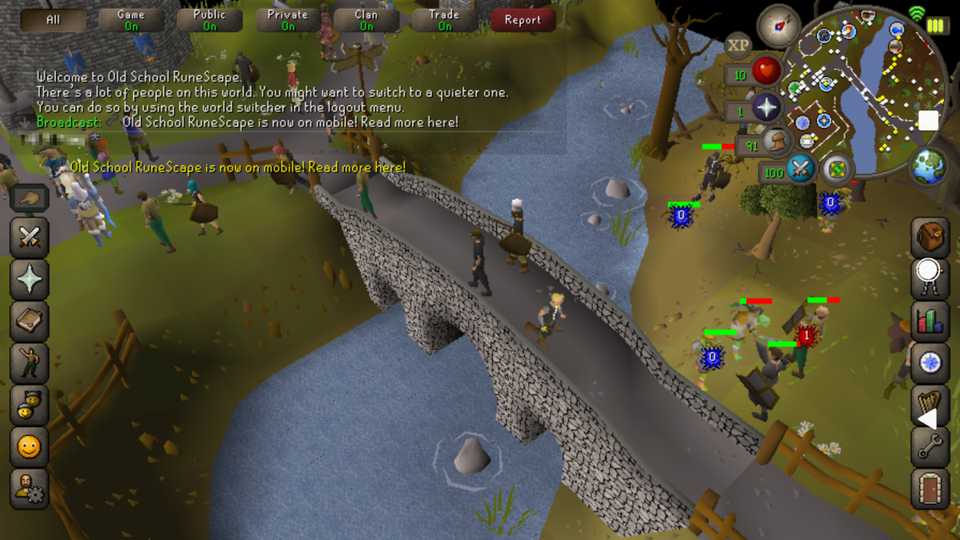
Most of this resurgence is being driven by Old School RuneScape, a version of the game that intentionally preserves its retro aesthetic and mechanics. Old School RuneScape began as a snapshot of the game exactly as it existed in 2007, before years of modernisation reshaped the original experience. Since then, it has expanded with new quests, areas, and features—but always through a lens of preserving what fans call the game’s “RuneScapiness.”

Back in the early 2000s, RuneScape stood out as one of the first massively multiplayer online games that could be played directly in a web browser, with no downloads required. Its accessible design, social gameplay, and distinctly British humour allowed it to spread rapidly through word of mouth, particularly among younger players who didn’t own high-end gaming PCs.

Two Games, One World

Today, RuneScape exists as two parallel experiences. There is RuneScape, often referred to by fans as RS3, which features updated graphics, new systems, and modern MMO conventions. Alongside it sits Old School RuneScape, which deliberately leans into its 2000s roots.

While newer MMOs such as World of Warcraft and Final Fantasy XIV boast larger daily player bases, RuneScape’s revival is notable because it is happening despite its age—not in spite of it.

https://runescape.wiki/images/thumb/Gielinor_map.png/300px-Gielinor_map.png?a999d=

“RuneScapiness” and Community-First Design

“There’s a term called ‘RuneScapiness’ that’s hard to nail down,” said Molly Mason, a game designer at Jagex, speaking to the BBC. “But part of it is the British humour—the Monty Python-style absurdity that runs through the game.”

Mason herself started playing RuneScape during a Halloween event in 2008 before eventually joining the development team. She believes the game’s community-driven design is central to its longevity, a view echoed by Jagex’s CEO Jon Bellamy, who took on the role in 2025.

Bellamy, a long-time player, has introduced changes that would be considered radical in many modern games. One of the most significant was allowing players to vote on whether to remove many in-game microtransactions—a major revenue stream across the industry. Players overwhelmingly voted to eliminate them, a move that won Jagex considerable goodwill.

Betting on Trust Over Short-Term Revenue

“This comes with real financial ramifications,” Bellamy said. “But with a 10- or 15-year view, my gut says this is the right thing to do.” The studio has also invested heavily in anti-cheating measures, user interface improvements, and updates designed to reduce pressure on players to log in every day.

The result, Bellamy says, is that Old School RuneScape has become “the fastest-growing MMO in the world right now”—a claim that feels almost paradoxical given the game’s age.

A Social World That Grows With Its Players

For many players, RuneScape’s appeal goes beyond gameplay mechanics. Megan, a Twitch streamer with around 20,000 followers, describes the game as something built “with” its community rather than simply “for” it. She says many players prefer RuneScape as a kind of time capsule—familiar, stable, and deeply social.

That social fabric has had real-world consequences. Multiple players told stories of friendships, marriages, and even international moves that began inside the world of Gielinor. YouTuber Ryan, known as The RS Guy, says he met his wife through the game, calling such stories “commonplace” within the RuneScape community.

You Never Quit RuneScape—You Just Take a Break

For Mason, that sentiment captures the essence of RuneScape’s enduring appeal. “We have a phrase,” she said. “You never quit RuneScape—you just take a break. The game will always be there, your character will always be there.”

In an era dominated by live-service games chasing constant novelty, RuneScape’s resurgence suggests something else matters just as much: familiarity, community, and a sense of continuity that players can return to—no matter how much time has passed.


Disclaimer

We strive to uphold the highest ethical standards in all of our reporting and coverage. We StartupNews.fyi want to be transparent with our readers about any potential conflicts of interest that may arise in our work. It’s possible that some of the investors we feature may have connections to other businesses, including competitors or companies we write about. However, we want to assure our readers that this will not have any impact on the integrity or impartiality of our reporting. We are committed to delivering accurate, unbiased news and information to our audience, and we will continue to uphold our ethics and principles in all of our work. Thank you for your trust and support.

Popular

More Like this

Why More Gamers Than Ever Are Returning to the 2000s Classic RuneScape

Imagine calling friends on a landline, ordering a pizza, and booting up RuneScape on a desktop PC. For many players who grew up in the early 2000s, that ritual is inseparable from memories of dial-up internet, MSN Messenger, and file-sharing services like Napster. What’s surprising is not that RuneScape evokes nostalgia—but that, in 2025, it is attracting more players than at any point in its 25-year history.

According to Jagex, the studio behind RuneScape, the game’s paid membership base grew to well over one million in 2025, marking a 30% increase from the start of the year. Millions more continue to play for free. At its peak, RuneScape recorded more than 240,000 concurrent players, the highest number ever logged simultaneously. To put that in perspective, at the time of writing, only three games on Steam regularly exceed that level of concurrent activity.

Old School RuneScape and the Power of Nostalgia

Most of this resurgence is being driven by Old School RuneScape, a version of the game that intentionally preserves its retro aesthetic and mechanics. Old School RuneScape began as a snapshot of the game exactly as it existed in 2007, before years of modernisation reshaped the original experience. Since then, it has expanded with new quests, areas, and features—but always through a lens of preserving what fans call the game’s “RuneScapiness.”

Back in the early 2000s, RuneScape stood out as one of the first massively multiplayer online games that could be played directly in a web browser, with no downloads required. Its accessible design, social gameplay, and distinctly British humour allowed it to spread rapidly through word of mouth, particularly among younger players who didn’t own high-end gaming PCs.

Two Games, One World

Today, RuneScape exists as two parallel experiences. There is RuneScape, often referred to by fans as RS3, which features updated graphics, new systems, and modern MMO conventions. Alongside it sits Old School RuneScape, which deliberately leans into its 2000s roots.

While newer MMOs such as World of Warcraft and Final Fantasy XIV boast larger daily player bases, RuneScape’s revival is notable because it is happening despite its age—not in spite of it.

https://runescape.wiki/images/thumb/Gielinor_map.png/300px-Gielinor_map.png?a999d=

“RuneScapiness” and Community-First Design

“There’s a term called ‘RuneScapiness’ that’s hard to nail down,” said Molly Mason, a game designer at Jagex, speaking to the BBC. “But part of it is the British humour—the Monty Python-style absurdity that runs through the game.”

Mason herself started playing RuneScape during a Halloween event in 2008 before eventually joining the development team. She believes the game’s community-driven design is central to its longevity, a view echoed by Jagex’s CEO Jon Bellamy, who took on the role in 2025.

Bellamy, a long-time player, has introduced changes that would be considered radical in many modern games. One of the most significant was allowing players to vote on whether to remove many in-game microtransactions—a major revenue stream across the industry. Players overwhelmingly voted to eliminate them, a move that won Jagex considerable goodwill.

Betting on Trust Over Short-Term Revenue

“This comes with real financial ramifications,” Bellamy said. “But with a 10- or 15-year view, my gut says this is the right thing to do.” The studio has also invested heavily in anti-cheating measures, user interface improvements, and updates designed to reduce pressure on players to log in every day.

The result, Bellamy says, is that Old School RuneScape has become “the fastest-growing MMO in the world right now”—a claim that feels almost paradoxical given the game’s age.

A Social World That Grows With Its Players

For many players, RuneScape’s appeal goes beyond gameplay mechanics. Megan, a Twitch streamer with around 20,000 followers, describes the game as something built “with” its community rather than simply “for” it. She says many players prefer RuneScape as a kind of time capsule—familiar, stable, and deeply social.

That social fabric has had real-world consequences. Multiple players told stories of friendships, marriages, and even international moves that began inside the world of Gielinor. YouTuber Ryan, known as The RS Guy, says he met his wife through the game, calling such stories “commonplace” within the RuneScape community.

You Never Quit RuneScape—You Just Take a Break

For Mason, that sentiment captures the essence of RuneScape’s enduring appeal. “We have a phrase,” she said. “You never quit RuneScape—you just take a break. The game will always be there, your character will always be there.”

In an era dominated by live-service games chasing constant novelty, RuneScape’s resurgence suggests something else matters just as much: familiarity, community, and a sense of continuity that players can return to—no matter how much time has passed.

Disclaimer

We strive to uphold the highest ethical standards in all of our reporting and coverage. We StartupNews.fyi want to be transparent with our readers about any potential conflicts of interest that may arise in our work. It’s possible that some of the investors we feature may have connections to other businesses, including competitors or companies we write about. However, we want to assure our readers that this will not have any impact on the integrity or impartiality of our reporting. We are committed to delivering accurate, unbiased news and information to our audience, and we will continue to uphold our ethics and principles in all of our work. Thank you for your trust and support.

Website Upgradation is going on for any glitch kindly connect at office@startupnews.fyi

More like this

T-Mobile just announced its first fee increase of the...

Joe Maring / Android AuthorityTL;DR T-Mobile is raising its Regulatory...

WhatsApp Enhances Group Chats With Three New Features

WhatsApp announced three new group chat features today, expanding...

Fortnite, Call of Duty, are Xbox’s most played games...

2025 is behind us and as always, we played...

Popular

iptv iptv iptv iptv iptv iptv iptv iptv iptv iptv