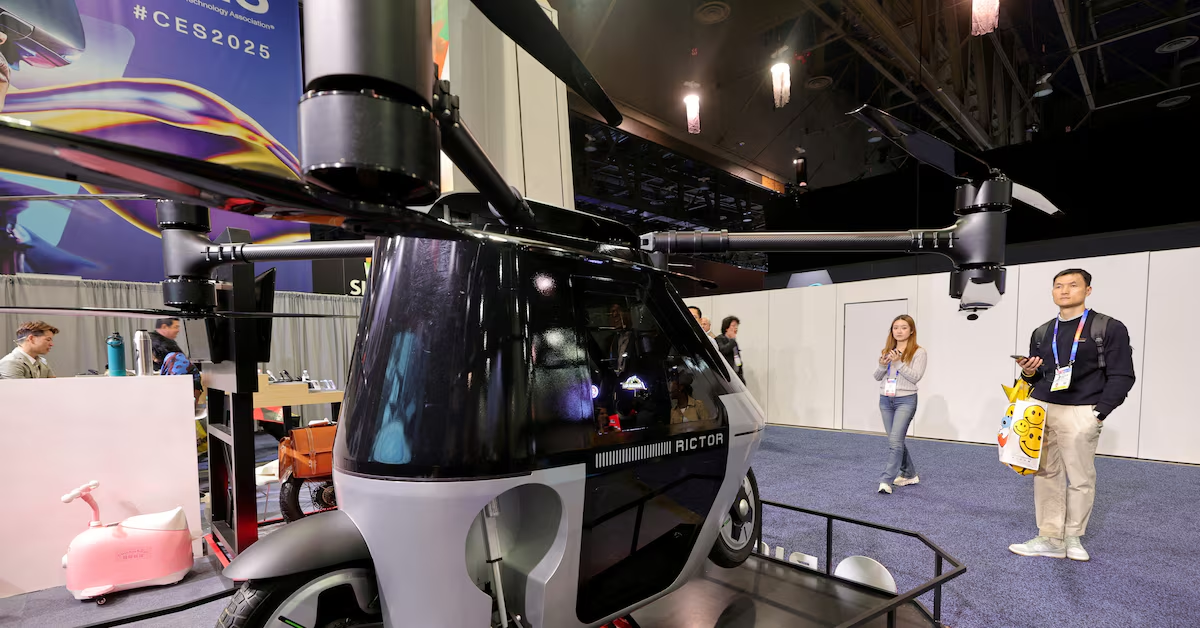
Self-Driving Tech and AI Take Center Stage at CES as Automakers Dial Back EV Plans

Share via:

As the global auto industry converges on Las Vegas for Consumer Electronics Show (CES) this week, the spotlight has shifted decisively away from electric vehicles and toward autonomous driving and artificial intelligence. With EV momentum slowing and profitability under pressure, automakers and suppliers are increasingly betting that AI-powered autonomy will be the next major growth engine.

Investors, too, are watching closely. After years of heavy spending, slow rollout, safety setbacks, and regulatory scrutiny, autonomous driving is once again being positioned as the technology that could reinvigorate an industry searching for its next breakthrough.

EV Momentum Fades as Strategy Resets

For much of the past decade, CES evolved into a de facto auto show, with carmakers using the stage to debut sleek new electric vehicles and ambitious electrification roadmaps. That narrative has weakened considerably.

A pullback in EV-friendly incentives and policies under Donald Trump has dampened demand in the United States, forcing several automakers to delay or cancel planned EV launches. High battery costs, uneven charging infrastructure, and slowing consumer adoption have further pushed manufacturers to rethink timelines and capital allocation.

As a result, CES 2026 features noticeably fewer headline-grabbing EV reveals. Instead, the emphasis has moved toward software, intelligence, and automation—areas where companies believe value creation may be faster and margins more defensible.

AI and Autonomy Move to the Forefront

“This year you will see more and more focus on AI and autonomous,” said PwC U.S. automotive industry leader C.J. Finn, noting that how companies deploy AI to safely scale driverless technology will be under intense scrutiny. According to Finn, the convergence of connectivity, AI, and autonomy is expected to be front and center across the show floor.

Auto suppliers and startups are lining up to showcase new autonomous vehicle stacks—ranging from perception software and decision-making algorithms to advanced sensors and compute platforms. Several partnerships and pilot programs are expected to be announced, many aimed at reducing or eliminating the role of a human driver in specific environments.
Tech Giants Step Deeper Into the Auto Stack

CES 2026’s speaker lineup underscores the growing influence of chipmakers and AI infrastructure providers in the automotive future. Jensen Huang, CEO of Nvidia, and Lisa Su, CEO of AMD, are among the most closely watched keynote speakers.

Their presence reflects a broader industry reality: modern autonomous vehicles are as much data centers on wheels as they are cars. High-performance chips, AI accelerators, and real-time processing capabilities are now central to vehicle differentiation, making traditional automakers increasingly dependent on Silicon Valley.

AI, however, is not confined to cars alone. CES will also highlight its integration into robotics, wearables, home devices, and health technology—reinforcing the idea that autonomy in vehicles is part of a much larger shift toward intelligent systems embedded everywhere.

A Cautious Revival for Driverless Vehicles

Commercialising autonomous vehicles has proven far more difficult than early hype suggested. Years of heavy investment have been followed by regulatory pushback, investigations after high-profile collisions, and the shutdown of several once-promising startups.

Still, recent progress has given the sector renewed momentum. Tesla’s limited robotaxi rollout in Austin last year—operating with safety monitors—demonstrated a cautious but tangible step toward autonomous services. At the same time, Waymo, owned by Alphabet, has continued expanding its driverless ride-hailing operations more quickly than many rivals expected.

These developments have helped reframe autonomy not as a moonshot, but as a gradual, use-case-driven deployment.

Driver Assistance Evolves Toward “Eyes-Off”

Beyond robotaxis, significant progress is also being made in advanced driver-assistance systems for consumer vehicles. Several automakers now offer hands-free highway driving, automatic lane changes, and increasingly sophisticated traffic management features.

Some manufacturers are pushing further. Rivian, for example, has signalled ambitions to introduce “eyes-off” driving in certain conditions and eventually extend self-driving capabilities to city streets. These incremental steps are seen as more realistic paths to autonomy than full, unrestricted driverless operation.

A Strategic Pivot, Not a Retreat

The shift away from EV-centric messaging at CES does not signal abandonment, but reprioritisation. Automakers remain committed to electrification, but the immediate focus is turning to technologies that can unlock new revenue streams, reduce labour costs, and differentiate vehicles in a crowded market.

Autonomy and AI fit that bill—at least in theory. Whether they can deliver at scale, safely and profitably, remains the industry’s defining question.

At CES 2026, one thing is clear: as EV ambitions cool, the race to build intelligent, autonomous vehicles is heating up again, with AI firmly in the driver’s seat.


Disclaimer

We strive to uphold the highest ethical standards in all of our reporting and coverage. We StartupNews.fyi want to be transparent with our readers about any potential conflicts of interest that may arise in our work. It’s possible that some of the investors we feature may have connections to other businesses, including competitors or companies we write about. However, we want to assure our readers that this will not have any impact on the integrity or impartiality of our reporting. We are committed to delivering accurate, unbiased news and information to our audience, and we will continue to uphold our ethics and principles in all of our work. Thank you for your trust and support.

Popular

More Like this

Self-Driving Tech and AI Take Center Stage at CES as Automakers Dial Back EV Plans

As the global auto industry converges on Las Vegas for Consumer Electronics Show (CES) this week, the spotlight has shifted decisively away from electric vehicles and toward autonomous driving and artificial intelligence. With EV momentum slowing and profitability under pressure, automakers and suppliers are increasingly betting that AI-powered autonomy will be the next major growth engine.

Investors, too, are watching closely. After years of heavy spending, slow rollout, safety setbacks, and regulatory scrutiny, autonomous driving is once again being positioned as the technology that could reinvigorate an industry searching for its next breakthrough.

EV Momentum Fades as Strategy Resets

For much of the past decade, CES evolved into a de facto auto show, with carmakers using the stage to debut sleek new electric vehicles and ambitious electrification roadmaps. That narrative has weakened considerably.

A pullback in EV-friendly incentives and policies under Donald Trump has dampened demand in the United States, forcing several automakers to delay or cancel planned EV launches. High battery costs, uneven charging infrastructure, and slowing consumer adoption have further pushed manufacturers to rethink timelines and capital allocation.

As a result, CES 2026 features noticeably fewer headline-grabbing EV reveals. Instead, the emphasis has moved toward software, intelligence, and automation—areas where companies believe value creation may be faster and margins more defensible.

AI and Autonomy Move to the Forefront

“This year you will see more and more focus on AI and autonomous,” said PwC U.S. automotive industry leader C.J. Finn, noting that how companies deploy AI to safely scale driverless technology will be under intense scrutiny. According to Finn, the convergence of connectivity, AI, and autonomy is expected to be front and center across the show floor.

Auto suppliers and startups are lining up to showcase new autonomous vehicle stacks—ranging from perception software and decision-making algorithms to advanced sensors and compute platforms. Several partnerships and pilot programs are expected to be announced, many aimed at reducing or eliminating the role of a human driver in specific environments.

Tech Giants Step Deeper Into the Auto Stack

CES 2026’s speaker lineup underscores the growing influence of chipmakers and AI infrastructure providers in the automotive future. Jensen Huang, CEO of Nvidia, and Lisa Su, CEO of AMD, are among the most closely watched keynote speakers.

Their presence reflects a broader industry reality: modern autonomous vehicles are as much data centers on wheels as they are cars. High-performance chips, AI accelerators, and real-time processing capabilities are now central to vehicle differentiation, making traditional automakers increasingly dependent on Silicon Valley.

AI, however, is not confined to cars alone. CES will also highlight its integration into robotics, wearables, home devices, and health technology—reinforcing the idea that autonomy in vehicles is part of a much larger shift toward intelligent systems embedded everywhere.

A Cautious Revival for Driverless Vehicles

Commercialising autonomous vehicles has proven far more difficult than early hype suggested. Years of heavy investment have been followed by regulatory pushback, investigations after high-profile collisions, and the shutdown of several once-promising startups.

Still, recent progress has given the sector renewed momentum. Tesla’s limited robotaxi rollout in Austin last year—operating with safety monitors—demonstrated a cautious but tangible step toward autonomous services. At the same time, Waymo, owned by Alphabet, has continued expanding its driverless ride-hailing operations more quickly than many rivals expected.

These developments have helped reframe autonomy not as a moonshot, but as a gradual, use-case-driven deployment.

Driver Assistance Evolves Toward “Eyes-Off”

Beyond robotaxis, significant progress is also being made in advanced driver-assistance systems for consumer vehicles. Several automakers now offer hands-free highway driving, automatic lane changes, and increasingly sophisticated traffic management features.

Some manufacturers are pushing further. Rivian, for example, has signalled ambitions to introduce “eyes-off” driving in certain conditions and eventually extend self-driving capabilities to city streets. These incremental steps are seen as more realistic paths to autonomy than full, unrestricted driverless operation.

A Strategic Pivot, Not a Retreat

The shift away from EV-centric messaging at CES does not signal abandonment, but reprioritisation. Automakers remain committed to electrification, but the immediate focus is turning to technologies that can unlock new revenue streams, reduce labour costs, and differentiate vehicles in a crowded market.

Autonomy and AI fit that bill—at least in theory. Whether they can deliver at scale, safely and profitably, remains the industry’s defining question.

At CES 2026, one thing is clear: as EV ambitions cool, the race to build intelligent, autonomous vehicles is heating up again, with AI firmly in the driver’s seat.

Disclaimer

We strive to uphold the highest ethical standards in all of our reporting and coverage. We StartupNews.fyi want to be transparent with our readers about any potential conflicts of interest that may arise in our work. It’s possible that some of the investors we feature may have connections to other businesses, including competitors or companies we write about. However, we want to assure our readers that this will not have any impact on the integrity or impartiality of our reporting. We are committed to delivering accurate, unbiased news and information to our audience, and we will continue to uphold our ethics and principles in all of our work. Thank you for your trust and support.

Website Upgradation is going on for any glitch kindly connect at office@startupnews.fyi

More like this

Meesho elevates Milan Partani as GM of Commerce Platform;...

E-commerce marketplace Meesho has reported changes in its...

Hiring Interns in Luxembourg? This Is What You Need...

Planning to bring interns on board in 2026?...

New Records Reveal the Mess RFK Jr. Left When...

At this point, it’s useful to examine what precisely...

Popular

iptv iptv iptv iptv iptv iptv iptv iptv iptv iptv iptv iptv iptv iptv iptv iptv iptv iptv iptv iptv