
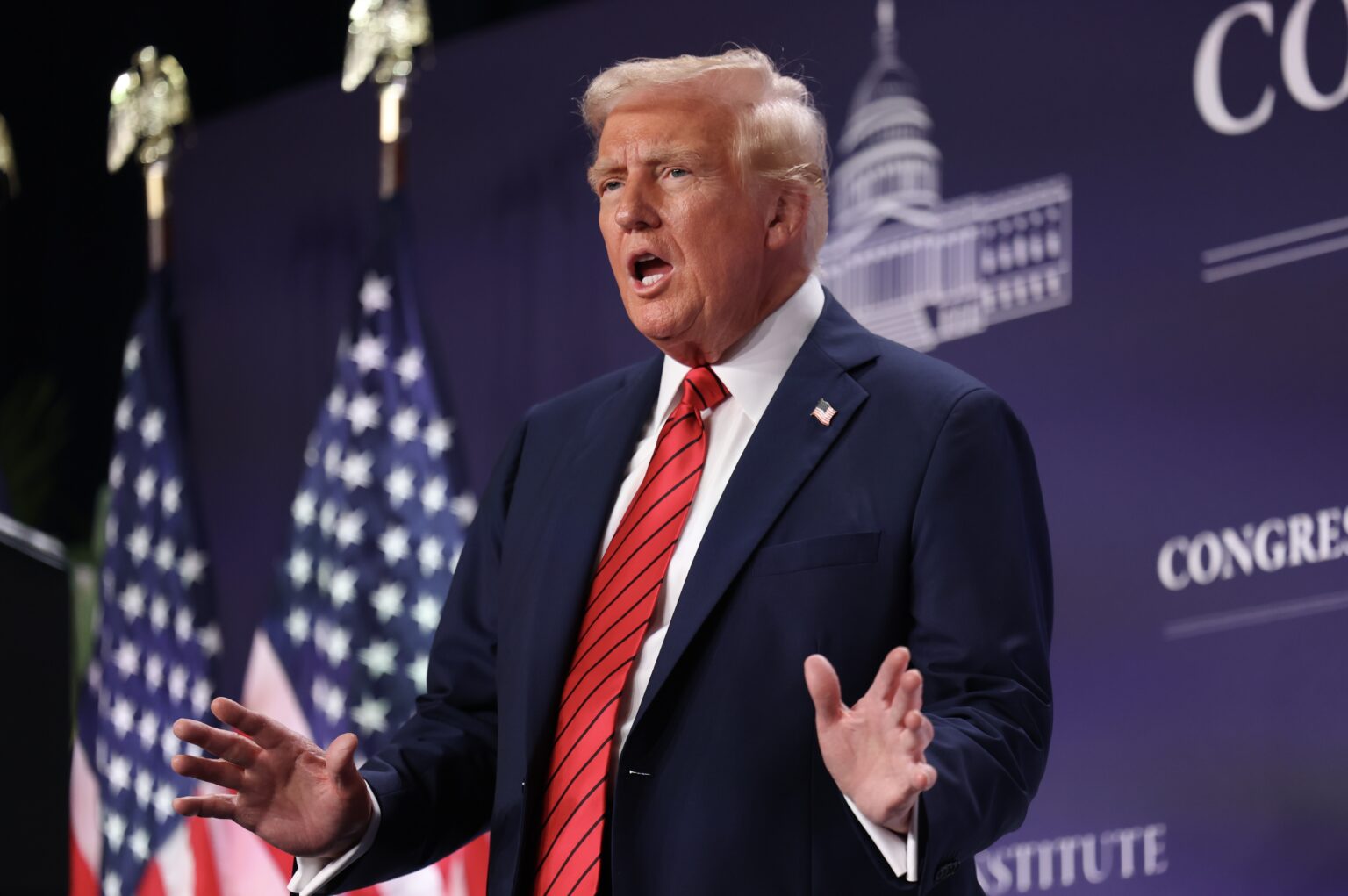
Former U.S. President Donald Trump publicly defended Immigration and Customs Enforcement (ICE) and offered an early characterization of a recent shooting before investigators released full details. The comments have drawn criticism from civil rights groups, legal experts, and political opponents, who argue the response risks politicizing an active investigation and undermining public trust.
Introduction
In the aftermath of a recent shooting connected to immigration enforcement, Donald Trump moved quickly to defend U.S. Immigration and Customs Enforcement (ICE) and to frame the incident publicly before authorities had completed their investigation.
The remarks, delivered as details were still emerging, reignited long-running debates over immigration enforcement, political rhetoric, and the appropriate role of public officials when facts are not yet established. Supporters praised Trump for backing law enforcement, while critics warned that premature conclusions could influence public perception and complicate accountability.
What Trump Said—and Why Timing Matters
Trump’s response emphasized support for ICE officers and portrayed the agency as operating under difficult and dangerous conditions. He suggested an interpretation of events that aligned with his broader immigration stance, stressing security and enforcement priorities.
However, the comments came at a moment when investigators had not yet released a comprehensive account of what occurred. Law enforcement agencies typically caution against speculation during active inquiries, noting that early narratives can change as evidence is reviewed.
Legal scholars point out that statements by prominent political figures can shape public expectations long before official findings are available, potentially creating pressure on investigators or witnesses.
ICE and the Political Context
ICE has long been a flashpoint in U.S. politics. Established in the early 2000s, the agency’s mandate includes immigration enforcement and investigations related to cross-border crime. Over the past decade, ICE operations have become central to national debates over immigration policy, civil liberties, and executive authority.
Trump’s presidency elevated ICE’s profile, with the agency frequently cited as a key instrument in enforcing stricter immigration rules. His continued defense of ICE reflects a consistent political message aimed at voters who prioritize border security and law-and-order policies.
At the same time, critics argue that ICE’s expanded role has increased the risk of controversial encounters, making careful, fact-based responses essential when incidents occur.
The Shooting: What Is Known and What Is Not
At the time of Trump’s remarks, authorities had confirmed that a shooting occurred in connection with an ICE-related operation. Basic details—such as the location and the involvement of law enforcement—were acknowledged, but key facts remained under investigation.
Unresolved questions included:
- The precise sequence of events leading up to the shooting
- Whether protocols were followed
- The roles of all individuals involved
- Any contributing factors such as miscommunication or escalation
Law enforcement agencies typically release information incrementally to avoid compromising investigations. Critics argue that political commentary during this phase risks filling information gaps with assumptions.
Reactions From Civil Rights and Legal Experts
Civil rights organizations responded cautiously to Trump’s statements, urging patience and transparency. Several groups emphasized that defending an agency before facts are established can appear dismissive of accountability concerns.
Legal experts echoed those worries, noting that due process depends on allowing investigations to proceed without undue influence. They warned that framing incidents prematurely can:
- Skew public opinion
- Complicate jury selection if cases proceed
- Undermine confidence in impartial oversight
Some experts also stressed that public officials have a responsibility to avoid language that could escalate tensions or validate misinformation.
Supporters Applaud Law Enforcement Backing
Trump’s supporters, however, viewed his remarks as a necessary show of solidarity. They argue that ICE agents operate in high-risk environments and face increasing hostility.
From this perspective, early defense of the agency is seen as:
- Boosting morale among officers
- Countering what supporters describe as unfair criticism
- Reinforcing a strong stance on border enforcement
For many voters aligned with Trump’s immigration views, backing ICE remains a core issue, and the timing of the remarks was less concerning than the message itself.
Media and Political Scrutiny
The episode quickly became a focal point in political and media coverage. Commentators debated whether Trump’s response reflected leadership or recklessness.
Some outlets framed the issue as part of a broader pattern in which political figures seek to define narratives immediately after breaking news. Others highlighted the risks of conflating political messaging with ongoing criminal or administrative investigations.
The coverage also underscored how immigration-related incidents are often interpreted through sharply polarized lenses, with facts sometimes taking a back seat to ideology.
Broader Implications for Public Trust
Public trust in law enforcement and government institutions depends heavily on perceptions of fairness and transparency. When high-profile figures appear to pre-judge incidents, that trust can erode among communities already skeptical of enforcement agencies.
Research in public administration suggests that confidence declines when:
- Investigations appear politicized
- Officials seem to favor institutions over accountability
- Victims or affected communities feel unheard
In immigration enforcement contexts, these dynamics are particularly sensitive due to existing tensions between agencies and immigrant communities.
Immigration Enforcement and the Rule of Law
The controversy highlights a central challenge in immigration policy: balancing enforcement with accountability. Supporters of strict enforcement argue that agencies need political backing to function effectively. Critics counter that such backing must not come at the expense of impartial investigations.
The rule of law requires that incidents involving force be evaluated on evidence, not political alignment. When leaders comment early, they risk blurring that line.
This tension is not new, but the intensity of modern media cycles amplifies its impact. Statements made within hours can circulate globally, shaping narratives long before official reports are released.
Comparisons to Past Incidents
Observers have drawn parallels to previous cases where political leaders weighed in early on law enforcement incidents. In several high-profile examples across different administrations, early statements were later contradicted by investigative findings.
These precedents have fueled calls for restraint, with some former officials advocating a “facts first” approach. They argue that waiting for verified information ultimately protects both agencies and the public from misinformation.
The Role of Leadership in Crisis Moments
Crisis communication experts emphasize that leadership during unfolding events should prioritize clarity, empathy, and restraint. Effective responses often include:
- Acknowledging uncertainty
- Expressing concern for all affected parties
- Committing to transparency and accountability
Trump’s critics argue that his approach prioritizes political positioning over these principles. Supporters contend that decisiveness and loyalty to law enforcement are equally important leadership traits.
Political Stakes Moving Forward
As immigration remains a central issue in U.S. politics, incidents involving ICE are likely to continue drawing intense scrutiny. Trump’s comments reinforce his longstanding platform, which remains influential within his political base.
For opponents, the episode serves as evidence of what they describe as a pattern of undermining investigative norms. For supporters, it reaffirms a commitment to enforcement and authority.
The divergence illustrates how the same event can deepen existing divides rather than foster consensus.
Conclusion
Donald Trump’s decision to defend ICE and frame a shooting before full facts were established has once again placed immigration enforcement and political rhetoric at the center of national debate. The episode underscores the risks and responsibilities that come with public commentary during active investigations.
While supporters view the remarks as a necessary defense of law enforcement, critics warn that premature narratives can undermine due process and public trust. As investigators continue their work, the broader question remains unresolved: how political leaders should balance advocacy, accountability, and restraint in moments when facts are still unfolding.
Key Highlights
- Trump publicly defended ICE following a shooting linked to enforcement activity
- Remarks were made before investigators released full details
- Civil rights groups and legal experts urged caution and due process
- Supporters praised strong backing of law enforcement
- Incident highlights ongoing tensions around immigration enforcement


