
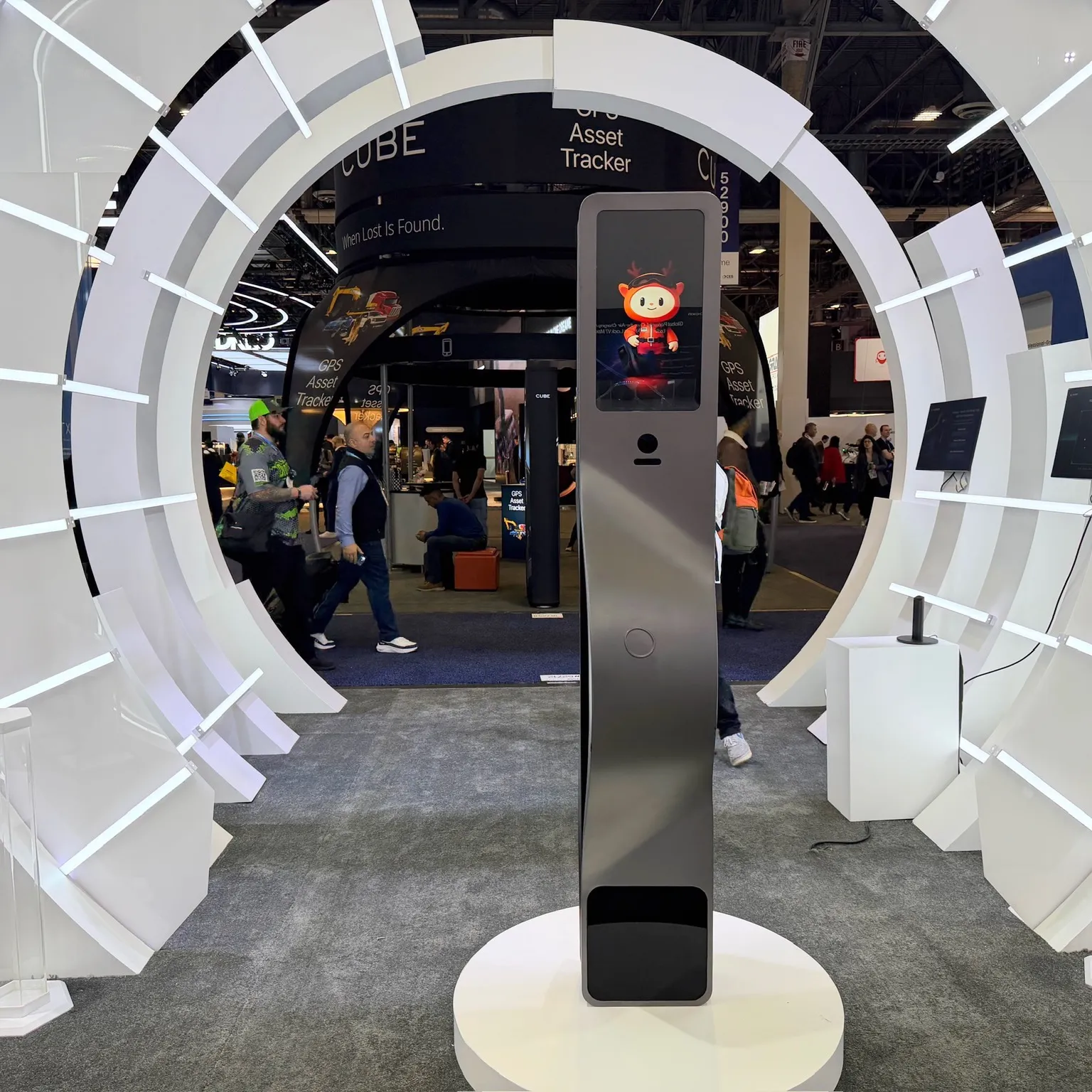
CES 2026 has emerged as a defining moment for the global technology industry, marking the transition from passive artificial intelligence to agentic AI systems capable of autonomous decision-making. As agentic AI reshapes consumer electronics, robotics, and smart home ecosystems, investors and manufacturers alike are responding with renewed confidence in hardware-driven innovation. The result is a notable market rotation toward companies building the physical infrastructure that enables intelligent, self-directed machines.
The Consumer Electronics Show has always reflected the direction of the technology industry, but CES 2026 stands out as a structural turning point. This year’s event introduced a clear shift away from AI systems that merely respond to user commands toward a new class of technologies described as agentic AI. These systems are designed not only to process information but also to take initiative, plan actions, and execute tasks across both digital and physical environments.
According to market analysis and reporting tied to CES 2026, the emergence of agentic AI is reshaping expectations across smartphones, appliances, robots, televisions, and smart home platforms. This evolution is not just technological but financial, as markets respond with renewed interest in hardware companies positioned to support this next phase of artificial intelligence.
Understanding the Rise of Agentic AI
Agentic AI represents a fundamental shift in how artificial intelligence operates. Instead of waiting for explicit prompts, these systems can set goals, evaluate outcomes, and adapt behavior over time. At CES 2026, agentic AI was not presented as a distant research concept. It appeared embedded across consumer and enterprise hardware, signaling readiness for real-world deployment.
This shift reflects years of progress in machine learning, sensor fusion, and edge computing. By combining local processing with contextual awareness, agentic AI systems can function with greater independence and reliability. CES 2026 demonstrated how this capability is moving beyond software platforms into physical devices that interact directly with the world.
Why CES 2026 Accelerated the Agentic AI Narrative
CES 2026 provided the ideal environment for agentic AI to take center stage. The show brought together device makers, chip manufacturers, software developers, and investors, allowing the full stack of AI-driven innovation to be visible at once. Rather than focusing on isolated AI features, many exhibitors emphasized systems that coordinate multiple components autonomously.
This holistic presentation helped clarify why agentic AI is gaining traction now. Advances in on-device processing and energy efficiency make it feasible for hardware to host increasingly complex intelligence. As a result, devices can make decisions locally, reducing latency and reliance on constant cloud connectivity. CES 2026 highlighted this shift as both a technological necessity and a competitive advantage.
Smartphones as Personal AI Agents
Although smartphones did not dominate headlines at CES 2026, they remain central to the agentic AI ecosystem. The best smartphone-related developments showcased how devices are evolving into personal AI agents capable of managing tasks proactively. Instead of reacting to user input, smartphones are increasingly positioned to anticipate needs, coordinate connected devices, and optimize daily routines.
This evolution reflects broader consumer expectations. Users want their devices to reduce friction rather than demand attention. Agentic AI enables smartphones to function as orchestrators within larger ecosystems, connecting appliances, wearables, vehicles, and smart homes into coherent systems.
Appliances Enter the Agentic AI Era
Home appliances at CES 2026 illustrated how agentic AI is reshaping even the most familiar categories. Rather than simply executing predefined programs, next-generation appliances demonstrated the ability to learn usage patterns, adjust behavior dynamically, and optimize performance without manual intervention.
These intelligent appliances operate as autonomous agents within the home environment. They manage energy consumption, schedule maintenance, and adapt to changing conditions. CES 2026 made it clear that appliances are no longer passive tools but active participants in intelligent living spaces.
Robots as the Most Visible Expression of Agentic AI
Robots provided the most tangible demonstration of agentic AI at CES 2026. Unlike earlier generations of robotic systems, which relied heavily on scripted behavior, many robots on display exhibited goal-oriented decision-making. They navigated complex environments, adjusted to unexpected obstacles, and coordinated actions without constant supervision.
Despite this progress, experts emphasized that agentic AI does not automatically translate into fully capable humanoid servants. The robotics industry is advancing through task-specific systems rather than general-purpose human analogues. CES 2026 reinforced the idea that meaningful autonomy is emerging incrementally, driven by practical applications rather than science fiction ideals.
Televisions and Displays Become Context-Aware Systems
Television technology at CES 2026 reflected the broader agentic AI trend through context-aware behavior. Modern displays no longer simply render content. They analyze ambient lighting, viewing habits, and content type to adjust performance dynamically. This intelligence operates continuously without requiring user input, exemplifying the shift toward autonomous optimization.
Agentic AI in televisions enhances user experience by making decisions that were previously manual. This approach aligns with the broader CES 2026 theme of intelligence that operates quietly in the background, improving outcomes without demanding attention.
Smart Homes as Coordinated AI Ecosystems
Smart home technology at CES 2026 showed how agentic AI can unify diverse devices into cohesive systems. Rather than relying on isolated automation rules, smart homes are evolving into environments managed by intelligent agents capable of understanding context and prioritizing goals.
Lighting, climate control, security, and entertainment systems increasingly coordinate through shared intelligence. Agentic AI allows these systems to respond to changing conditions holistically, balancing comfort, efficiency, and safety. CES 2026 positioned smart homes as one of the most immediate beneficiaries of this shift.
Market Rotation Toward Hardware and Infrastructure
The rise of agentic AI at CES 2026 has significant financial implications. Investors are increasingly rotating toward hardware and infrastructure companies that provide the foundation for autonomous intelligence. This includes chipmakers, sensor manufacturers, robotics firms, and device brands capable of integrating AI at scale.
After years of software-driven market dominance, CES 2026 highlighted why hardware is regaining importance. Agentic AI requires physical systems capable of perception, action, and local computation. This reality is driving renewed interest in companies that build the tangible components enabling intelligent autonomy.
Why Hardware Is Experiencing a Resurgence
The hardware resurgence observed around CES 2026 is not cyclical hype but structural change. Agentic AI depends on efficient processors, advanced sensors, and reliable power management. These requirements elevate the strategic importance of hardware innovation.
Unlike cloud-based AI, which concentrates value within a few platforms, agentic AI distributes intelligence across countless devices. This decentralization creates opportunities across the hardware supply chain. CES 2026 demonstrated how this shift is redefining competitive dynamics across the tech industry.
Agentic AI and the Shift From Cloud Dependence
Another defining aspect of agentic AI at CES 2026 is its reduced reliance on constant cloud connectivity. While cloud services remain essential for updates and large-scale learning, many agentic systems operate locally for responsiveness and privacy.
This hybrid model aligns with consumer expectations around reliability and data control. Devices that can think and act independently are less vulnerable to connectivity disruptions. CES 2026 positioned this balance between local and cloud intelligence as a cornerstone of future product design.
Economic and Strategic Implications
The emergence of agentic AI has implications beyond consumer electronics. Industries such as manufacturing, logistics, healthcare, and energy management are poised to benefit from autonomous systems capable of making real-time decisions. CES 2026 served as a convergence point where consumer and industrial applications of agentic AI intersected.
This convergence strengthens the case for long-term investment in AI-enabled hardware. As autonomous systems scale, demand for reliable physical infrastructure will continue to grow. CES 2026 provided early signals of this trajectory.
Challenges That Remain
Despite its promise, agentic AI faces meaningful challenges. Ensuring safety, transparency, and accountability in autonomous systems remains critical. Devices capable of independent action must operate within clearly defined boundaries to maintain trust.
CES 2026 discussions emphasized the importance of regulation, testing, and ethical frameworks. While agentic AI is advancing rapidly, responsible deployment will shape how quickly it gains widespread acceptance.
What CES 2026 Reveals About the Future of Technology
CES 2026 revealed a technology industry entering a new phase. The focus is no longer on adding AI features but on building systems capable of autonomous operation. This shift elevates hardware, reshapes markets, and redefines user expectations.
Agentic AI represents the next evolutionary step in artificial intelligence, one that blends cognition with action. CES 2026 showed that this future is approaching gradually, through practical deployments rather than dramatic leaps.
Conclusion
CES 2026 marked the dawn of the agentic AI era, reshaping how technology is built, valued, and experienced. Across smartphones, appliances, robots, televisions, and smart homes, autonomous intelligence emerged as the defining theme of the show. This shift is driving market rotation toward hardware and signaling a resurgence in physical technology innovation.
Rather than replacing humans, agentic AI is designed to work alongside them, reducing friction and increasing efficiency. CES 2026 demonstrated that the future of AI is not confined to software platforms but embodied in devices that can perceive, decide, and act in the real world. As this transition continues, the impact of agentic AI will extend far beyond the show floor, shaping the next decade of technological progress.


