Google’s AI Inbox Could Be a Glimpse of Gmail’s Future — And It May Change How We Handle Email Forever

Share via:

Google is quietly experimenting with what could become the most significant evolution of Gmail in years. A new AI-powered Inbox experience, recently explored in a hands-on report by The Verge, suggests that Google is rethinking not just how emails are displayed, but how they are understood, prioritized, and acted upon. While still in an early and limited form, Google’s AI Inbox feels less like a simple feature update and more like a preview of where email itself may be heading.

For years, Gmail has relied on incremental improvements such as smart replies, priority inboxes, and spam filtering. These tools helped manage growing inboxes, but they still required users to actively read, sort, and respond. Google’s AI Inbox appears to take a fundamentally different approach. Instead of organizing emails after they arrive, it aims to interpret intent, surface what matters most, and reduce the need for constant manual triage.

At its core, the AI Inbox reimagines the inbox as a dynamic workspace rather than a static list of messages. Emails are no longer treated as equal entries competing for attention. Instead, artificial intelligence analyzes content, urgency, and relevance to determine what should be shown prominently and what can safely fade into the background. This represents a shift from inbox management to inbox assistance.

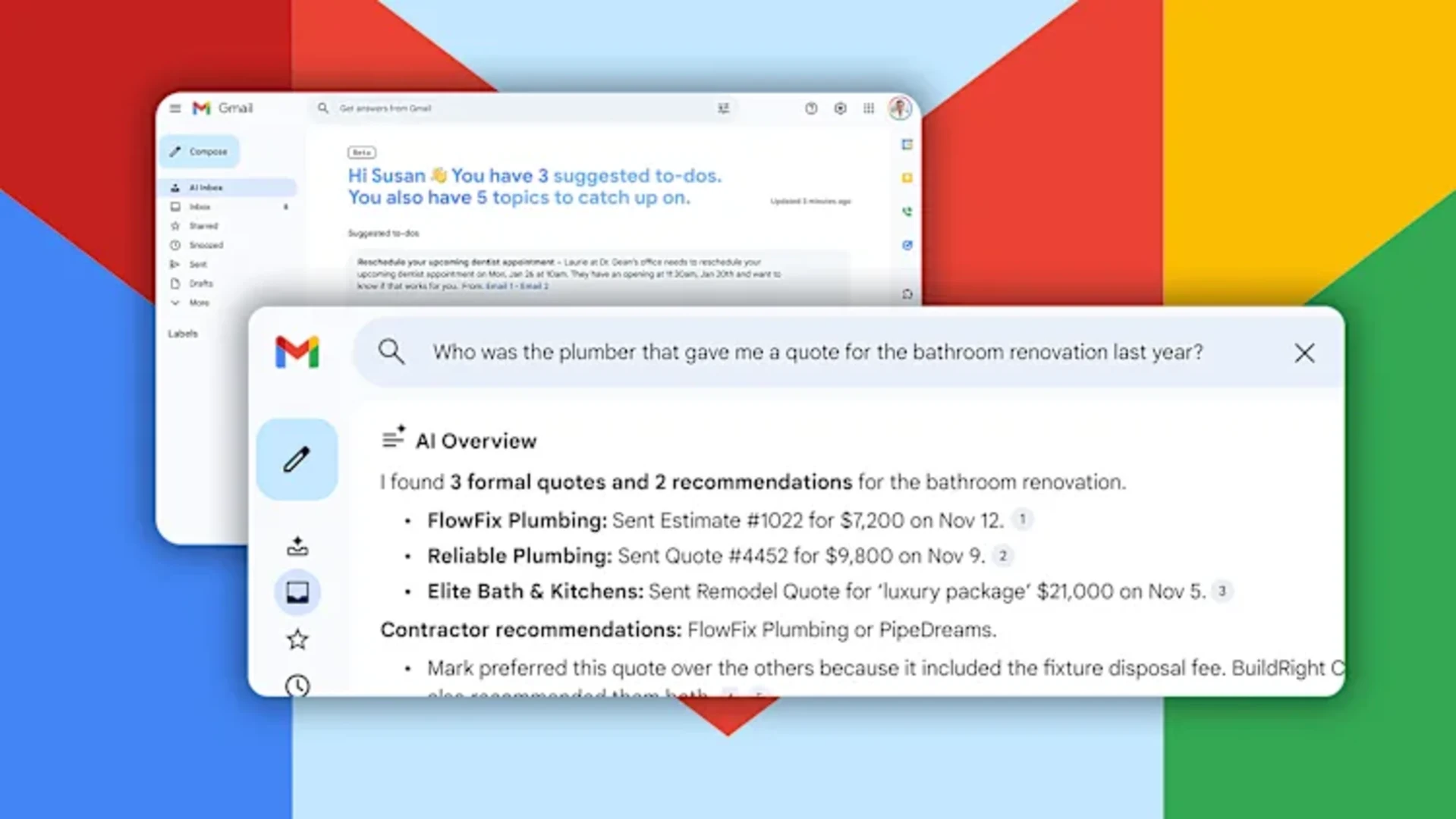
The most striking aspect of Google’s AI Inbox is how proactive it feels. Rather than waiting for users to open messages, the system attempts to summarize conversations, highlight required actions, and group related communications together. This approach mirrors how people naturally think about tasks rather than messages. In practice, it means users spend less time scanning subject lines and more time understanding what actually needs to be done.

This vision aligns closely with Google’s broader push toward AI-driven productivity across its ecosystem. Tools within Google Workspace have increasingly leaned on artificial intelligence to assist with writing, scheduling, and collaboration. Gmail, as one of the most widely used communication tools in the world, is a natural candidate for deeper AI integration. The AI Inbox appears to be a logical next step in that evolution.

Importantly, the AI Inbox does not try to eliminate the traditional inbox entirely. Instead, it layers intelligence on top of familiar structures. Users can still access full email threads and detailed messages, but the system attempts to reduce friction by providing context upfront. This balance between familiarity and innovation is critical, especially for a product with billions of users who rely on predictable behavior.

One of the long-standing challenges of email is information overload. As inboxes fill with newsletters, notifications, and automated messages, important emails can easily get buried. Gmail has addressed this problem in the past through tabs and filters, but these solutions often feel blunt. Google’s AI Inbox promises a more nuanced understanding, distinguishing not just between categories, but between significance.

The hands-on impressions suggest that the AI Inbox prioritizes clarity over clutter. Instead of presenting dozens of unread messages, it surfaces a smaller number of meaningful items, often accompanied by summaries or suggested actions. This design philosophy reflects a broader trend in software toward reducing cognitive load rather than simply offering more options.

Another notable element is how the AI Inbox handles ongoing conversations. Long email threads, which are notoriously difficult to follow, are condensed into concise overviews. This allows users to grasp the current state of a discussion without scrolling through pages of replies. For professionals juggling multiple projects, this could significantly reduce the time spent catching up on email.

Google’s approach also hints at a future where responding to email becomes less labor-intensive. With AI-generated suggestions and contextual understanding, Gmail could eventually handle routine replies automatically, reserving human attention for nuanced communication. While this raises questions about authenticity and control, it also reflects how many users already interact with email as a task to be completed rather than a conversation to be enjoyed.

Privacy and trust inevitably come into focus when discussing AI-driven email. Gmail already processes email content to filter spam and offer smart features, but deeper AI involvement may prompt renewed scrutiny. Google has emphasized that user data remains protected within its systems, yet broader adoption of AI Inbox features will depend on clear communication about how data is used and stored.

The AI Inbox also reflects changing expectations around productivity tools. Modern users increasingly expect software to adapt to them rather than the other way around. Calendars suggest meeting times, documents autocomplete text, and messaging apps highlight urgent conversations. Email, long seen as an unchanging utility, is finally being reshaped by the same expectations.

From a competitive standpoint, Google’s AI Inbox could widen the gap between Gmail and rival email services. While others offer smart features, Gmail’s scale and integration within Google Workspace give it a unique advantage. An intelligent inbox that genuinely saves time could become a powerful retention tool, especially for enterprise users who live in their inboxes.

It is worth noting that Google has experimented with radical inbox ideas before. The original Inbox by Gmail attempted to rethink email around bundles and reminders, but it was ultimately discontinued. The AI Inbox feels like a more mature evolution of that concept, informed by years of user feedback and far more capable AI technology. Where Inbox by Gmail relied on rules and categories, the new approach relies on understanding and context.

The timing of this experiment is also significant. Artificial intelligence has moved rapidly from novelty to expectation. Users are increasingly comfortable with AI assistance, provided it delivers clear value. Google’s AI Inbox arrives at a moment when people are more open to letting software take on cognitive tasks, particularly those that feel repetitive or overwhelming.

However, widespread adoption will depend on execution. Email is deeply personal, and even small changes can provoke strong reactions. Google will need to ensure that users feel in control and can easily override AI decisions. Transparency, customization, and gradual rollout will be essential to avoid backlash.
The AI Inbox may also influence how email is written. If messages are increasingly summarized and action-oriented, senders may adapt by writing more clearly and concisely. Over time, this feedback loop could subtly reshape email culture itself, emphasizing clarity and intent over length and formality.

Looking ahead, the AI Inbox hints at a future where Gmail becomes less about managing messages and more about managing outcomes. Emails are treated as inputs into a broader system that tracks tasks, decisions, and responsibilities. In this vision, the inbox becomes a dashboard for work and communication rather than a repository of messages.

Google has not announced when or if the AI Inbox will roll out widely, and it remains unclear which features will make it into the final product. Early experiments often evolve significantly before reaching mainstream users. Still, the direction is clear. Gmail’s future is likely to be more intelligent, more proactive, and more deeply integrated with how people actually work.

For users overwhelmed by email, this shift could be transformative. Reducing the mental burden of inbox management has long been a productivity goal, and AI may finally make it achievable. For Google, the AI Inbox represents an opportunity to redefine one of its most important products for the next decade.


Disclaimer

We strive to uphold the highest ethical standards in all of our reporting and coverage. We StartupNews.fyi want to be transparent with our readers about any potential conflicts of interest that may arise in our work. It’s possible that some of the investors we feature may have connections to other businesses, including competitors or companies we write about. However, we want to assure our readers that this will not have any impact on the integrity or impartiality of our reporting. We are committed to delivering accurate, unbiased news and information to our audience, and we will continue to uphold our ethics and principles in all of our work. Thank you for your trust and support.

Popular

More Like this

Google’s AI Inbox Could Be a Glimpse of Gmail’s Future — And It May Change How We Handle Email Forever

Google is quietly experimenting with what could become the most significant evolution of Gmail in years. A new AI-powered Inbox experience, recently explored in a hands-on report by The Verge, suggests that Google is rethinking not just how emails are displayed, but how they are understood, prioritized, and acted upon. While still in an early and limited form, Google’s AI Inbox feels less like a simple feature update and more like a preview of where email itself may be heading.

For years, Gmail has relied on incremental improvements such as smart replies, priority inboxes, and spam filtering. These tools helped manage growing inboxes, but they still required users to actively read, sort, and respond. Google’s AI Inbox appears to take a fundamentally different approach. Instead of organizing emails after they arrive, it aims to interpret intent, surface what matters most, and reduce the need for constant manual triage.

At its core, the AI Inbox reimagines the inbox as a dynamic workspace rather than a static list of messages. Emails are no longer treated as equal entries competing for attention. Instead, artificial intelligence analyzes content, urgency, and relevance to determine what should be shown prominently and what can safely fade into the background. This represents a shift from inbox management to inbox assistance.

The most striking aspect of Google’s AI Inbox is how proactive it feels. Rather than waiting for users to open messages, the system attempts to summarize conversations, highlight required actions, and group related communications together. This approach mirrors how people naturally think about tasks rather than messages. In practice, it means users spend less time scanning subject lines and more time understanding what actually needs to be done.

This vision aligns closely with Google’s broader push toward AI-driven productivity across its ecosystem. Tools within Google Workspace have increasingly leaned on artificial intelligence to assist with writing, scheduling, and collaboration. Gmail, as one of the most widely used communication tools in the world, is a natural candidate for deeper AI integration. The AI Inbox appears to be a logical next step in that evolution.

Importantly, the AI Inbox does not try to eliminate the traditional inbox entirely. Instead, it layers intelligence on top of familiar structures. Users can still access full email threads and detailed messages, but the system attempts to reduce friction by providing context upfront. This balance between familiarity and innovation is critical, especially for a product with billions of users who rely on predictable behavior.

One of the long-standing challenges of email is information overload. As inboxes fill with newsletters, notifications, and automated messages, important emails can easily get buried. Gmail has addressed this problem in the past through tabs and filters, but these solutions often feel blunt. Google’s AI Inbox promises a more nuanced understanding, distinguishing not just between categories, but between significance.

The hands-on impressions suggest that the AI Inbox prioritizes clarity over clutter. Instead of presenting dozens of unread messages, it surfaces a smaller number of meaningful items, often accompanied by summaries or suggested actions. This design philosophy reflects a broader trend in software toward reducing cognitive load rather than simply offering more options.

Another notable element is how the AI Inbox handles ongoing conversations. Long email threads, which are notoriously difficult to follow, are condensed into concise overviews. This allows users to grasp the current state of a discussion without scrolling through pages of replies. For professionals juggling multiple projects, this could significantly reduce the time spent catching up on email.

Google’s approach also hints at a future where responding to email becomes less labor-intensive. With AI-generated suggestions and contextual understanding, Gmail could eventually handle routine replies automatically, reserving human attention for nuanced communication. While this raises questions about authenticity and control, it also reflects how many users already interact with email as a task to be completed rather than a conversation to be enjoyed.

Privacy and trust inevitably come into focus when discussing AI-driven email. Gmail already processes email content to filter spam and offer smart features, but deeper AI involvement may prompt renewed scrutiny. Google has emphasized that user data remains protected within its systems, yet broader adoption of AI Inbox features will depend on clear communication about how data is used and stored.

The AI Inbox also reflects changing expectations around productivity tools. Modern users increasingly expect software to adapt to them rather than the other way around. Calendars suggest meeting times, documents autocomplete text, and messaging apps highlight urgent conversations. Email, long seen as an unchanging utility, is finally being reshaped by the same expectations.

From a competitive standpoint, Google’s AI Inbox could widen the gap between Gmail and rival email services. While others offer smart features, Gmail’s scale and integration within Google Workspace give it a unique advantage. An intelligent inbox that genuinely saves time could become a powerful retention tool, especially for enterprise users who live in their inboxes.

It is worth noting that Google has experimented with radical inbox ideas before. The original Inbox by Gmail attempted to rethink email around bundles and reminders, but it was ultimately discontinued. The AI Inbox feels like a more mature evolution of that concept, informed by years of user feedback and far more capable AI technology. Where Inbox by Gmail relied on rules and categories, the new approach relies on understanding and context.

The timing of this experiment is also significant. Artificial intelligence has moved rapidly from novelty to expectation. Users are increasingly comfortable with AI assistance, provided it delivers clear value. Google’s AI Inbox arrives at a moment when people are more open to letting software take on cognitive tasks, particularly those that feel repetitive or overwhelming.

However, widespread adoption will depend on execution. Email is deeply personal, and even small changes can provoke strong reactions. Google will need to ensure that users feel in control and can easily override AI decisions. Transparency, customization, and gradual rollout will be essential to avoid backlash.

The AI Inbox may also influence how email is written. If messages are increasingly summarized and action-oriented, senders may adapt by writing more clearly and concisely. Over time, this feedback loop could subtly reshape email culture itself, emphasizing clarity and intent over length and formality.

Looking ahead, the AI Inbox hints at a future where Gmail becomes less about managing messages and more about managing outcomes. Emails are treated as inputs into a broader system that tracks tasks, decisions, and responsibilities. In this vision, the inbox becomes a dashboard for work and communication rather than a repository of messages.

Google has not announced when or if the AI Inbox will roll out widely, and it remains unclear which features will make it into the final product. Early experiments often evolve significantly before reaching mainstream users. Still, the direction is clear. Gmail’s future is likely to be more intelligent, more proactive, and more deeply integrated with how people actually work.

For users overwhelmed by email, this shift could be transformative. Reducing the mental burden of inbox management has long been a productivity goal, and AI may finally make it achievable. For Google, the AI Inbox represents an opportunity to redefine one of its most important products for the next decade.

Disclaimer

We strive to uphold the highest ethical standards in all of our reporting and coverage. We StartupNews.fyi want to be transparent with our readers about any potential conflicts of interest that may arise in our work. It’s possible that some of the investors we feature may have connections to other businesses, including competitors or companies we write about. However, we want to assure our readers that this will not have any impact on the integrity or impartiality of our reporting. We are committed to delivering accurate, unbiased news and information to our audience, and we will continue to uphold our ethics and principles in all of our work. Thank you for your trust and support.

Website Upgradation is going on for any glitch kindly connect at office@startupnews.fyi

More like this

CloudBees CEO: Why Migration Is a Mirage Costing You...

A recent survey shows that, last year, 57%...

India reportedly tells quick-commerce firms to drop 10-minute delivery...

India’s labor ministry is pushing the country’s booming...

Popular

iptv iptv iptv iptv iptv iptv iptv iptv iptv iptv iptv iptv iptv iptv iptv iptv iptv iptv iptv iptv iptv iptv iptv iptv iptv iptv iptv iptv iptv iptv iptv iptv iptv iptv iptv iptv iptv iptv iptv iptv iptv iptv iptv iptv iptv iptv iptv iptv iptv iptv iptv iptv iptv iptv iptv iptv iptv iptv iptv iptv iptv iptv iptv iptv iptv iptv iptv iptv iptv iptv iptv iptv iptv iptv iptv iptv iptv iptv iptv iptv iptv iptv iptv iptv iptv iptv iptv iptv iptv iptv iptv iptv iptv iptv iptv iptv iptv iptv iptv iptv iptv iptv iptv iptv iptv iptv iptv iptv iptv iptv iptv iptv iptv iptv iptv iptv iptv iptv iptv iptv iptv iptv iptv iptv iptv iptv iptv iptv iptv iptv iptv iptv iptv iptv iptv iptv iptv iptv iptv iptv iptv iptv iptv iptv iptv iptv iptv iptv iptv iptv iptv iptv iptv iptv iptv iptv iptv iptv iptv iptv iptv iptv iptv iptv iptv iptv iptv iptv iptv iptv iptv iptv iptv iptv iptv iptv iptv iptv iptv iptv iptv iptv iptv iptv iptv iptv iptv iptv iptv iptv iptv iptv iptv iptv iptv iptv iptv iptv iptv iptv iptv iptv iptv iptv iptv iptv iptv iptv iptv iptv iptv iptv iptv iptv iptv iptv iptv iptv iptv iptv iptv iptv iptv iptv iptv iptv iptv iptv iptv iptv iptv iptv iptv iptv iptv iptv iptv iptv iptv iptv iptv iptv iptv iptv iptv iptv iptv iptv iptv iptv iptv iptv iptv iptv iptv iptv iptv iptv iptv iptv iptv iptv iptv iptv iptv iptv iptv iptv iptv iptv iptv iptv iptv iptv iptv iptv iptv iptv iptv iptv iptv iptv iptv iptv iptv iptv iptv iptv iptv iptv iptv iptv iptv iptv iptv iptv iptv iptv iptv iptv iptv iptv iptv iptv iptv iptv iptv iptv iptv iptv iptv iptv iptv iptv iptv iptv iptv iptv iptv iptv iptv iptv iptv iptv iptv iptv iptv iptv iptv iptv iptv iptv iptv iptv iptv iptv iptv iptv iptv iptv iptv iptv iptv iptv iptv iptv iptv iptv iptv iptv iptv iptv iptv iptv iptv iptv iptv iptv iptv iptv iptv iptv iptv iptv iptv iptv iptv iptv iptv iptv iptv iptv iptv iptv iptv iptv iptv iptv iptv iptv iptv iptv iptv iptv iptv iptv iptv iptv iptv iptv iptv iptv iptv iptv iptv iptv iptv iptv iptv iptv iptv iptv iptv iptv iptv iptv iptv iptv iptv iptv iptv iptv iptv iptv iptv iptv iptv iptv iptv iptv iptv iptv iptv iptv iptv iptv iptv iptv iptv iptv iptv iptv iptv iptv iptv iptv iptv iptv iptv iptv iptv iptv iptv iptv iptv iptv iptv iptv iptv iptv iptv iptv iptv iptv iptv iptv iptv iptv iptv iptv iptv iptv iptv iptv iptv iptv iptv iptv iptv iptv iptv iptv iptv iptv iptv iptv