

The United States Senate is advancing a market structure bill that could represent the first comprehensive federal framework for digital assets, including stablecoins and decentralized finance (DeFi). At the heart of the legislation are two of the most contentious issues in crypto policy: how stablecoin rewards and yields are treated, and how DeFi developers and protocols should be regulated and protected under U.S. law.
After years of fragmented enforcement, regulatory uncertainty, and debates over which federal agency should govern digital assets, the Senate’s draft legislation attempts to build consensus. It reflects weeks of negotiations between lawmakers, banking lobbyists, crypto industry advocates, and consumer protection groups — each with different priorities on how to balance innovation, financial stability, and investor safeguards.
This bill arrives at a critical moment: policymakers have long signaled that legal clarity is necessary to help the United States compete internationally in digital asset markets, attract investment, and prevent regulatory fragmentation.
Why This Matters for Crypto Markets and U.S. Financial Policy
Digital assets have grown rapidly without a unified U.S. regulatory structure. Stablecoins — cryptocurrencies designed to maintain a stable value pegged to traditional assets like the U.S. dollar — are now widely used for payments, trading, and decentralized finance. But without clear rules, issuers and platforms have operated in a gray zone between securities, commodities, and banking law, raising concerns about consumer protection and systemic risk.
Meanwhile, DeFi protocols — software systems that automate financial services like lending and trading — have exploded in popularity. But legal uncertainty surrounding developer liability and platform responsibilities has chilled investment and raised questions about how existing statutes apply to decentralized networks.
For entrepreneurs and institutions building in crypto, a market structure bill that addresses these issues could reduce legal risk, clarify compliance obligations, and unlock broader financial integration. For regulators, it could finally define jurisdictional boundaries, streamline oversight, and create enforceable standards to protect investors without unnecessarily stifling innovation.
Stablecoins Under the Senate Bill: Yield Restrictions and the Compromise
One of the biggest sticking points in negotiations has been how to treat stablecoin rewards and yield-generating products. Stablecoin issuers and centralized exchanges currently offer users returns or rewards — often paid in tokens — to incentivize holding assets or participating in platform activity. Critics argue this blurs the line between deposits and securities, posing risks similar to unregulated banking.
The Senate draft proposes that digital asset service providers may not pay interest or yield solely for holding a payment stablecoin. This means passive returns simply for holding stablecoins would be prohibited. However, the bill carves out an important exception: rewards or incentives tied to specific activities — such as trading, staking, or liquidity provision — would remain permitted. This compromise attempts to protect community banks’ traditional deposit model while still allowing crypto ecosystems to innovate in activity-based incentives.
This compromise reflects weeks of negotiations between the crypto lobby, represented by exchanges like Coinbase, and the banking sector — which fears uncontrolled stablecoin yields could siphon deposits from traditional financial institutions.
By explicitly allowing activity-based rewards, the bill preserves a path for platforms to engage users without creating what some lawmakers see as de facto unregulated interest accounts. At the same time, proponents of tighter control argue that even nuanced yield structures must be carefully monitored to protect consumers. This debate captures the larger tension between innovation and stability that defines modern U.S. crypto policy.
Defining Oversight: SEC, CFTC, and Ancillary Assets
Another central objective of the Senate bill is to clarify which federal agencies oversee different parts of the crypto ecosystem. Historically, the Securities and Exchange Commission (SEC) and the Commodity Futures Trading Commission (CFTC) have both claimed jurisdiction over aspects of digital assets, prompting lawsuits and enforcement actions that left companies uncertain about compliance.
The draft aims to delineate regulatory authority by introducing an “ancillary asset” classification — a new category for digital assets that do not neatly fit traditional securities definitions. This could impact how cryptocurrencies included in exchange-traded funds are treated, ensuring that certain network tokens are not automatically classified as securities.
Under this structure, assets with sufficient decentralization or specific functional criteria could fall under the CFTC’s jurisdiction, while others — depending on their characteristics — might remain within the SEC’s remit. The clarity around ancillary assets could reduce fragmentation, lower compliance costs, and provide companies with clearer pathways for product and service development.
DeFi Protections and the Developer Liability Question
DeFi presents a unique regulatory challenge. Unlike centralized platforms, DeFi protocols operate without a central entity controlling funds or decision-making. This structural difference has raised complicated questions about legal liability, especially when users lose funds due to exploits, bugs, or misuse.
The Senate draft incorporates language from the Blockchain Regulatory Certainty Act, which seeks to ensure that software developers who do not control user funds are not automatically treated as money transmitters or held liable under laws designed for traditional finance intermediaries.
This provision is a significant development. Many in the DeFi community argue that treating developers as financial intermediaries — simply because they write code — would chill innovation and contradict the decentralized ethos of blockchain. By carving out protections for developers, the bill reduces legal risk for builders while maintaining accountability for activities that directly affect users’ assets.
Critics, however, caution that these protections must be carefully defined to ensure they do not create loopholes that allow bad actors to evade responsibility for fraud or negligence. This debate underscores the broader challenge of regulating decentralized systems with legal frameworks designed for centralized intermediaries.
The Legislative Path and Political Dynamics
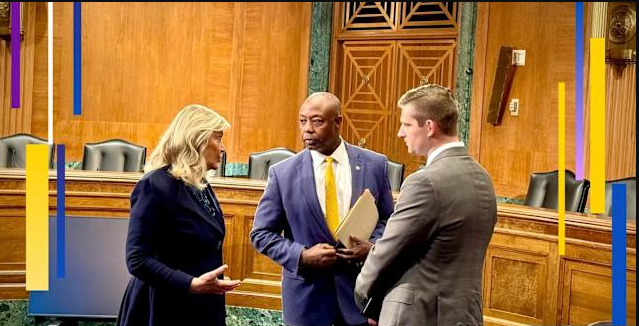
The Senate Banking Committee, led by Chairman Tim Scott, is scheduled to markup and vote on the bill after a highly compressed review process. Lawmakers have faced pressure from both the crypto industry and traditional finance lobbyists, each with distinct priorities. While Republicans control the committee, Democratic support is crucial for advancing comprehensive legislation to the Senate floor.
Several Democratic senators have publicly requested more time to examine the extensive draft, voicing concerns that rushed amendments could undermine investor protections or leave gaps in enforcement. The compressed timeline — with just 48 hours to review and less than 24 hours to prepare amendments — has drawn criticism from both sides.
Political considerations also play a role. Legislative momentum must contend with broader congressional calendars and the ongoing debate over federal budgeting — factors that could delay or reshape the bill. The outcome will hinge not just on technical language but on securing bipartisan consensus in a politically polarized environment.
Broader Market Implications
If enacted, the Senate market structure bill would represent a paradigm shift in U.S. crypto regulation.
For stablecoins, it could institutionalize rules that prevent passive yield generation, reshaping how platforms design reward programs and how users strategize asset allocation. The activity-based rewards exception could foster innovation in staking, liquidity incentives, and transactional incentives — but also require platforms to rethink compliance strategies.
For DeFi ecosystems, defined protections for developers could unlock legal certainty that accelerates product launches and institutional participation. Protocols that currently hesitate to engage due to liability fears might find a clearer path to growth. At the same time, the bill’s regulatory clarity could attract capital from traditional finance seeking well-defined legal frameworks.
Finally, defining agency roles and regulatory boundaries would reduce enforcement uncertainty that has hampered U.S. leadership in digital asset markets for years. Clear jurisdictional rules could encourage global firms to base operations in the U.S., fostering competitiveness against international markets like Europe and Asia.
GEO – Global Relevance
Crypto regulatory frameworks are not just a U.S. matter. Major economies in Europe, the United Kingdom, Japan, and Singapore are also refining digital asset rules, each with distinct approaches to stablecoins and decentralized finance. A U.S. bill that balances consumer protection with innovation could influence global standards, reducing fragmentation in cross-border markets and providing multinational firms a predictable compliance environment. Clear rules in the U.S. also affect global investment flows, as many international projects seek access to large capital markets and institutional partners tied to American regulatory approval.
Final Thought
The Senate market structure bill represents a notable effort to reconcile long-standing disagreements over how to govern digital assets. By addressing stablecoin rewards and DeFi protections, it pushes the United States closer to a comprehensive crypto regulatory framework. Whether it can survive political negotiation and become law remains uncertain, but its direction signals that policymakers are moving past enforcement ambiguity toward structured oversight.
In simple terms, the new Senate market structure bill proposes a compromise on stablecoin rewards and introduces protections for decentralized finance (DeFi), marking a major step toward a long-awaited U.S. crypto regulatory framework.


