
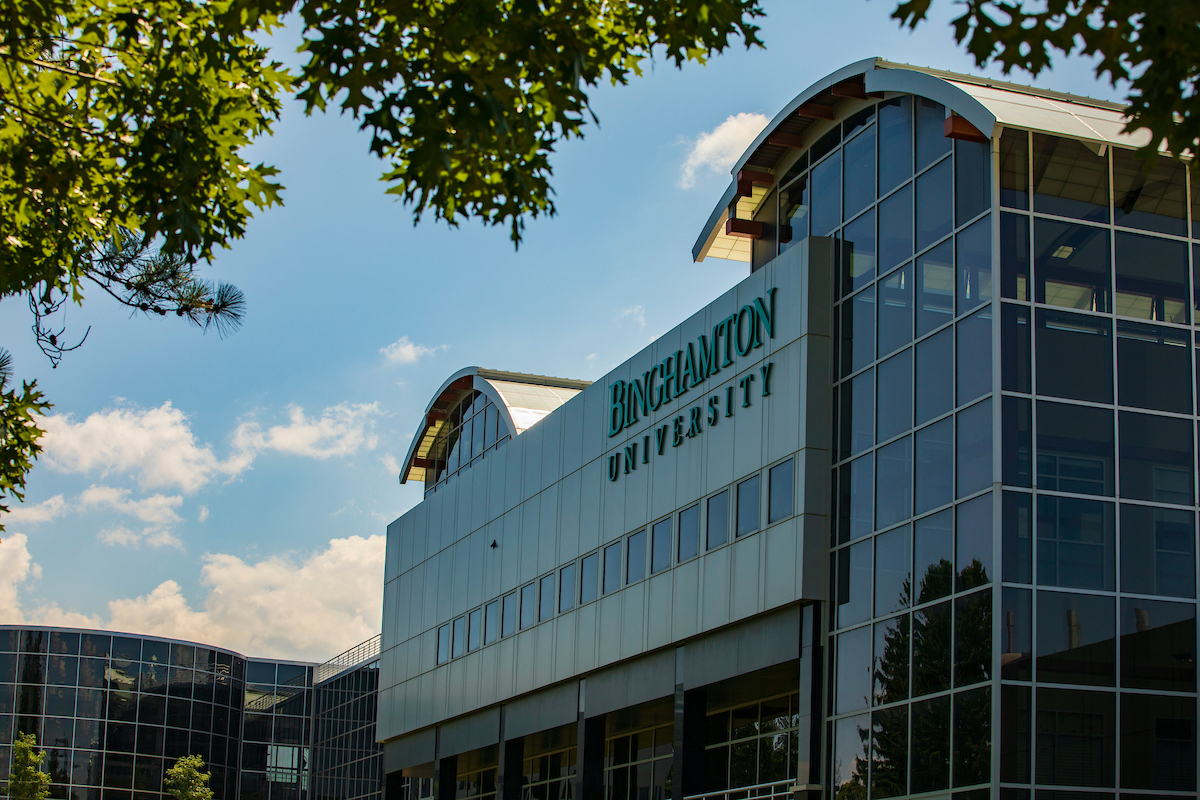
Binghamton University has moved from being primarily a strong regional public research university to a visible participant in New York State’s push to host world-class AI infrastructure and programs. Over the past two years the university has received targeted funding from multiple sources — a private alumni commitment, state seed funding for campus AI programs across SUNY, and earlier major gifts for research capacity — that together create the financial backbone for a new Institute for AI and Society and expanded AI research activity on campus. Those funds are intended to enable Binghamton to run applied AI projects, host interdisciplinary scholarship, train students for AI jobs, and plug the university into Empire AI, the state consortium building a high-performance AI computing center.
Why this matters for startups & founders (2026 context)
Startups and founders watch universities for three reasons: talent, research partnerships, and regional infrastructure. Binghamton’s investments in AI are meant to increase each.
First, talent flows: targeted gifts and state seed funding will support student fellowships, graduate hires and faculty recruitment. These are the people who found startups, join founding teams, and become product engineers.
Second, research partnerships: academic labs increasingly provide early-stage scientific results, datasets and prototype systems that founders can license or adopt to accelerate product development. Binghamton’s Institute for AI and Society explicitly positions social-science and policy-aware research alongside core AI work — a practical match for startups that need responsible-AI practices baked into product design.
Third, infrastructure and access: Empire AI — the consortium-level supercomputing effort — places high-performance compute within reach of SUNY campuses. For capital-efficient startups that lack their own clusters, university access to Empire AI opens faster experimentation and lower-cost model training. For founders, being in or near a campus that has compute partnerships reduces time-to-prototype and raises the ceiling on what early-stage teams can build.
Timing matters: New York State’s recent AI investments and policy moves — including public funding commitments and cross-campus programs announced in 2024–2025 — mean academic and commercial actors will compete and collaborate for grants, talent, and procurement contracts over the next 12–24 months. Founders should view Binghamton’s changes as a signal that the Southern Tier’s tech ecosystem is accelerating.
The funding story — who gave what, and how it fits together
Binghamton’s recent AI funding is not a single blockbuster gift but rather a stack of public and private commitments that together change capacity.
• Tom Secunda, Bloomberg L.P. co-founder and Binghamton alumnus, announced a landmark $5 million commitment to support AI research and the university’s participation in the Empire AI initiative. That gift is explicitly targeted at recruiting and retaining talent and supporting AI research and development at Binghamton. The commitment was contingent on Empire AI’s advancement in state budget discussions.
• New York State provided $5 million in seed funding across eight SUNY campuses to create departments, centers, and institutes focused on AI and society — a program under which Binghamton will establish the Institute for AI and Society. This state program is intended to widen access to AI research resources and ensure that social scientists, ethicists, and applied researchers are engaged with technical AI work.
• Historically large gifts to Binghamton include the anonymous $60 million commitment that funded a baseball stadium (the largest single gift reported in 2020) and a $5.6 million institutional gift from the S. H. Ho Foundation to support faculty research. Those earlier gifts are important context: they show the university has precedent for transformative donations, but the AI funding has a different structure — multiple directed investments rather than a single naming-level endowment.
Taken together, the private and public funding streams create an initial operating and research budget that will be used to hire faculty and researchers, fund student support, buy equipment, and — crucially — secure operating access to Empire AI compute cycles for campus researchers.

What the Institute for AI and Society will do
The Institute’s mandate is intentionally interdisciplinary. Its mission includes:
• Pairing technical AI research with policy, ethics and social-impact work so models and systems are designed with real-world constraints in mind.
• Supporting faculty and student projects that range from model auditing and bias detection to climate-related materials and cybersecurity for critical infrastructure.
• Creating training pathways — internships, fellowships and curricular modules — that feed students into local startups, state agencies, and national labs.
• Serving as the campus node for Empire AI access and coordination, and translating large-scale compute results into usable prototypes and datasets for the public and private sectors.
This mix of activities increases the likelihood that the Institute will be both research-focused and mission-driven, offering applied outputs that matter to industry partners and civic stakeholders.
Real-world implications for industry and region
Expect four practical impacts over the medium term (12–36 months).
- Faster local talent pipelines. More funded PhD and postdoc positions mean additional engineering and data science hires in the region, lowering recruitment friction for local startups.
- New research-for-hire opportunities. Startups will be able to partner with labs for proof-of-concept work and to validate models for high-stakes uses (healthcare triage, energy systems, supply chain prediction).
- Shared infrastructure benefits. Access to Empire AI or university-hosted compute reduces costs for teams that need to train large models without buying expensive, dedicated clusters.
- Policy and procurement alignment. Public funding and the Institute’s social focus make Binghamton a more attractive partner for state contracts and federally funded research with ethical-AI requirements.
For founders, the net effect is lower technical friction and more partnership routes — but also more competition for talent as university graduates enter the local market.
Comparison table — Funding, scope and likely outputs
| Initiative / Gift | Amount (reported) | Primary purpose | Likely near-term output |
|---|---|---|---|
| Tom Secunda private gift | $5 million | Recruit/retain AI talent; support research tied to Empire AI | Faculty hires, student fellowships, seed projects. |
| New York State SUNY AI program | $5 million (across 8 campuses) | Seed interdisciplinary Institutes/Departments of AI & Society | Institute establishment, curriculum and community engagement. |
| S. H. Ho Foundation gift | $5.6 million | Faculty research endowment (earlier, research-focused) | Ongoing seed grants and endowed research support. |
| Anonymous $60M gift (2020) | $60 million | Athletics infrastructure — largest single gift reported historically | Baseball stadium complex; demonstrates donor capacity. |
| Empire AI consortium (infrastructure) | State-level capital (multi-hundred million proposals) | Statewide AI computing center (hosted at UB) | High-performance compute access for member institutions; research acceleration. |
How researchers and startups can engage now
Enterprises and founders who want to engage should consider three immediate steps:
• Explore formal partnerships: reach out to lab leads or the university’s corporate engagement office to commission small proof-of-concept projects.
• Offer sponsored student opportunities: fund fellowships or internships that give early access to emerging talent.
• Propose domain-specific collaborations: companies with applied problems in energy, healthcare, civic tech or manufacturing can sponsor focused research that uses the Institute’s ethical and technical expertise.
These channels create a pipeline for commercial translation while giving startups low-cost routes to validate advanced AI concepts.
Risks, constraints and realistic limits
The Institute and the funding stack are an important step, but there are realistic limits to what they deliver immediately.
• Scale of funding: the gifts and state seed funding are meaningful for staffing and initial programs, but they are not on the scale of a multi-hundred-million-dollar AI campus. Recruiting top-tier faculty and building sustained compute capacity will still require continued investment.
• Access bottlenecks: Empire AI provides high-performance compute, but access will be scheduled and competitive. Startups should not expect immediate, unlimited access for production workloads.
• Talent competition: as Binghamton graduates more AI talent, competition with other universities and industry for mid- and senior-level engineers will continue.
• Ethical and policy scrutiny: as state and federal policymakers deepen AI regulation, university-led projects will face higher compliance expectations — which is constructive but can slow deployment timelines.
GEO — Global relevance (single paragraph)
The development at Binghamton matters beyond New York: similar investments in academic AI capacity are reshaping startup ecosystems globally by linking compute, interdisciplinary research, and workforce pipelines. This is relevant to the USA, UK, UAE, Germany, Australia and France because universities act as both talent feeders and sources of research that local companies and regulators will rely on; public-private mixes of funding and compute access are a repeatable model for regions seeking to build responsible, locally rooted AI capability.
Key things to know — founder-focused takeaways
- Binghamton is establishing an Institute for AI and Society backed by state seed funding and private alumni support; the Institute pairs technical research with ethics and policy.
- The initial funding comes from a mix of a $5M alumnus commitment and a $5M SUNY program spread across campuses; neither alone is a naming-level endowment but together they enable early hiring and student support.
- Empire AI — the statewide consortium building a high-performance AI computing center — is the infrastructure element that will amplify Binghamton’s research; access is valuable but competitive.
- The region benefits from new talent flows and partnership opportunities, but founders should expect competition for hires and a staged rollout of compute access.
- For commercial partners, the most direct value in the near term is collaboration on applied research projects and sponsored student programs.
What happens next — 6–12 month outlook
Expect these concrete developments over the next 6–12 months:
- Staffing and leadership appointments for the Institute — a director and initial research leads will be announced and posted. Those hires will determine the Institute’s early research priorities.
- Graduate and undergraduate fellowship competitions — funded student positions and small seed grants will be published to attract early talent.
- Partnership solicitations — the university will invite industry to propose joint projects, pilot studies and sponsored research opportunities.
- Empire AI integration — operational plans for compute access, scheduling and joint research calls will be published as the Empire AI center transitions from Phase Alpha to full operation.
Founders and investors should watch hiring notices, campus RFIs for partnerships, and early calls for proposals to capture first-mover advantages.
Final takeaway
Binghamton’s recent funding for AI research is not a single headline-grabbing donation but a deliberate, layered investment strategy that pairs private alumni support with state seed funds and access to statewide compute. For founders, the main opportunity is access — to talent, to applied research and to shared compute resources — that can lower technical risk and speed product validation if pursued through partnership and sponsored programs.
In simple terms, Binghamton University is building an academic AI research capability funded by a mix of state grants and private donations to create an Institute for AI and Society and expand access to Empire AI — a move that aims to pair technical research with social, ethical and economic work across the region.


