Google Gemini Adds ‘Personal Intelligence’ to Gmail, Docs, and Other Apps

Share via:

Artificial intelligence inside productivity software is no longer limited to generic suggestions or one-size-fits-all automation. With its latest update, Google has introduced what it calls “Personal Intelligence” inside Gemini, fundamentally changing how its AI assistant interacts with users across Google apps.

The update marks a shift away from task-based AI toward context-aware intelligence that understands individual work patterns, preferences, and data across tools like Gmail, Docs, Sheets, Drive, and Calendar. Instead of responding only to prompts, Gemini now aims to work alongside users by anticipating needs, summarizing relevant information, and delivering insights that are personalized rather than generic.

This move reflects a broader industry trend where AI is becoming embedded directly into daily workflows, not as a separate tool but as an invisible layer of intelligence operating in the background.
What Google Means by ‘Personal Intelligence’

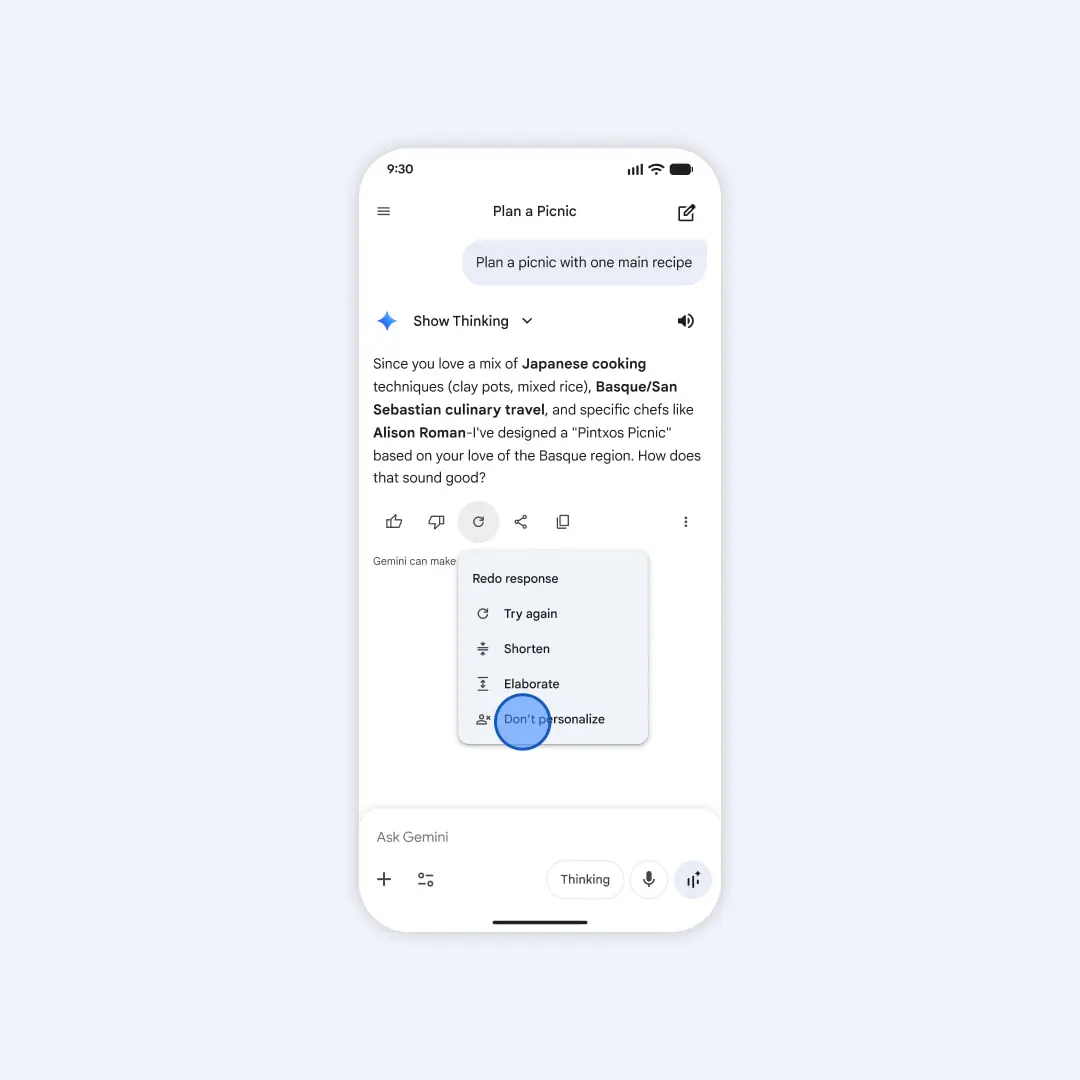
Personal Intelligence, as described by Google, refers to Gemini’s ability to understand a user’s context across apps while respecting permission boundaries. Unlike traditional AI assistants that rely solely on the text of a prompt, Gemini now draws signals from a user’s emails, documents, calendars, and files to provide responses that are specific to that individual.

For example, when asked to draft an email, Gemini can reference previous conversations, meeting notes, or documents stored in Drive to ensure accuracy and relevance. When summarizing a document, it can consider the user’s role, recent projects, or upcoming deadlines to highlight what matters most.

The defining feature here is continuity. Gemini is no longer starting from zero with each interaction. It builds situational awareness over time, enabling responses that feel less like outputs from a tool and more like assistance from a knowledgeable colleague.

How Gemini Integrates Across Google Apps

The rollout of Personal Intelligence is deeply tied to Gemini’s integration with Google’s ecosystem. Rather than existing as a standalone chatbot, Gemini is embedded directly into Google Workspace apps.

In Gmail, Gemini can summarize long email threads, suggest context-aware replies, and draft messages that align with the user’s tone and history. In Google Docs, it can help rewrite content based on previous documents or generate summaries tailored to the document’s purpose. In Sheets, Gemini can analyze data using context from related files or emails, not just the spreadsheet itself.

Calendar integration allows Gemini to understand time constraints and priorities, while Drive access enables it to retrieve relevant files without manual searching. This cross-app awareness is what enables Personal Intelligence to function as more than simple automation.

How Personal Intelligence Actually Works Behind the Scenes

At a technical level, Gemini’s Personal Intelligence relies on a combination of large language models, permission-based data access, and contextual retrieval systems. Gemini does not permanently “train” on personal data in the traditional sense. Instead, it accesses relevant information in real time when generating responses, based on what the user allows it to see.

This approach allows Gemini to remain flexible while addressing privacy concerns. Context is pulled only when needed, scoped to the task at hand, and governed by existing Workspace permissions. If a user does not have access to a document, Gemini cannot reference it.

Google emphasizes that this system is designed to enhance usefulness without compromising data boundaries, a balance that has become increasingly important as AI assistants move deeper into enterprise and personal workflows.

Why This Matters Now

The timing of this update is significant. Productivity tools are facing growing pressure to deliver measurable time savings and cognitive relief, especially as workloads become more complex and fragmented.

Many professionals now manage dozens of conversations, documents, and tasks simultaneously. Searching for information, switching between apps, and manually synthesizing context consume a significant portion of the workday. Personal Intelligence aims to reduce this overhead by making AI responsible for context assembly.

Rather than asking users to explain what they need every time, Gemini begins to infer intent based on what it already knows about their work environment. This shift mirrors how human assistants operate, providing value by understanding context rather than waiting for detailed instructions.

The Difference Between Generic AI and Personal Intelligence

Traditional AI assistants typically operate in isolation. They respond to prompts using general knowledge or the immediate input provided. While useful, this model places the burden on users to supply context repeatedly.

Personal Intelligence changes this dynamic. By understanding ongoing projects, past interactions, and organizational context, Gemini can deliver responses that are immediately actionable. An email summary can highlight decisions instead of listing messages. A document suggestion can align with an existing strategy rather than offering a generic template.

This distinction is subtle but important. It moves AI from being reactive to being context-aware, which significantly enhances its perceived usefulness in professional settings.

Privacy, Control, and User Trust

One of the most sensitive aspects of Personal Intelligence is data access. Google has made clear that users retain control over what Gemini can see. Workspace permissions, sharing settings, and admin policies continue to govern access.

Gemini does not gain new visibility into data by default. It operates within the same boundaries as the user, acting as an assistant rather than an overseer. This design is intended to address concerns about overreach and unintended data exposure.

Trust will play a central role in adoption. Users are more likely to rely on Personal Intelligence if they understand how data is used and feel confident that sensitive information remains protected.

Implications for Knowledge Workers and Teams

For individual users, Personal Intelligence promises reduced friction. Tasks that previously required manual coordination, such as preparing for meetings or drafting follow-ups, can be accelerated with context-aware assistance.

For teams, the impact could be broader. Shared documents and collaborative workflows allow Gemini to understand collective context, potentially improving alignment and reducing miscommunication. Summaries, updates, and drafts can reflect not just individual input but team-wide activity.

Over time, this could influence how work is structured. Instead of spending time assembling information, teams may focus more on decision-making and execution.

The Enterprise Angle and Competitive Pressure

Google’s move also reflects growing competition in enterprise AI. Productivity platforms are racing to embed AI deeply enough that it becomes indispensable rather than optional.

Personal Intelligence positions Gemini as more than a feature. It becomes part of the operating fabric of work. This increases switching costs and strengthens Google’s value proposition to businesses already using Workspace.

Enterprises evaluating AI tools increasingly look beyond surface-level capabilities. They want systems that integrate seamlessly, respect governance requirements, and deliver consistent value. Gemini’s approach aligns closely with these expectations.

How This Changes User Expectations of AI

As Personal Intelligence becomes more common, user expectations will shift. Generic responses may feel insufficient. Users will increasingly expect AI to “know” their work, remember past interactions, and adapt to their preferences.

This creates a new standard for AI assistants. They are no longer judged solely on language fluency but on relevance, timing, and contextual accuracy. Tools that fail to meet these expectations risk being perceived as distractions rather than helpers.

For Google, this raises the bar for continuous improvement. Personal Intelligence is not a static feature. It must evolve alongside user behavior, organizational structures, and changing workflows.

Broader Implications for the Future of Work

The introduction of Personal Intelligence signals a broader transformation in how software supports work. Instead of tools being passive containers for information, they become active participants in the workflow.

This has implications beyond productivity. Decision-making, collaboration, and even creativity may increasingly involve AI as a partner rather than a tool. The line between human and machine contribution becomes more fluid, raising new questions about responsibility, authorship, and accountability.

At the same time, the human role becomes more focused on judgment, strategy, and interpersonal interaction. AI handles context assembly and routine synthesis, freeing people to concentrate on higher-level tasks.

Global Relevance and Adoption Outlook

While the rollout is initially focused on Google’s existing user base, the implications are global. Organizations across the USA, UK, UAE, Germany, Australia, and France are grappling with similar productivity challenges and digital complexity.

As AI regulation, data governance, and enterprise adoption mature, context-aware systems like Gemini’s Personal Intelligence are likely to become standard rather than exceptional. The pace of adoption will vary by region and industry, but the direction is clear.

A Shift From Tools to Intelligence Layers

Gemini’s Personal Intelligence represents a meaningful evolution in AI-assisted work. It moves beyond isolated features toward an intelligence layer that spans applications and adapts to individual users.

Whether this approach becomes the dominant model will depend on execution, trust, and demonstrated value. If Gemini consistently delivers relevant, accurate, and secure assistance, it may redefine how users think about productivity software altogether.

The update underscores a simple but powerful idea: the most useful AI is not the one that knows the most facts, but the one that understands context.


Disclaimer

We strive to uphold the highest ethical standards in all of our reporting and coverage. We StartupNews.fyi want to be transparent with our readers about any potential conflicts of interest that may arise in our work. It’s possible that some of the investors we feature may have connections to other businesses, including competitors or companies we write about. However, we want to assure our readers that this will not have any impact on the integrity or impartiality of our reporting. We are committed to delivering accurate, unbiased news and information to our audience, and we will continue to uphold our ethics and principles in all of our work. Thank you for your trust and support.

Popular

More Like this

Google Gemini Adds ‘Personal Intelligence’ to Gmail, Docs, and Other Apps

Artificial intelligence inside productivity software is no longer limited to generic suggestions or one-size-fits-all automation. With its latest update, Google has introduced what it calls “Personal Intelligence” inside Gemini, fundamentally changing how its AI assistant interacts with users across Google apps.

The update marks a shift away from task-based AI toward context-aware intelligence that understands individual work patterns, preferences, and data across tools like Gmail, Docs, Sheets, Drive, and Calendar. Instead of responding only to prompts, Gemini now aims to work alongside users by anticipating needs, summarizing relevant information, and delivering insights that are personalized rather than generic.

This move reflects a broader industry trend where AI is becoming embedded directly into daily workflows, not as a separate tool but as an invisible layer of intelligence operating in the background.

What Google Means by ‘Personal Intelligence’

Personal Intelligence, as described by Google, refers to Gemini’s ability to understand a user’s context across apps while respecting permission boundaries. Unlike traditional AI assistants that rely solely on the text of a prompt, Gemini now draws signals from a user’s emails, documents, calendars, and files to provide responses that are specific to that individual.

For example, when asked to draft an email, Gemini can reference previous conversations, meeting notes, or documents stored in Drive to ensure accuracy and relevance. When summarizing a document, it can consider the user’s role, recent projects, or upcoming deadlines to highlight what matters most.

The defining feature here is continuity. Gemini is no longer starting from zero with each interaction. It builds situational awareness over time, enabling responses that feel less like outputs from a tool and more like assistance from a knowledgeable colleague.

How Gemini Integrates Across Google Apps

The rollout of Personal Intelligence is deeply tied to Gemini’s integration with Google’s ecosystem. Rather than existing as a standalone chatbot, Gemini is embedded directly into Google Workspace apps.

In Gmail, Gemini can summarize long email threads, suggest context-aware replies, and draft messages that align with the user’s tone and history. In Google Docs, it can help rewrite content based on previous documents or generate summaries tailored to the document’s purpose. In Sheets, Gemini can analyze data using context from related files or emails, not just the spreadsheet itself.

Calendar integration allows Gemini to understand time constraints and priorities, while Drive access enables it to retrieve relevant files without manual searching. This cross-app awareness is what enables Personal Intelligence to function as more than simple automation.

How Personal Intelligence Actually Works Behind the Scenes

At a technical level, Gemini’s Personal Intelligence relies on a combination of large language models, permission-based data access, and contextual retrieval systems. Gemini does not permanently “train” on personal data in the traditional sense. Instead, it accesses relevant information in real time when generating responses, based on what the user allows it to see.

This approach allows Gemini to remain flexible while addressing privacy concerns. Context is pulled only when needed, scoped to the task at hand, and governed by existing Workspace permissions. If a user does not have access to a document, Gemini cannot reference it.

Google emphasizes that this system is designed to enhance usefulness without compromising data boundaries, a balance that has become increasingly important as AI assistants move deeper into enterprise and personal workflows.

Why This Matters Now

The timing of this update is significant. Productivity tools are facing growing pressure to deliver measurable time savings and cognitive relief, especially as workloads become more complex and fragmented.

Many professionals now manage dozens of conversations, documents, and tasks simultaneously. Searching for information, switching between apps, and manually synthesizing context consume a significant portion of the workday. Personal Intelligence aims to reduce this overhead by making AI responsible for context assembly.

Rather than asking users to explain what they need every time, Gemini begins to infer intent based on what it already knows about their work environment. This shift mirrors how human assistants operate, providing value by understanding context rather than waiting for detailed instructions.

The Difference Between Generic AI and Personal Intelligence

Traditional AI assistants typically operate in isolation. They respond to prompts using general knowledge or the immediate input provided. While useful, this model places the burden on users to supply context repeatedly.

Personal Intelligence changes this dynamic. By understanding ongoing projects, past interactions, and organizational context, Gemini can deliver responses that are immediately actionable. An email summary can highlight decisions instead of listing messages. A document suggestion can align with an existing strategy rather than offering a generic template.

This distinction is subtle but important. It moves AI from being reactive to being context-aware, which significantly enhances its perceived usefulness in professional settings.

Privacy, Control, and User Trust

One of the most sensitive aspects of Personal Intelligence is data access. Google has made clear that users retain control over what Gemini can see. Workspace permissions, sharing settings, and admin policies continue to govern access.

Gemini does not gain new visibility into data by default. It operates within the same boundaries as the user, acting as an assistant rather than an overseer. This design is intended to address concerns about overreach and unintended data exposure.

Trust will play a central role in adoption. Users are more likely to rely on Personal Intelligence if they understand how data is used and feel confident that sensitive information remains protected.

Implications for Knowledge Workers and Teams

For individual users, Personal Intelligence promises reduced friction. Tasks that previously required manual coordination, such as preparing for meetings or drafting follow-ups, can be accelerated with context-aware assistance.

For teams, the impact could be broader. Shared documents and collaborative workflows allow Gemini to understand collective context, potentially improving alignment and reducing miscommunication. Summaries, updates, and drafts can reflect not just individual input but team-wide activity.

Over time, this could influence how work is structured. Instead of spending time assembling information, teams may focus more on decision-making and execution.

The Enterprise Angle and Competitive Pressure

Google’s move also reflects growing competition in enterprise AI. Productivity platforms are racing to embed AI deeply enough that it becomes indispensable rather than optional.

Personal Intelligence positions Gemini as more than a feature. It becomes part of the operating fabric of work. This increases switching costs and strengthens Google’s value proposition to businesses already using Workspace.

Enterprises evaluating AI tools increasingly look beyond surface-level capabilities. They want systems that integrate seamlessly, respect governance requirements, and deliver consistent value. Gemini’s approach aligns closely with these expectations.

How This Changes User Expectations of AI

As Personal Intelligence becomes more common, user expectations will shift. Generic responses may feel insufficient. Users will increasingly expect AI to “know” their work, remember past interactions, and adapt to their preferences.

This creates a new standard for AI assistants. They are no longer judged solely on language fluency but on relevance, timing, and contextual accuracy. Tools that fail to meet these expectations risk being perceived as distractions rather than helpers.

For Google, this raises the bar for continuous improvement. Personal Intelligence is not a static feature. It must evolve alongside user behavior, organizational structures, and changing workflows.

Broader Implications for the Future of Work

The introduction of Personal Intelligence signals a broader transformation in how software supports work. Instead of tools being passive containers for information, they become active participants in the workflow.

This has implications beyond productivity. Decision-making, collaboration, and even creativity may increasingly involve AI as a partner rather than a tool. The line between human and machine contribution becomes more fluid, raising new questions about responsibility, authorship, and accountability.

At the same time, the human role becomes more focused on judgment, strategy, and interpersonal interaction. AI handles context assembly and routine synthesis, freeing people to concentrate on higher-level tasks.

Global Relevance and Adoption Outlook

While the rollout is initially focused on Google’s existing user base, the implications are global. Organizations across the USA, UK, UAE, Germany, Australia, and France are grappling with similar productivity challenges and digital complexity.

As AI regulation, data governance, and enterprise adoption mature, context-aware systems like Gemini’s Personal Intelligence are likely to become standard rather than exceptional. The pace of adoption will vary by region and industry, but the direction is clear.

A Shift From Tools to Intelligence Layers

Gemini’s Personal Intelligence represents a meaningful evolution in AI-assisted work. It moves beyond isolated features toward an intelligence layer that spans applications and adapts to individual users.

Whether this approach becomes the dominant model will depend on execution, trust, and demonstrated value. If Gemini consistently delivers relevant, accurate, and secure assistance, it may redefine how users think about productivity software altogether.

The update underscores a simple but powerful idea: the most useful AI is not the one that knows the most facts, but the one that understands context.

Disclaimer

We strive to uphold the highest ethical standards in all of our reporting and coverage. We StartupNews.fyi want to be transparent with our readers about any potential conflicts of interest that may arise in our work. It’s possible that some of the investors we feature may have connections to other businesses, including competitors or companies we write about. However, we want to assure our readers that this will not have any impact on the integrity or impartiality of our reporting. We are committed to delivering accurate, unbiased news and information to our audience, and we will continue to uphold our ethics and principles in all of our work. Thank you for your trust and support.

Website Upgradation is going on for any glitch kindly connect at office@startupnews.fyi

More like this

Dell’s mega award-winning 34-inch Alienware QD-OLED gaming monitor drops...

Dell's fantastic Alienware AW3423DWF gaming monitor has dropped back...

Dell’s mega award-winning 34-inch Alienware QD-OLED gaming monitor drops...

Dell's fantastic Alienware AW3423DWF gaming monitor has dropped back...

Verizon promises to offer credits following massive outage —...

Verizon has released a statement on X regarding the...

Popular

iptv iptv iptv iptv iptv iptv iptv iptv iptv iptv iptv iptv iptv iptv iptv iptv iptv iptv iptv iptv iptv iptv iptv iptv iptv iptv iptv iptv iptv iptv iptv iptv iptv iptv iptv iptv iptv iptv iptv iptv iptv iptv iptv iptv iptv iptv iptv iptv iptv iptv iptv iptv iptv iptv iptv iptv iptv iptv iptv iptv iptv iptv iptv iptv iptv iptv iptv iptv iptv iptv iptv iptv iptv iptv iptv iptv iptv iptv iptv iptv iptv iptv iptv iptv iptv iptv iptv iptv iptv iptv iptv iptv iptv iptv iptv iptv iptv iptv iptv iptv iptv iptv iptv iptv iptv iptv iptv iptv iptv iptv iptv iptv iptv iptv iptv iptv iptv iptv iptv iptv iptv iptv iptv iptv iptv iptv iptv iptv iptv iptv iptv iptv iptv iptv iptv iptv iptv iptv iptv iptv iptv iptv iptv iptv iptv iptv iptv iptv iptv iptv iptv iptv iptv iptv iptv iptv iptv iptv iptv iptv iptv iptv iptv iptv iptv iptv iptv iptv iptv iptv iptv iptv iptv iptv iptv iptv iptv iptv iptv iptv iptv iptv iptv iptv iptv iptv iptv iptv iptv iptv iptv iptv iptv iptv iptv iptv iptv iptv iptv iptv iptv iptv iptv iptv iptv iptv iptv iptv iptv iptv iptv iptv iptv iptv iptv iptv iptv iptv iptv iptv iptv iptv iptv iptv iptv iptv iptv iptv iptv iptv iptv iptv iptv iptv iptv iptv iptv iptv iptv iptv iptv iptv iptv iptv iptv iptv iptv iptv iptv iptv iptv iptv iptv iptv iptv iptv iptv iptv iptv iptv iptv iptv iptv iptv iptv iptv iptv iptv iptv iptv iptv iptv iptv iptv iptv iptv iptv iptv iptv iptv iptv iptv iptv iptv iptv iptv iptv iptv iptv iptv iptv iptv iptv iptv iptv iptv iptv iptv iptv iptv iptv iptv iptv iptv iptv iptv iptv iptv iptv iptv iptv iptv iptv iptv iptv iptv iptv iptv iptv iptv iptv iptv iptv iptv iptv iptv iptv iptv iptv iptv iptv iptv iptv iptv iptv iptv iptv iptv iptv iptv iptv iptv iptv iptv iptv iptv iptv iptv iptv iptv iptv iptv iptv iptv iptv iptv iptv iptv iptv iptv iptv iptv iptv iptv iptv iptv iptv iptv iptv iptv iptv iptv iptv iptv iptv iptv iptv iptv iptv iptv iptv iptv iptv iptv iptv iptv iptv iptv iptv iptv iptv iptv iptv iptv iptv iptv iptv iptv iptv iptv iptv iptv iptv iptv iptv iptv iptv iptv iptv iptv iptv iptv iptv iptv iptv iptv iptv iptv iptv iptv iptv iptv iptv iptv iptv iptv iptv iptv iptv iptv iptv iptv iptv iptv iptv iptv iptv iptv iptv iptv iptv iptv iptv iptv iptv iptv iptv iptv iptv iptv iptv iptv iptv iptv iptv iptv iptv iptv iptv iptv iptv iptv iptv iptv iptv iptv iptv iptv iptv iptv iptv iptv iptv iptv iptv iptv