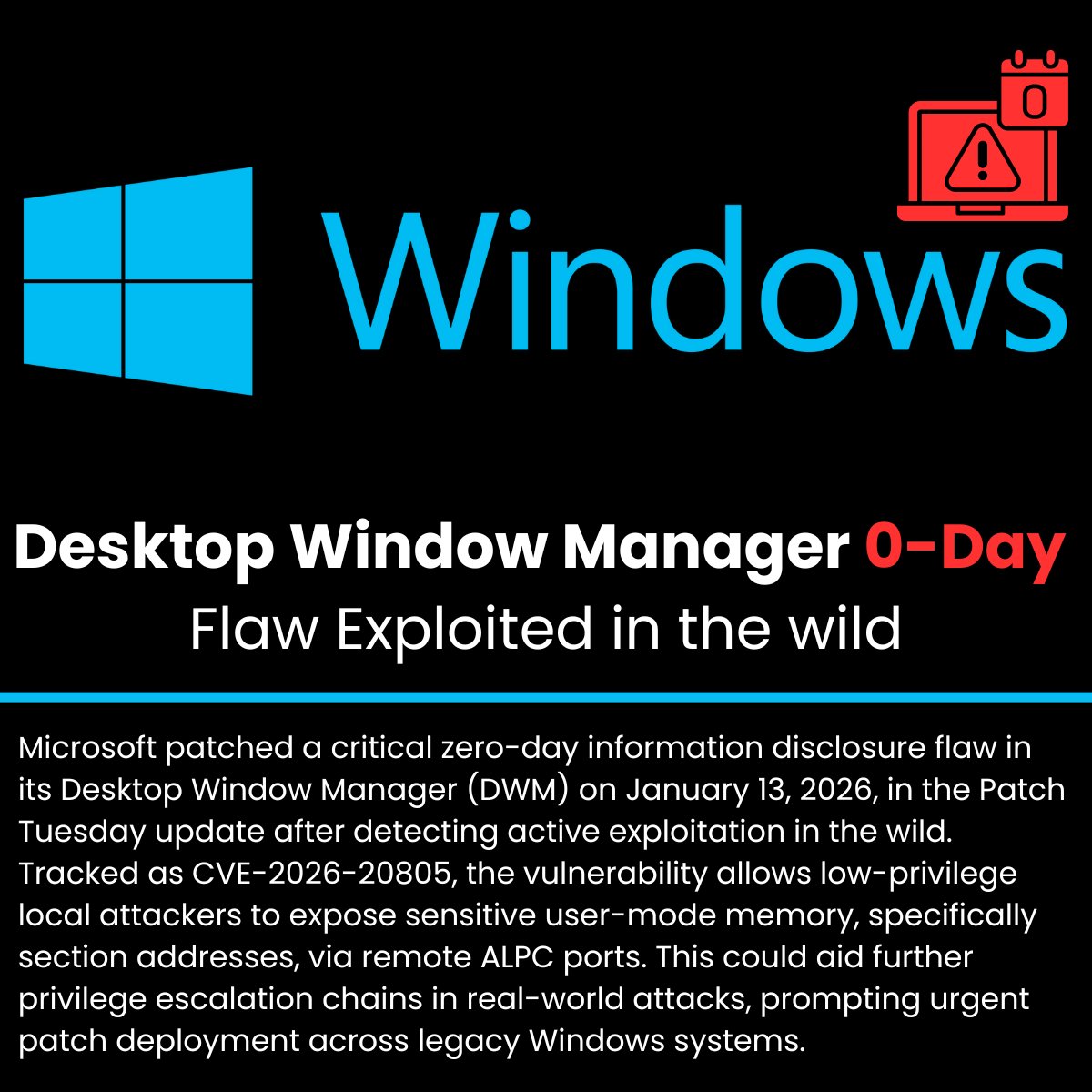
Microsoft Desktop Window Manager Zero-Day Vulnerability Exploited in the Wild Raises Serious Windows Security Concerns

Share via:

A newly disclosed zero-day vulnerability in Microsoft’s Desktop Window Manager (DWM) is being actively exploited in the wild, triggering fresh concerns about the security of Windows systems worldwide. The flaw, first detailed by Cybersecurity News, allows attackers to escalate privileges on affected systems, potentially gaining deep control over compromised machines. With no patch available at the time of disclosure, the vulnerability represents a significant threat to both enterprise and consumer Windows users.

Desktop Window Manager is a core Windows component responsible for rendering the graphical user interface, managing visual effects, and handling how applications appear on screen. Because it operates at a highly privileged level, any vulnerability within DWM carries serious implications. The active exploitation of this zero-day elevates the issue from a theoretical risk to an immediate, real-world danger.

Why Desktop Window Manager Is a High-Value Target

Desktop Window Manager sits at the heart of the Windows user experience. It controls window composition, animations, transparency effects, and visual rendering across the operating system. Because DWM interacts closely with both the kernel and user-level applications, it is a particularly attractive target for attackers seeking privilege escalation.

When attackers exploit vulnerabilities in DWM, they can potentially bypass security boundaries that normally protect the operating system. This makes DWM flaws especially valuable in multi-stage attacks, where an initial compromise is followed by escalation to administrative or system-level privileges.

What Makes This a Zero-Day Vulnerability

A zero-day vulnerability is defined by the absence of a publicly available fix at the time it is discovered or exploited. In this case, attackers were observed abusing the DWM flaw before Microsoft released a security patch, leaving defenders with limited immediate options.

The fact that this vulnerability is being exploited in the wild indicates that threat actors have already developed reliable exploit code. This significantly increases risk, as exploitation is no longer hypothetical. Systems running vulnerable versions of Windows are exposed until a fix is deployed.

How the Exploit Works in Practice

While full technical details have not been publicly disclosed to avoid further abuse, security researchers indicate that the vulnerability enables local privilege escalation. This means an attacker must already have some level of access to the system, such as through malware or a compromised user account.

Once exploited, the flaw allows attackers to elevate their privileges, potentially gaining system-level access. From there, they can disable security tools, install persistent malware, exfiltrate sensitive data, or pivot deeper into corporate networks.

Active Exploitation Raises the Stakes

The most alarming aspect of this vulnerability is confirmation that it is already being exploited in real-world attacks. Active exploitation suggests that the flaw is being used in targeted campaigns or broader malware operations.

Historically, vulnerabilities that reach this stage are often incorporated into exploit kits, ransomware attacks, or espionage campaigns. The longer a zero-day remains unpatched, the greater the likelihood that it will be adopted by additional threat actors.

Who Is at Risk

Any organization or individual running affected versions of Windows is potentially at risk. Enterprise environments are particularly vulnerable because attackers often use privilege escalation vulnerabilities to move laterally across networks.

Consumer users are also exposed, especially those who delay updates or run systems without additional security controls. Once a system is compromised, even basic user activity can be monitored or manipulated by attackers with elevated privileges.

Microsoft’s Response and Patch Outlook

At the time of reporting, Microsoft has acknowledged the vulnerability and is expected to address it in an upcoming security update. Historically, Microsoft prioritizes zero-days under active exploitation, often delivering fixes through emergency patches or the next Patch Tuesday cycle.

However, the window between disclosure and patch deployment remains a critical period of risk. During this time, defenders must rely on mitigations, monitoring, and behavioral detection to reduce exposure.
Temporary Mitigations and Defensive Measures

Until an official patch is released, organizations are encouraged to strengthen endpoint security and monitor for unusual activity. Restricting user privileges, applying application control policies, and increasing logging around system processes can help reduce risk.

Security teams should pay close attention to abnormal DWM behavior, unexpected privilege changes, and suspicious process activity. While these measures do not eliminate the vulnerability, they can help detect exploitation attempts early.

Why Privilege Escalation Flaws Are So Dangerous

Privilege escalation vulnerabilities like this one are rarely used in isolation. Instead, they serve as force multipliers. An attacker who gains initial access through phishing or malware can use such flaws to bypass defenses and gain full control of a system.

This makes privilege escalation bugs especially valuable in targeted attacks, where stealth and persistence are priorities. The DWM zero-day fits this pattern, making it particularly concerning for high-value targets.

A Pattern of Increasing Zero-Day Activity

The exploitation of the DWM vulnerability reflects a broader trend: attackers are increasingly targeting core operating system components. As security around applications improves, threat actors shift focus to lower-level components where vulnerabilities can have outsized impact.

Recent years have seen a rise in zero-day exploitation across widely used platforms. This trend underscores the importance of proactive security measures and rapid patch adoption.

Impact on Enterprises and Critical Infrastructure

In enterprise environments, DWM exploitation could enable attackers to bypass endpoint protections and gain administrative access. From there, attackers can deploy ransomware, steal credentials, or compromise sensitive systems.

Critical infrastructure operators are especially at risk, as Windows systems often underpin operational technology environments. A successful exploit could disrupt operations or expose sensitive data.

Why Rapid Patching Remains Essential

Once Microsoft releases a fix, rapid patch deployment will be critical. Attackers often reverse-engineer patches to improve exploit reliability, increasing risk for unpatched systems.

Organizations that delay updates become prime targets, particularly in the days immediately following patch release. This dynamic makes patch management one of the most important aspects of modern cybersecurity defense.

Lessons for Windows Users

The DWM zero-day serves as a reminder that no system is immune to vulnerabilities, even in mature platforms like Windows. Users should prioritize timely updates, enable automatic patching where possible, and avoid running daily tasks with administrative privileges.

For enterprises, the incident highlights the importance of defense-in-depth strategies that assume vulnerabilities will be exploited at some point.

How This Fits Into the Broader Threat Landscape

The exploitation of a core Windows component aligns with broader threat trends favoring stealthy, high-impact vulnerabilities. Attackers increasingly seek flaws that allow them to remain undetected while maintaining persistent access.

Zero-days like this one are often traded or sold within underground markets, further increasing the risk of widespread exploitation.

What Comes Next

As Microsoft prepares a fix, security researchers will continue analyzing the vulnerability to understand its full impact. Additional detections and indicators of compromise are likely to emerge as more data becomes available.

Users and organizations should stay alert for official guidance from Microsoft and apply patches as soon as they are released.

Conclusion: A Critical Reminder of Windows Security Realities

The active exploitation of a zero-day vulnerability in Microsoft Desktop Window Manager underscores the ongoing risks facing Windows users. As attackers continue to target core system components, the margin for error grows smaller.

This incident highlights the importance of layered security, rapid patching, and continuous monitoring. While Microsoft is expected to address the flaw quickly, the episode serves as a sobering reminder that even fundamental parts of modern operating systems can become entry points for serious attacks.


Disclaimer

We strive to uphold the highest ethical standards in all of our reporting and coverage. We StartupNews.fyi want to be transparent with our readers about any potential conflicts of interest that may arise in our work. It’s possible that some of the investors we feature may have connections to other businesses, including competitors or companies we write about. However, we want to assure our readers that this will not have any impact on the integrity or impartiality of our reporting. We are committed to delivering accurate, unbiased news and information to our audience, and we will continue to uphold our ethics and principles in all of our work. Thank you for your trust and support.

Popular

More Like this

Microsoft Desktop Window Manager Zero-Day Vulnerability Exploited in the Wild Raises Serious Windows Security Concerns

A newly disclosed zero-day vulnerability in Microsoft’s Desktop Window Manager (DWM) is being actively exploited in the wild, triggering fresh concerns about the security of Windows systems worldwide. The flaw, first detailed by Cybersecurity News, allows attackers to escalate privileges on affected systems, potentially gaining deep control over compromised machines. With no patch available at the time of disclosure, the vulnerability represents a significant threat to both enterprise and consumer Windows users.

Desktop Window Manager is a core Windows component responsible for rendering the graphical user interface, managing visual effects, and handling how applications appear on screen. Because it operates at a highly privileged level, any vulnerability within DWM carries serious implications. The active exploitation of this zero-day elevates the issue from a theoretical risk to an immediate, real-world danger.

Why Desktop Window Manager Is a High-Value Target

Desktop Window Manager sits at the heart of the Windows user experience. It controls window composition, animations, transparency effects, and visual rendering across the operating system. Because DWM interacts closely with both the kernel and user-level applications, it is a particularly attractive target for attackers seeking privilege escalation.

When attackers exploit vulnerabilities in DWM, they can potentially bypass security boundaries that normally protect the operating system. This makes DWM flaws especially valuable in multi-stage attacks, where an initial compromise is followed by escalation to administrative or system-level privileges.

What Makes This a Zero-Day Vulnerability

A zero-day vulnerability is defined by the absence of a publicly available fix at the time it is discovered or exploited. In this case, attackers were observed abusing the DWM flaw before Microsoft released a security patch, leaving defenders with limited immediate options.

The fact that this vulnerability is being exploited in the wild indicates that threat actors have already developed reliable exploit code. This significantly increases risk, as exploitation is no longer hypothetical. Systems running vulnerable versions of Windows are exposed until a fix is deployed.

How the Exploit Works in Practice

While full technical details have not been publicly disclosed to avoid further abuse, security researchers indicate that the vulnerability enables local privilege escalation. This means an attacker must already have some level of access to the system, such as through malware or a compromised user account.

Once exploited, the flaw allows attackers to elevate their privileges, potentially gaining system-level access. From there, they can disable security tools, install persistent malware, exfiltrate sensitive data, or pivot deeper into corporate networks.

Active Exploitation Raises the Stakes

The most alarming aspect of this vulnerability is confirmation that it is already being exploited in real-world attacks. Active exploitation suggests that the flaw is being used in targeted campaigns or broader malware operations.

Historically, vulnerabilities that reach this stage are often incorporated into exploit kits, ransomware attacks, or espionage campaigns. The longer a zero-day remains unpatched, the greater the likelihood that it will be adopted by additional threat actors.

Who Is at Risk

Any organization or individual running affected versions of Windows is potentially at risk. Enterprise environments are particularly vulnerable because attackers often use privilege escalation vulnerabilities to move laterally across networks.

Consumer users are also exposed, especially those who delay updates or run systems without additional security controls. Once a system is compromised, even basic user activity can be monitored or manipulated by attackers with elevated privileges.

Microsoft’s Response and Patch Outlook

At the time of reporting, Microsoft has acknowledged the vulnerability and is expected to address it in an upcoming security update. Historically, Microsoft prioritizes zero-days under active exploitation, often delivering fixes through emergency patches or the next Patch Tuesday cycle.

However, the window between disclosure and patch deployment remains a critical period of risk. During this time, defenders must rely on mitigations, monitoring, and behavioral detection to reduce exposure.

Temporary Mitigations and Defensive Measures

Until an official patch is released, organizations are encouraged to strengthen endpoint security and monitor for unusual activity. Restricting user privileges, applying application control policies, and increasing logging around system processes can help reduce risk.

Security teams should pay close attention to abnormal DWM behavior, unexpected privilege changes, and suspicious process activity. While these measures do not eliminate the vulnerability, they can help detect exploitation attempts early.

Why Privilege Escalation Flaws Are So Dangerous

Privilege escalation vulnerabilities like this one are rarely used in isolation. Instead, they serve as force multipliers. An attacker who gains initial access through phishing or malware can use such flaws to bypass defenses and gain full control of a system.

This makes privilege escalation bugs especially valuable in targeted attacks, where stealth and persistence are priorities. The DWM zero-day fits this pattern, making it particularly concerning for high-value targets.

A Pattern of Increasing Zero-Day Activity

The exploitation of the DWM vulnerability reflects a broader trend: attackers are increasingly targeting core operating system components. As security around applications improves, threat actors shift focus to lower-level components where vulnerabilities can have outsized impact.

Recent years have seen a rise in zero-day exploitation across widely used platforms. This trend underscores the importance of proactive security measures and rapid patch adoption.

Impact on Enterprises and Critical Infrastructure

In enterprise environments, DWM exploitation could enable attackers to bypass endpoint protections and gain administrative access. From there, attackers can deploy ransomware, steal credentials, or compromise sensitive systems.

Critical infrastructure operators are especially at risk, as Windows systems often underpin operational technology environments. A successful exploit could disrupt operations or expose sensitive data.

Why Rapid Patching Remains Essential

Once Microsoft releases a fix, rapid patch deployment will be critical. Attackers often reverse-engineer patches to improve exploit reliability, increasing risk for unpatched systems.

Organizations that delay updates become prime targets, particularly in the days immediately following patch release. This dynamic makes patch management one of the most important aspects of modern cybersecurity defense.

Lessons for Windows Users

The DWM zero-day serves as a reminder that no system is immune to vulnerabilities, even in mature platforms like Windows. Users should prioritize timely updates, enable automatic patching where possible, and avoid running daily tasks with administrative privileges.

For enterprises, the incident highlights the importance of defense-in-depth strategies that assume vulnerabilities will be exploited at some point.

How This Fits Into the Broader Threat Landscape

The exploitation of a core Windows component aligns with broader threat trends favoring stealthy, high-impact vulnerabilities. Attackers increasingly seek flaws that allow them to remain undetected while maintaining persistent access.

Zero-days like this one are often traded or sold within underground markets, further increasing the risk of widespread exploitation.

What Comes Next

As Microsoft prepares a fix, security researchers will continue analyzing the vulnerability to understand its full impact. Additional detections and indicators of compromise are likely to emerge as more data becomes available.

Users and organizations should stay alert for official guidance from Microsoft and apply patches as soon as they are released.

Conclusion: A Critical Reminder of Windows Security Realities

The active exploitation of a zero-day vulnerability in Microsoft Desktop Window Manager underscores the ongoing risks facing Windows users. As attackers continue to target core system components, the margin for error grows smaller.

This incident highlights the importance of layered security, rapid patching, and continuous monitoring. While Microsoft is expected to address the flaw quickly, the episode serves as a sobering reminder that even fundamental parts of modern operating systems can become entry points for serious attacks.

Disclaimer

We strive to uphold the highest ethical standards in all of our reporting and coverage. We StartupNews.fyi want to be transparent with our readers about any potential conflicts of interest that may arise in our work. It’s possible that some of the investors we feature may have connections to other businesses, including competitors or companies we write about. However, we want to assure our readers that this will not have any impact on the integrity or impartiality of our reporting. We are committed to delivering accurate, unbiased news and information to our audience, and we will continue to uphold our ethics and principles in all of our work. Thank you for your trust and support.

Website Upgradation is going on for any glitch kindly connect at office@startupnews.fyi

More like this

GrowthPal raises $2.6M  in funding led by Ideaspring Capital...

GrowthPal, co-founded by Maneesh Bhandari, Shalu Mitruka and Amaresh...

Animal Crossing’s Big 3.0 Update Has Fans Eager to...

The return of Animal Crossing: New Horizons to the...

I decluttered my closet with the ‘meal prep’ hack...

When it comes to organizing my home, the one...

Popular

iptv iptv iptv iptv iptv iptv iptv iptv iptv iptv iptv iptv iptv iptv iptv iptv iptv iptv iptv iptv iptv iptv iptv iptv iptv iptv iptv iptv iptv iptv iptv iptv iptv iptv iptv iptv iptv iptv iptv iptv iptv iptv iptv iptv iptv iptv iptv iptv iptv iptv iptv iptv iptv iptv iptv iptv iptv iptv iptv iptv iptv iptv iptv iptv iptv iptv iptv iptv iptv iptv iptv iptv iptv iptv iptv iptv iptv iptv iptv iptv iptv iptv iptv iptv iptv iptv iptv iptv iptv iptv iptv iptv iptv iptv iptv iptv iptv iptv iptv iptv iptv iptv iptv iptv iptv iptv iptv iptv iptv iptv iptv iptv iptv iptv iptv iptv iptv iptv iptv iptv iptv iptv iptv iptv iptv iptv iptv iptv iptv iptv iptv iptv iptv iptv iptv iptv iptv iptv iptv iptv iptv iptv iptv iptv iptv iptv iptv iptv iptv iptv iptv iptv iptv iptv iptv iptv iptv iptv iptv iptv iptv iptv iptv iptv iptv iptv iptv iptv iptv iptv iptv iptv iptv iptv iptv iptv iptv iptv iptv iptv iptv iptv iptv iptv iptv iptv iptv iptv iptv iptv iptv iptv iptv iptv iptv iptv iptv iptv iptv iptv iptv iptv iptv iptv iptv iptv iptv iptv iptv iptv iptv iptv iptv iptv iptv iptv iptv iptv iptv iptv iptv iptv iptv iptv iptv iptv iptv iptv iptv iptv iptv iptv iptv iptv iptv iptv iptv iptv iptv iptv iptv iptv iptv iptv iptv iptv iptv iptv iptv iptv iptv iptv iptv iptv iptv iptv iptv iptv iptv iptv iptv iptv iptv iptv iptv iptv iptv iptv iptv iptv iptv iptv iptv iptv iptv iptv iptv iptv iptv iptv iptv iptv iptv iptv iptv iptv iptv iptv iptv iptv iptv iptv iptv iptv iptv iptv iptv iptv iptv iptv iptv iptv iptv iptv iptv iptv iptv iptv iptv iptv iptv iptv iptv iptv iptv iptv iptv iptv iptv iptv iptv iptv iptv iptv iptv iptv iptv iptv iptv iptv iptv iptv iptv iptv iptv iptv iptv iptv iptv iptv iptv iptv iptv iptv iptv iptv iptv iptv iptv iptv iptv iptv iptv iptv iptv iptv iptv iptv iptv iptv iptv iptv iptv iptv iptv iptv iptv iptv iptv iptv iptv iptv iptv iptv iptv iptv iptv iptv iptv iptv iptv iptv iptv iptv iptv iptv iptv iptv iptv iptv iptv iptv iptv iptv iptv iptv iptv iptv iptv iptv iptv iptv iptv iptv iptv iptv iptv iptv iptv iptv iptv iptv iptv iptv iptv iptv iptv iptv iptv iptv iptv iptv iptv iptv iptv iptv iptv iptv iptv iptv iptv iptv iptv iptv iptv iptv iptv iptv iptv iptv iptv iptv iptv iptv iptv iptv iptv iptv iptv iptv iptv iptv iptv iptv iptv iptv iptv iptv iptv iptv iptv iptv iptv iptv iptv iptv iptv iptv iptv iptv iptv iptv iptv iptv iptv iptv