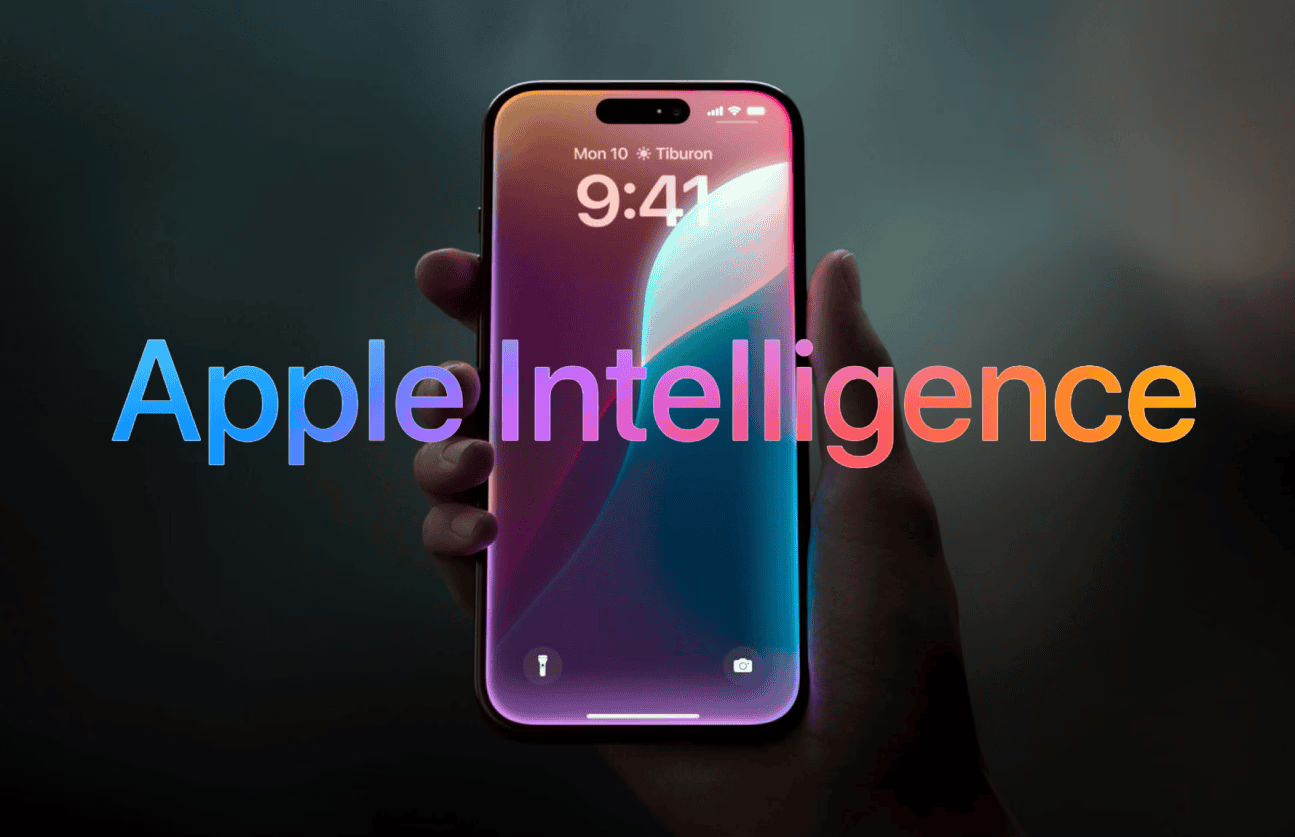
Apple Lost the AI Race — Now the Real Challenge Begins

Share via:

For much of the past decade, Apple defined the modern smartphone experience. It shaped how people interact with technology, from touch interfaces to privacy-centric ecosystems. But as artificial intelligence becomes the defining technology of this era, a growing consensus has emerged across the industry: Apple has lost the AI race—at least the first leg of it. As explored in depth by The Verge, Apple now faces a far more complex challenge than catching up on features. The real test is whether it can redefine AI on its own terms without abandoning the principles that built its brand.

This is not a story about Apple failing outright. It is a story about timing, strategy, and what happens when a company optimized for polish and control confronts a technology that rewards speed, scale, and iteration.

How Apple Fell Behind in the AI Moment

The current AI boom did not arrive quietly. Generative models, conversational assistants, and multimodal systems exploded into public awareness almost overnight. Companies like Google, OpenAI, and Microsoft moved aggressively, shipping products early and refining them in public.

Apple, by contrast, remained cautious. Siri, once a pioneer, stagnated. While competitors unveiled assistants capable of reasoning across text, images, and context, Siri remained largely transactional—reliable for basic commands but ill-equipped for deeper intelligence.

This gap became impossible to ignore when Google introduced Gemini, positioning it not as a feature but as a system-wide intelligence layer.

Why Gemini Changed the Conversation

Gemini reframed expectations. It showed users that AI assistants could be proactive, contextual, and multimodal. It could understand what users were doing, reference prior interactions, and operate across apps and services.

Suddenly, the bar moved. AI was no longer about answering questions. It was about understanding lives.

Against this backdrop, Apple’s AI offerings felt restrained. Even well-executed features appeared incremental rather than transformative.

This is why the narrative shifted from “Apple is being careful” to “Apple is behind.”

Apple’s Google AI Deal: A Strategic Admission

Apple’s reported decision to integrate Google’s Gemini into the iPhone ecosystem was a watershed moment. Rather than signaling weakness, it revealed pragmatism.

Apple acknowledged that building a world-class large language model fast enough to compete head-on would be extraordinarily difficult without compromising its values. Partnering with Google allows Apple to offer competitive AI capabilities while buying time.

But this partnership also underscores a reality: Apple no longer controls the frontier of consumer AI.

Why Losing the First AI Race Isn’t Fatal

Technology history is full of examples where being first did not guarantee long-term dominance. Apple itself is proof. It was not first to smartphones, MP3 players, or smartwatches—but it redefined each category.

The AI race is not a single sprint. It is a marathon with multiple phases. Apple may have lost the first phase—public perception and early deployment—but the next phase is more complex.

That phase is about trust, integration, and everyday usefulness.

Apple’s Real Advantage: Ecosystem Control

Unlike its rivals, Apple controls its ecosystem end to end. Hardware, software, services, and silicon all move in concert.

This matters enormously for AI. A deeply integrated assistant can coordinate actions across devices in ways cloud-first competitors struggle to match. AI that understands your phone, watch, laptop, and earbuds simultaneously is more powerful than one that simply answers questions.

Apple’s challenge is not inventing intelligence—it is weaving it invisibly into everything users do.

Privacy: Apple’s Constraint and Opportunity

Apple’s greatest strength is also its biggest constraint. Privacy-first design limits how aggressively Apple can train models and retain user data.

However, as AI matures, privacy may become a competitive advantage rather than a liability. Users are increasingly uneasy about assistants that know everything but explain nothing.

If Apple can deliver on-device or privacy-preserving AI that rivals cloud-based intelligence, it could redefine trust in AI systems.

That is a harder problem—but a more durable one.

Why Siri’s Reinvention Matters More Than Features

Siri does not need more commands. It needs a new architecture.

The future Siri must:

  • Understand context across time
  • Reason across apps
  • Act proactively
  • Stay largely invisible

This vision aligns closely with Gemini’s philosophy, which is why comparisons are inevitable. But Apple’s implementation will feel different if it succeeds—less chatty, more anticipatory.

The challenge is execution, not imagination.

Apple’s AI Problem Is Cultural, Not Technical

Apple has world-class engineers and custom silicon optimized for machine learning. The notice gap is not technical capability—it is organizational tempo.

AI rewards rapid iteration and public experimentation. Apple’s culture rewards secrecy and polish. Reconciling these approaches is Apple’s true challenge.

The question is whether Apple can move fast enough without breaking what makes it Apple.

The Risk of Letting Others Define the Future

By allowing Google and OpenAI to define user expectations for AI, Apple risks becoming a follower in perception, even if it later delivers superior experiences.

Perception matters. Once users associate innovation with competitors, Apple must work harder to reclaim narrative leadership.

That said, Apple has done this before. The company excels at reframing existing ideas as inevitable once executed well.

AI as Infrastructure, Not an App

One reason Apple appears behind is that it does not think of AI as an app. It thinks of AI as infrastructure.

This makes Apple’s progress harder to see. When Apple finally reveals its AI vision fully, it will likely arrive as a system-wide evolution rather than a single product launch.

This approach is riskier but potentially more transformative.

Why the Next Two Years Are Critical

Apple’s window to redefine its AI position is narrow but real. The next two years will determine whether Apple becomes a first-class AI platform or a premium hardware shell around others’ intelligence.

Investments in custom silicon, on-device models, and OS-level intelligence suggest Apple understands the stakes.

What remains is delivery.

The Role of Regulation and Trust

AI regulation is coming. When it does, Apple’s conservative approach may look prescient rather than slow.

Compliance, explainability, and data minimization will matter more. Apple is better positioned than most to adapt to these constraints without massive restructuring.

This could level the playing field.

Why Apple’s Challenge Is Bigger Than Catching Up

Catching up on features is easy. Redefining expectations is hard.

Apple’s real challenge is not matching Gemini’s capabilities—it is deciding what kind of AI it wants to ship at scale, to billions of users, without eroding trust.

That is a harder race than speed alone.
What Success Would Look Like for Apple

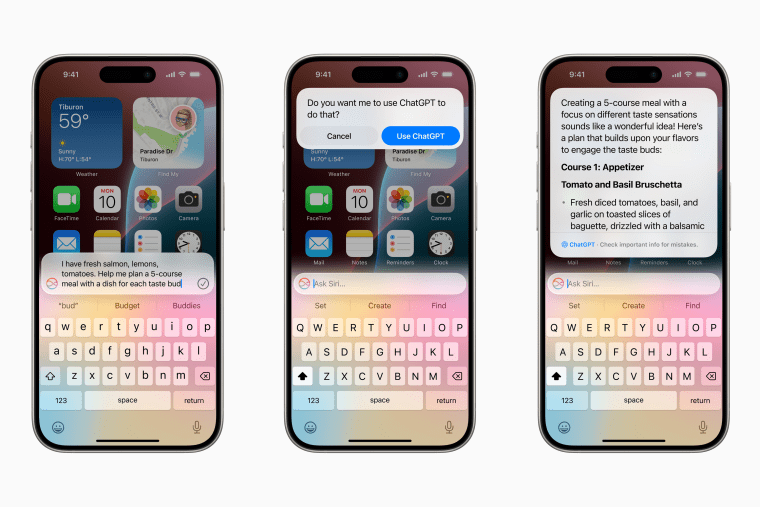
Apple does not need the smartest chatbot. It needs the most useful assistant.

Success would look like:

  • Less friction, not more interaction
  • Fewer commands, more anticipation
  • Intelligence that feels native, not bolted on

If Apple delivers this, the narrative will change quickly.

Failure Is Also a Possibility

There is risk. If Apple moves too slowly, users may permanently associate innovation with competitors. If it moves too fast, it may compromise privacy and polish.

The balance is delicate.

But Apple has navigated similar inflection points before.

Conclusion: The AI Race Isn’t Over—It’s Just Changed

Apple may have lost the first phase of the AI race. Gemini, ChatGPT, and others set expectations faster and louder. But the real challenge—the one that determines long-term winners—is only beginning.

That challenge is about trust, integration, and living with AI every day. Apple’s strengths align closely with those needs.

The company no longer has the luxury of waiting. But it still has the assets to redefine the game..


Disclaimer

We strive to uphold the highest ethical standards in all of our reporting and coverage. We StartupNews.fyi want to be transparent with our readers about any potential conflicts of interest that may arise in our work. It’s possible that some of the investors we feature may have connections to other businesses, including competitors or companies we write about. However, we want to assure our readers that this will not have any impact on the integrity or impartiality of our reporting. We are committed to delivering accurate, unbiased news and information to our audience, and we will continue to uphold our ethics and principles in all of our work. Thank you for your trust and support.

Popular

More Like this

Apple Lost the AI Race — Now the Real Challenge Begins

For much of the past decade, Apple defined the modern smartphone experience. It shaped how people interact with technology, from touch interfaces to privacy-centric ecosystems. But as artificial intelligence becomes the defining technology of this era, a growing consensus has emerged across the industry: Apple has lost the AI race—at least the first leg of it. As explored in depth by The Verge, Apple now faces a far more complex challenge than catching up on features. The real test is whether it can redefine AI on its own terms without abandoning the principles that built its brand.

This is not a story about Apple failing outright. It is a story about timing, strategy, and what happens when a company optimized for polish and control confronts a technology that rewards speed, scale, and iteration.

How Apple Fell Behind in the AI Moment

The current AI boom did not arrive quietly. Generative models, conversational assistants, and multimodal systems exploded into public awareness almost overnight. Companies like Google, OpenAI, and Microsoft moved aggressively, shipping products early and refining them in public.

Apple, by contrast, remained cautious. Siri, once a pioneer, stagnated. While competitors unveiled assistants capable of reasoning across text, images, and context, Siri remained largely transactional—reliable for basic commands but ill-equipped for deeper intelligence.

This gap became impossible to ignore when Google introduced Gemini, positioning it not as a feature but as a system-wide intelligence layer.

Why Gemini Changed the Conversation

Gemini reframed expectations. It showed users that AI assistants could be proactive, contextual, and multimodal. It could understand what users were doing, reference prior interactions, and operate across apps and services.

Suddenly, the bar moved. AI was no longer about answering questions. It was about understanding lives.

Against this backdrop, Apple’s AI offerings felt restrained. Even well-executed features appeared incremental rather than transformative.

This is why the narrative shifted from “Apple is being careful” to “Apple is behind.”

Apple’s Google AI Deal: A Strategic Admission

Apple’s reported decision to integrate Google’s Gemini into the iPhone ecosystem was a watershed moment. Rather than signaling weakness, it revealed pragmatism.

Apple acknowledged that building a world-class large language model fast enough to compete head-on would be extraordinarily difficult without compromising its values. Partnering with Google allows Apple to offer competitive AI capabilities while buying time.

But this partnership also underscores a reality: Apple no longer controls the frontier of consumer AI.

Why Losing the First AI Race Isn’t Fatal

Technology history is full of examples where being first did not guarantee long-term dominance. Apple itself is proof. It was not first to smartphones, MP3 players, or smartwatches—but it redefined each category.

The AI race is not a single sprint. It is a marathon with multiple phases. Apple may have lost the first phase—public perception and early deployment—but the next phase is more complex.

That phase is about trust, integration, and everyday usefulness.

Apple’s Real Advantage: Ecosystem Control

Unlike its rivals, Apple controls its ecosystem end to end. Hardware, software, services, and silicon all move in concert.

This matters enormously for AI. A deeply integrated assistant can coordinate actions across devices in ways cloud-first competitors struggle to match. AI that understands your phone, watch, laptop, and earbuds simultaneously is more powerful than one that simply answers questions.

Apple’s challenge is not inventing intelligence—it is weaving it invisibly into everything users do.

Privacy: Apple’s Constraint and Opportunity

Apple’s greatest strength is also its biggest constraint. Privacy-first design limits how aggressively Apple can train models and retain user data.

However, as AI matures, privacy may become a competitive advantage rather than a liability. Users are increasingly uneasy about assistants that know everything but explain nothing.

If Apple can deliver on-device or privacy-preserving AI that rivals cloud-based intelligence, it could redefine trust in AI systems.

That is a harder problem—but a more durable one.

Why Siri’s Reinvention Matters More Than Features

Siri does not need more commands. It needs a new architecture.

The future Siri must:

  • Understand context across time
  • Reason across apps
  • Act proactively
  • Stay largely invisible

This vision aligns closely with Gemini’s philosophy, which is why comparisons are inevitable. But Apple’s implementation will feel different if it succeeds—less chatty, more anticipatory.

The challenge is execution, not imagination.

Apple’s AI Problem Is Cultural, Not Technical

Apple has world-class engineers and custom silicon optimized for machine learning. The notice gap is not technical capability—it is organizational tempo.

AI rewards rapid iteration and public experimentation. Apple’s culture rewards secrecy and polish. Reconciling these approaches is Apple’s true challenge.

The question is whether Apple can move fast enough without breaking what makes it Apple.

The Risk of Letting Others Define the Future

By allowing Google and OpenAI to define user expectations for AI, Apple risks becoming a follower in perception, even if it later delivers superior experiences.

Perception matters. Once users associate innovation with competitors, Apple must work harder to reclaim narrative leadership.

That said, Apple has done this before. The company excels at reframing existing ideas as inevitable once executed well.

AI as Infrastructure, Not an App

One reason Apple appears behind is that it does not think of AI as an app. It thinks of AI as infrastructure.

This makes Apple’s progress harder to see. When Apple finally reveals its AI vision fully, it will likely arrive as a system-wide evolution rather than a single product launch.

This approach is riskier but potentially more transformative.

Why the Next Two Years Are Critical

Apple’s window to redefine its AI position is narrow but real. The next two years will determine whether Apple becomes a first-class AI platform or a premium hardware shell around others’ intelligence.

Investments in custom silicon, on-device models, and OS-level intelligence suggest Apple understands the stakes.

What remains is delivery.

The Role of Regulation and Trust

AI regulation is coming. When it does, Apple’s conservative approach may look prescient rather than slow.

Compliance, explainability, and data minimization will matter more. Apple is better positioned than most to adapt to these constraints without massive restructuring.

This could level the playing field.

Why Apple’s Challenge Is Bigger Than Catching Up

Catching up on features is easy. Redefining expectations is hard.

Apple’s real challenge is not matching Gemini’s capabilities—it is deciding what kind of AI it wants to ship at scale, to billions of users, without eroding trust.

That is a harder race than speed alone.

What Success Would Look Like for Apple

Apple does not need the smartest chatbot. It needs the most useful assistant.

Success would look like:

  • Less friction, not more interaction
  • Fewer commands, more anticipation
  • Intelligence that feels native, not bolted on

If Apple delivers this, the narrative will change quickly.

Failure Is Also a Possibility

There is risk. If Apple moves too slowly, users may permanently associate innovation with competitors. If it moves too fast, it may compromise privacy and polish.

The balance is delicate.

But Apple has navigated similar inflection points before.

Conclusion: The AI Race Isn’t Over—It’s Just Changed

Apple may have lost the first phase of the AI race. Gemini, ChatGPT, and others set expectations faster and louder. But the real challenge—the one that determines long-term winners—is only beginning.

That challenge is about trust, integration, and living with AI every day. Apple’s strengths align closely with those needs.

The company no longer has the luxury of waiting. But it still has the assets to redefine the game..

Disclaimer

We strive to uphold the highest ethical standards in all of our reporting and coverage. We StartupNews.fyi want to be transparent with our readers about any potential conflicts of interest that may arise in our work. It’s possible that some of the investors we feature may have connections to other businesses, including competitors or companies we write about. However, we want to assure our readers that this will not have any impact on the integrity or impartiality of our reporting. We are committed to delivering accurate, unbiased news and information to our audience, and we will continue to uphold our ethics and principles in all of our work. Thank you for your trust and support.

Website Upgradation is going on for any glitch kindly connect at office@startupnews.fyi

More like this

Kiwibit Beako 4K Smart Bird Feeder With Solar Roof...

Kiwibit sells a few different versions of the Beako;...

U.S. slashes Taiwan tariffs in new semiconductor trade deal...

The U.S. and Taiwan just settled on a new...

How to easily add a backup carrier to your...

Follow ZDNET: Add us as a...

Popular

best iptv best iptv best iptv best iptv best iptv best iptv best iptv best iptv best iptv best iptv best iptv best iptv best iptv best iptv best iptv best iptv best iptv best iptv best iptv best iptv best iptv best iptv best iptv best iptv best iptv best iptv best iptv best iptv best iptv best iptv best iptv best iptv best iptv best iptv best iptv best iptv best iptv best iptv best iptv best iptv best iptv best iptv best iptv best iptv best iptv best iptv best iptv best iptv best iptv best iptv best iptv best iptv best iptv best iptv best iptv best iptv best iptv best iptv best iptv best iptv best iptv best iptv best iptv best iptv best iptv best iptv best iptv best iptv best iptv best iptv best iptv best iptv best iptv best iptv best iptv best iptv best iptv best iptv best iptv best iptv best iptv best iptv best iptv best iptv best iptv best iptv best iptv best iptv best iptv best iptv best iptv best iptv best iptv best iptv best iptv best iptv best iptv best iptv best iptv best iptv best iptv best iptv best iptv best iptv best iptv best iptv best iptv best iptv best iptv best iptv best iptv best iptv best iptv best iptv best iptv best iptv best iptv best iptv best iptv best iptv best iptv best iptv best iptv best iptv best iptv best iptv best iptv best iptv best iptv best iptv best iptv best iptv best iptv best iptv best iptv best iptv best iptv best iptv best iptv best iptv best iptv best iptv best iptv best iptv best iptv best iptv best iptv best iptv best iptv best iptv best iptv best iptv best iptv best iptv best iptv best iptv best iptv best iptv best iptv best iptv best iptv best iptv best iptv best iptv best iptv best iptv best iptv best iptv best iptv best iptv best iptv best iptv best iptv best iptv best iptv best iptv best iptv best iptv best iptv best iptv best iptv best iptv best iptv best iptv best iptv best iptv best iptv best iptv best iptv best iptv best iptv best iptv best iptv best iptv best iptv best iptv best iptv