
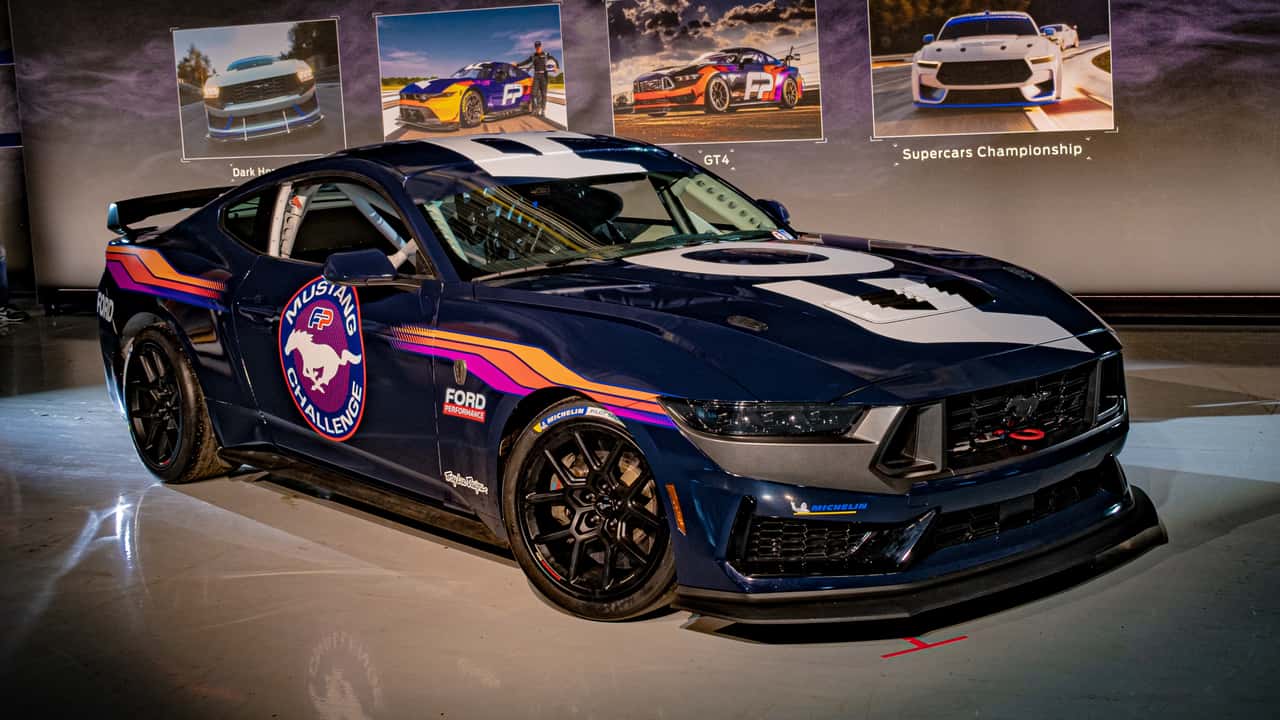
Ford has officially announced that the Mustang Dark Horse SC will enter competitive motorsports in 2027, marking a significant escalation of the company’s factory-backed racing ambitions for its newest performance Mustang. The confirmation, first reported by Jayski, signals Ford’s intent to turn the Dark Horse badge from a high-performance road car into a serious competition platform with global relevance.
This announcement goes beyond a simple racing entry. It reflects Ford’s broader strategy to keep internal combustion performance relevant in an era increasingly defined by electrification, sustainability mandates, and shifting consumer priorities. By committing the Dark Horse SC to competition, Ford is reinforcing the Mustang’s identity as a motorsports-first nameplate rather than a nostalgia-driven icon.
Why the Mustang Dark Horse SC Matters to Ford’s Racing Strategy
The Dark Horse SC is not just another Mustang variant adapted for the track. It has been conceived from the outset as a bridge between road-going performance cars and purpose-built race machines. Ford’s decision to campaign it in 2027 confirms that the model was always intended to have motorsport DNA.
For Ford, motorsports serve as both a testing ground and a marketing platform. Competitive racing allows Ford Performance engineers to push powertrain durability, aerodynamics, and chassis dynamics to extremes that are impossible to replicate in consumer testing alone. Lessons learned on track often influence future road cars, strengthening the brand’s performance credibility.
What ‘SC’ Signifies in the Dark Horse Name
The “SC” designation is widely understood to reference supercharging, a defining feature that separates the Dark Horse SC from other Mustang variants. While Ford has not yet disclosed full technical specifications for the racing version, the SC badge strongly suggests forced induction will play a central role in its competitive identity.
Supercharging aligns with Ford’s philosophy of delivering immediate throttle response, sustained power output, and mechanical drama. In a racing context, this configuration provides predictable performance characteristics that teams can tune for endurance, sprint formats, or balance-of-performance regulations.
A Purpose-Built Race Car, Not a Converted Street Model
Ford has been careful to position the Dark Horse SC as a purpose-built competition car, rather than a lightly modified street Mustang. This distinction is critical.
Modern motorsports regulations demand extensive structural reinforcement, advanced safety systems, and specialized aerodynamics. The Dark Horse SC is expected to feature a bespoke racing chassis configuration, track-specific suspension geometry, and motorsport-grade cooling solutions.
By announcing the car well ahead of its 2027 debut, Ford gives teams and partners time to prepare, test, and integrate the platform into long-term racing programs.
Where the Dark Horse SC Is Expected to Compete
While Ford has not yet confirmed specific series, industry observers expect the Mustang Dark Horse SC to target GT-style and touring car-based championships where manufacturer-backed entries play a central role.
These categories offer global visibility and competitive parity, allowing Ford to showcase engineering excellence without the extreme costs associated with prototype racing. Such series also align closely with production-based performance cars, strengthening the connection between track and showroom.
The 2027 timeline suggests Ford is aligning the Dark Horse SC with future regulation cycles.
Ford Performance’s Growing Influence
The announcement underscores the growing influence of Ford Performance within the company. Over the past decade, Ford Performance has expanded its footprint across multiple racing disciplines, from endurance racing to grassroots motorsports.
The Dark Horse SC fits neatly into this portfolio. It complements existing Mustang-based racing efforts while introducing a more modern, aggressive interpretation of the platform.
This consistency reinforces Ford’s identity as a brand that competes, not just participates.
Why 2027 Is a Strategic Target
Choosing 2027 as the debut year is not arbitrary. Motorsports regulations often operate on multi-year cycles, and manufacturers plan entries to coincide with new technical frameworks.
By targeting 2027, Ford positions the Dark Horse SC to debut under rules that may better accommodate modern powertrains, efficiency targets, and safety standards. This forward planning reduces the risk of early obsolescence and maximizes the car’s competitive lifespan.
It also allows Ford to refine the platform through extensive testing before official competition.
The Mustang’s Enduring Motorsport Legacy
The Mustang has a long and storied racing history, competing in everything from touring car championships to endurance events. The Dark Horse SC builds on that legacy rather than reinventing it.
By attaching the Dark Horse name to a competition program, Ford signals that this is not a side project. It is a continuation of a lineage that values speed, durability, and driver engagement.
This historical continuity strengthens the emotional connection between fans and the brand.
How Racing Influences Road Cars
One of the most important aspects of a factory racing program is technology transfer. Aerodynamics, cooling strategies, braking systems, and power delivery developed for competition often inform future production models.
The Dark Horse SC’s racing program could influence subsequent Mustang variants, particularly in areas such as forced induction refinement and chassis tuning.
For enthusiasts, this means the racing effort may deliver tangible benefits beyond trophies.
Market and Fan Reaction
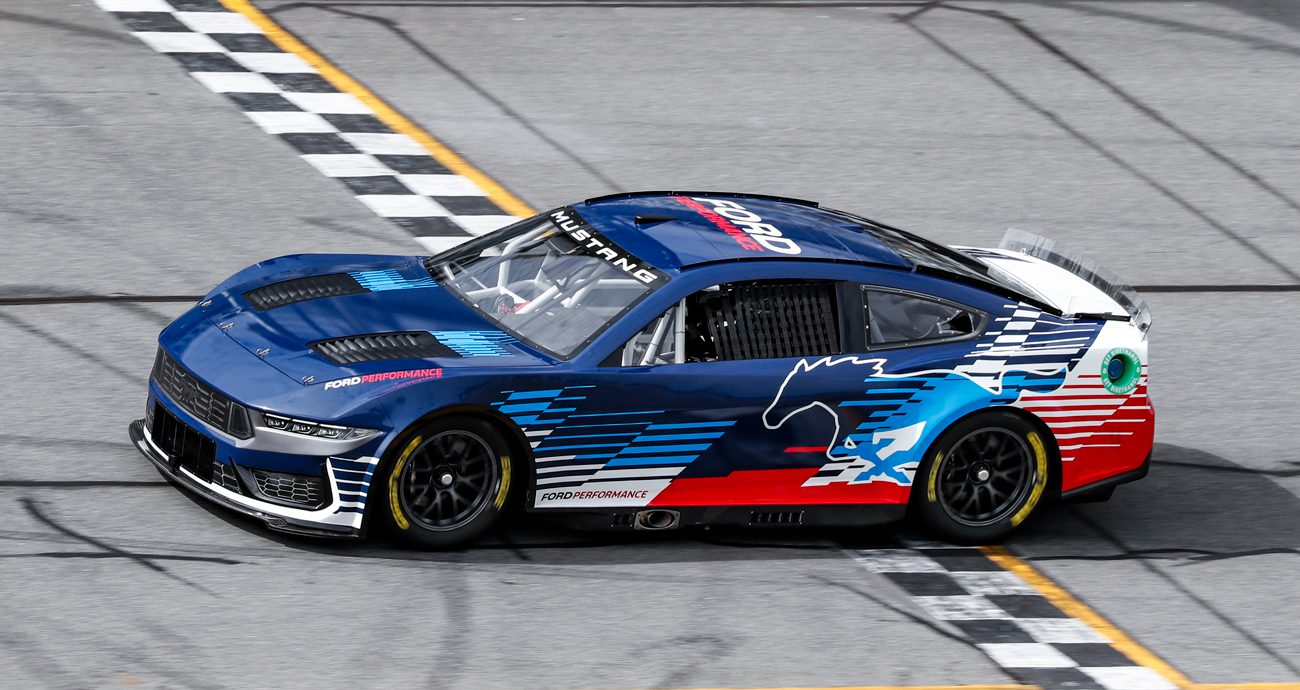
Early reactions to the announcement have been overwhelmingly positive among motorsports fans and Mustang loyalists. The idea of a Dark Horse SC competing on the global stage resonates with those who view racing as central to the Mustang’s identity.
In a market where many manufacturers are scaling back combustion-based racing efforts, Ford’s commitment stands out. It reinforces the perception that Ford remains deeply invested in performance culture.
This enthusiasm will likely translate into strong engagement as more details emerge.
Balancing Electrification and Combustion Performance
Ford’s announcement arrives at a time when the automotive industry is navigating a complex transition toward electrification. By committing the Dark Horse SC to racing, Ford demonstrates that internal combustion engines still have a role to play—particularly in motorsports.
This does not contradict Ford’s investment in electric vehicles. Instead, it reflects a dual strategy: advancing electric mobility while preserving performance heritage.
Such balance allows Ford to appeal to a broad audience without diluting its brand identity.
What This Means for Customer Racing
Factory-backed race cars often form the foundation for customer racing programs. While Ford has not confirmed customer availability for the Dark Horse SC, its announcement opens the door to potential privateer participation.
Customer racing strengthens motorsports ecosystems by enabling independent teams to compete using manufacturer-supported platforms. If Ford extends the Dark Horse SC to customers, it could significantly expand the car’s presence across series and regions.
This would further amplify the Mustang’s competitive footprint.
A Statement of Confidence in the Mustang Platform
Committing a new Mustang variant to racing years in advance reflects confidence in the underlying platform. Ford clearly believes the Dark Horse architecture has the structural integrity and adaptability required for long-term competition.
This confidence matters. Motorsport programs are expensive, complex, and high-risk. Manufacturers do not enter them lightly.
Ford’s decision signals long-term belief rather than short-term experimentation.
The Broader Impact on Motorsports
The introduction of the Mustang Dark Horse SC in 2027 could influence competitive dynamics across multiple series. A new factory-backed entry often raises performance benchmarks and encourages rivals to respond.
This competitive pressure benefits fans by delivering closer racing and faster technological advancement.
Ford’s involvement ensures that Mustang remains part of that evolution.
What Comes Next
Over the next year, more information is expected to emerge regarding the Dark Horse SC’s technical specifications, homologation plans, and series eligibility. Each announcement will further clarify Ford’s vision for the program.
Testing and development updates will also offer insight into how the car is shaping up ahead of its debut.
For now, the announcement sets the stage.
Conclusion: Ford Doubles Down on Mustang Racing in 2027
Ford’s decision to field the Mustang Dark Horse SC in competition starting in 2027 is more than a motorsports announcement. It is a declaration of intent.
By investing in a purpose-built racing platform rooted in its latest performance Mustang, Ford reinforces its commitment to competition, engineering excellence, and enthusiast culture. The Dark Horse SC represents the next chapter in a legacy that values speed, resilience, and innovation.
As the automotive world evolves, Ford is proving that there is still room for loud, fast, mechanically thrilling machines on the world’s racetracks. The Mustang Dark Horse SC is poised to carry that torch into the next era of motorsport


