Will Google Become Our AI-Powered Central Planner? The Quiet Shift That Could Reshape the Global Economy

Share via:

The question of whether Google could become an AI-powered central planner no longer sounds like speculative futurism. It is increasingly grounded in reality. As artificial intelligence advances and data-driven decision-making expands into pricing, logistics, advertising, and consumer behavior, Google’s role begins to resemble something far more consequential than a search engine or ad platform. As explored by The Big Newsletter, Google may be positioning itself to quietly organize prices, demand, and information flows at a scale never before seen in the private sector.

This is not about intent alone. It is about capability. Google already sits at the intersection of search, advertising, cloud infrastructure, mapping, productivity software, and now advanced AI models. When those systems begin coordinating in real time, the result looks less like a collection of tools and more like an operating layer for the global economy.

Why the Idea of a “Central Planner” Is No Longer Abstract

Historically, central planning has been associated with governments attempting to manage economies from the top down. Those efforts struggled because they lacked real-time data, adaptive feedback, and computational power. Google, however, operates in an entirely different context.

With access to trillions of data points—search queries, location data, ad performance, shopping trends, and cloud-hosted business operations—Google already observes economic behavior as it happens. AI turns that observation into prediction and optimization.

At that point, coordination becomes possible.

From Organizing Information to Organizing Outcomes

Google’s original mission was famously simple: organize the world’s information. Over time, that mission has quietly expanded.

Search no longer just returns links. It recommends answers. Ads no longer just display options. They shape demand. Maps no longer just show routes. They optimize traffic flow.

With AI, Google can increasingly anticipate needs rather than respond to them. That shift—from information organization to outcome optimization—is what makes the “central planner” comparison feel relevant.

Pricing Power Through Information Advantage

One of the most consequential areas where Google’s influence could expand is pricing. Through advertising auctions, shopping integrations, and analytics tools, Google already affects how prices are set and discovered.

If AI models begin optimizing prices dynamically—based on demand, inventory, competition, and user behavior—Google could indirectly influence price levels across industries.

This would not require explicit control. It would emerge naturally from optimization.

Why AI Changes the Scale of Influence

What makes this moment different from past tech dominance is AI’s ability to coordinate complexity. Traditional algorithms optimize narrowly. AI systems can optimize across domains.

Google’s AI models can theoretically balance:
• Consumer demand
• Supplier pricing
• Advertising efficiency
• Logistics constraints
• Regional behavior patterns

At sufficient scale, this looks less like market mediation and more like systemic coordination.

The Invisible Hand, Now Algorithmic

Economists often describe markets as guided by an “invisible hand.” AI makes that hand visible—and programmable.

Google’s platforms already sit between buyers and sellers in countless transactions. AI allows those platforms to nudge outcomes continuously.

Importantly, this does not require malicious intent. Optimization alone can reshape markets.

The planner emerges not because Google wants control, but because optimization rewards coordination.

Why Google Is Uniquely Positioned

Many companies build AI. Few have Google’s breadth.

Google combines:
• Search intent
• Advertising demand
• Mapping and mobility data
• Cloud-hosted enterprise operations
• Consumer productivity tools

This breadth allows Google’s AI systems to see economic relationships others cannot. The result is leverage—not through coercion, but through insight.

That insight becomes power when applied consistently.

Central Planning Without Central Authority

Traditional central planners imposed rules. Google’s influence operates through incentives.

Advertisers follow recommendations. Businesses rely on analytics. Consumers accept defaults. Over time, behavior aligns with optimization outputs.

This is central planning without mandates—soft coordination driven by data and AI.

That subtlety makes it more powerful and harder to regulate.

The Role of Gemini and Advanced AI Models

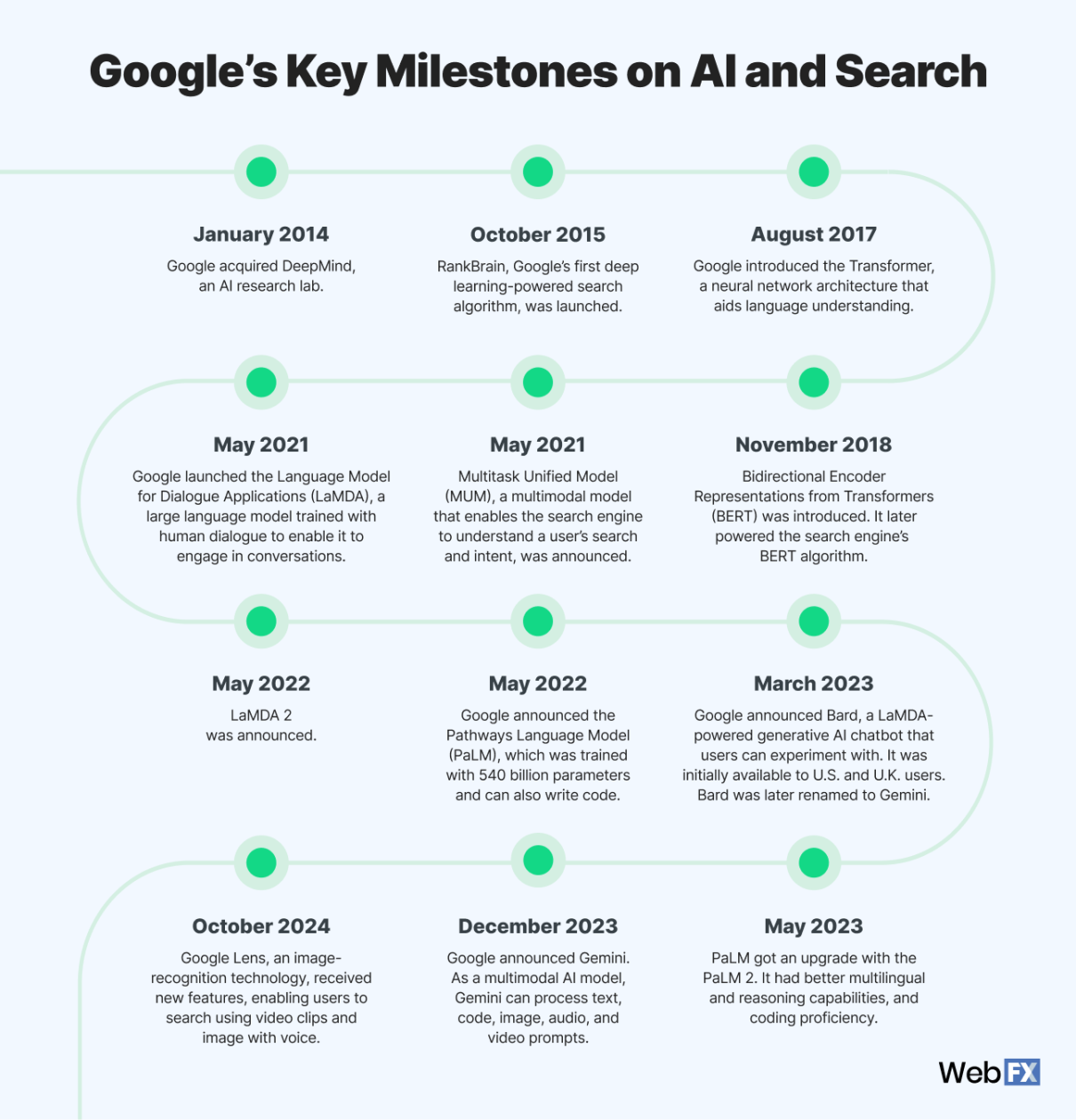
Google’s Gemini AI represents a shift from task-specific models to general-purpose intelligence layers. These models can reason across domains, understand trade-offs, and adapt dynamically.

When applied to economic systems, this means decisions are no longer siloed. Advertising, pricing, and logistics can inform each other in real time.

This convergence is what fuels concern—and fascination.
Is This Efficient or Dangerous?

Efficiency is the strongest argument in favor of AI coordination. Markets are often inefficient due to information gaps, delays, and misaligned incentives.

AI can reduce waste, smooth demand, and optimize distribution. In theory, everyone benefits.

The risk lies in concentration. When optimization authority rests with a single private actor, accountability becomes unclear.

Who Sets the Objective

Central planning always raises the same question: who decides the goals?

Google’s AI optimizes for metrics chosen by humans—revenue, engagement, efficiency, or user satisfaction. These goals may align with social good, but they are not democratically chosen.

Even neutral-seeming objectives can produce unintended consequences when scaled globally.

Regulatory Blind Spots

Most regulations assume companies act within discrete markets. AI coordination blurs those boundaries.

Google’s influence spans advertising, commerce, navigation, and cloud infrastructure. Regulators struggle to see the whole picture.

By the time coordination effects are visible, they may already be entrenched.

Why This Isn’t Just About Google

Google is the clearest example, but it is not alone. AI-driven coordination is a structural trend.

However, Google’s reach makes it a bellwether. If Google becomes an AI-powered central planner, others may follow—or be forced to adapt.

The question is not whether coordination will happen, but who will shape it.

Consumer Convenience vs. Systemic Power

Consumers often benefit directly. Better recommendations, lower prices, smoother experiences.

These benefits make resistance unlikely. Few users object to systems that make life easier.

Systemic power grows quietly when convenience masks complexity.

The Historical Parallel That Matters

In the past, railroads, utilities, and telecoms became regulated not because they were evil, but because they became essential.

Google’s AI systems may be approaching that threshold—not as infrastructure you see, but as infrastructure you depend on.

That distinction matters.

Can Transparency Solve the Problem?

Transparency is often proposed as a solution. But AI systems are inherently complex.

Understanding how decisions are made is difficult even for experts. For the public, it may be impossible.

Accountability mechanisms will need to evolve alongside the technology.

The Long-Term Economic Implications

If AI coordination continues unchecked, markets may become more stable—but less competitive.

New entrants may struggle if optimization favors incumbents. Innovation could slow if AI prioritizes predictability.

Central planning is efficient—but not always creative.

Why This Debate Is Just Beginning

The question “Will Google become our AI-powered central planner?” is not about tomorrow. It is about trajectory.

Each incremental improvement nudges the system closer to coordination. No single step looks dramatic. Together, they add up.

By the time the role is obvious, it may be unavoidable.

What Society Needs to Decide

The real issue is not Google’s power, but society’s response.

Should AI coordination be constrained? Shared? Publicly governed? Or trusted to private actors?

Those decisions will define the next economic era.

Conclusion: A Planner by Accident, Not Decree

Google is not declaring itself a central planner. It does not need to.

By optimizing information, prices, and behavior through AI, it may become one by default.

The challenge ahead is ensuring that efficiency does not eclipse accountability, and that coordination serves society—not just systems.


Disclaimer

We strive to uphold the highest ethical standards in all of our reporting and coverage. We StartupNews.fyi want to be transparent with our readers about any potential conflicts of interest that may arise in our work. It’s possible that some of the investors we feature may have connections to other businesses, including competitors or companies we write about. However, we want to assure our readers that this will not have any impact on the integrity or impartiality of our reporting. We are committed to delivering accurate, unbiased news and information to our audience, and we will continue to uphold our ethics and principles in all of our work. Thank you for your trust and support.

Popular

More Like this

Will Google Become Our AI-Powered Central Planner? The Quiet Shift That Could Reshape the Global Economy

The question of whether Google could become an AI-powered central planner no longer sounds like speculative futurism. It is increasingly grounded in reality. As artificial intelligence advances and data-driven decision-making expands into pricing, logistics, advertising, and consumer behavior, Google’s role begins to resemble something far more consequential than a search engine or ad platform. As explored by The Big Newsletter, Google may be positioning itself to quietly organize prices, demand, and information flows at a scale never before seen in the private sector.

This is not about intent alone. It is about capability. Google already sits at the intersection of search, advertising, cloud infrastructure, mapping, productivity software, and now advanced AI models. When those systems begin coordinating in real time, the result looks less like a collection of tools and more like an operating layer for the global economy.

Why the Idea of a “Central Planner” Is No Longer Abstract

Historically, central planning has been associated with governments attempting to manage economies from the top down. Those efforts struggled because they lacked real-time data, adaptive feedback, and computational power. Google, however, operates in an entirely different context.

With access to trillions of data points—search queries, location data, ad performance, shopping trends, and cloud-hosted business operations—Google already observes economic behavior as it happens. AI turns that observation into prediction and optimization.

At that point, coordination becomes possible.

From Organizing Information to Organizing Outcomes

Google’s original mission was famously simple: organize the world’s information. Over time, that mission has quietly expanded.

Search no longer just returns links. It recommends answers. Ads no longer just display options. They shape demand. Maps no longer just show routes. They optimize traffic flow.

With AI, Google can increasingly anticipate needs rather than respond to them. That shift—from information organization to outcome optimization—is what makes the “central planner” comparison feel relevant.

Pricing Power Through Information Advantage

One of the most consequential areas where Google’s influence could expand is pricing. Through advertising auctions, shopping integrations, and analytics tools, Google already affects how prices are set and discovered.

If AI models begin optimizing prices dynamically—based on demand, inventory, competition, and user behavior—Google could indirectly influence price levels across industries.

This would not require explicit control. It would emerge naturally from optimization.

Why AI Changes the Scale of Influence

What makes this moment different from past tech dominance is AI’s ability to coordinate complexity. Traditional algorithms optimize narrowly. AI systems can optimize across domains.

Google’s AI models can theoretically balance:
• Consumer demand
• Supplier pricing
• Advertising efficiency
• Logistics constraints
• Regional behavior patterns

At sufficient scale, this looks less like market mediation and more like systemic coordination.

The Invisible Hand, Now Algorithmic

Economists often describe markets as guided by an “invisible hand.” AI makes that hand visible—and programmable.

Google’s platforms already sit between buyers and sellers in countless transactions. AI allows those platforms to nudge outcomes continuously.

Importantly, this does not require malicious intent. Optimization alone can reshape markets.

The planner emerges not because Google wants control, but because optimization rewards coordination.

Why Google Is Uniquely Positioned

Many companies build AI. Few have Google’s breadth.

Google combines:
• Search intent
• Advertising demand
• Mapping and mobility data
• Cloud-hosted enterprise operations
• Consumer productivity tools

This breadth allows Google’s AI systems to see economic relationships others cannot. The result is leverage—not through coercion, but through insight.

That insight becomes power when applied consistently.

Central Planning Without Central Authority

Traditional central planners imposed rules. Google’s influence operates through incentives.

Advertisers follow recommendations. Businesses rely on analytics. Consumers accept defaults. Over time, behavior aligns with optimization outputs.

This is central planning without mandates—soft coordination driven by data and AI.

That subtlety makes it more powerful and harder to regulate.

The Role of Gemini and Advanced AI Models

Google’s Gemini AI represents a shift from task-specific models to general-purpose intelligence layers. These models can reason across domains, understand trade-offs, and adapt dynamically.

When applied to economic systems, this means decisions are no longer siloed. Advertising, pricing, and logistics can inform each other in real time.

This convergence is what fuels concern—and fascination.

Is This Efficient or Dangerous?

Efficiency is the strongest argument in favor of AI coordination. Markets are often inefficient due to information gaps, delays, and misaligned incentives.

AI can reduce waste, smooth demand, and optimize distribution. In theory, everyone benefits.

The risk lies in concentration. When optimization authority rests with a single private actor, accountability becomes unclear.

Who Sets the Objective

Central planning always raises the same question: who decides the goals?

Google’s AI optimizes for metrics chosen by humans—revenue, engagement, efficiency, or user satisfaction. These goals may align with social good, but they are not democratically chosen.

Even neutral-seeming objectives can produce unintended consequences when scaled globally.

Regulatory Blind Spots

Most regulations assume companies act within discrete markets. AI coordination blurs those boundaries.

Google’s influence spans advertising, commerce, navigation, and cloud infrastructure. Regulators struggle to see the whole picture.

By the time coordination effects are visible, they may already be entrenched.

Why This Isn’t Just About Google

Google is the clearest example, but it is not alone. AI-driven coordination is a structural trend.

However, Google’s reach makes it a bellwether. If Google becomes an AI-powered central planner, others may follow—or be forced to adapt.

The question is not whether coordination will happen, but who will shape it.

Consumer Convenience vs. Systemic Power

Consumers often benefit directly. Better recommendations, lower prices, smoother experiences.

These benefits make resistance unlikely. Few users object to systems that make life easier.

Systemic power grows quietly when convenience masks complexity.

The Historical Parallel That Matters

In the past, railroads, utilities, and telecoms became regulated not because they were evil, but because they became essential.

Google’s AI systems may be approaching that threshold—not as infrastructure you see, but as infrastructure you depend on.

That distinction matters.

Can Transparency Solve the Problem?

Transparency is often proposed as a solution. But AI systems are inherently complex.

Understanding how decisions are made is difficult even for experts. For the public, it may be impossible.

Accountability mechanisms will need to evolve alongside the technology.

The Long-Term Economic Implications

If AI coordination continues unchecked, markets may become more stable—but less competitive.

New entrants may struggle if optimization favors incumbents. Innovation could slow if AI prioritizes predictability.

Central planning is efficient—but not always creative.

Why This Debate Is Just Beginning

The question “Will Google become our AI-powered central planner?” is not about tomorrow. It is about trajectory.

Each incremental improvement nudges the system closer to coordination. No single step looks dramatic. Together, they add up.

By the time the role is obvious, it may be unavoidable.

What Society Needs to Decide

The real issue is not Google’s power, but society’s response.

Should AI coordination be constrained? Shared? Publicly governed? Or trusted to private actors?

Those decisions will define the next economic era.

Conclusion: A Planner by Accident, Not Decree

Google is not declaring itself a central planner. It does not need to.

By optimizing information, prices, and behavior through AI, it may become one by default.

The challenge ahead is ensuring that efficiency does not eclipse accountability, and that coordination serves society—not just systems.

Disclaimer

We strive to uphold the highest ethical standards in all of our reporting and coverage. We StartupNews.fyi want to be transparent with our readers about any potential conflicts of interest that may arise in our work. It’s possible that some of the investors we feature may have connections to other businesses, including competitors or companies we write about. However, we want to assure our readers that this will not have any impact on the integrity or impartiality of our reporting. We are committed to delivering accurate, unbiased news and information to our audience, and we will continue to uphold our ethics and principles in all of our work. Thank you for your trust and support.

Website Upgradation is going on for any glitch kindly connect at office@startupnews.fyi

More like this

5 things I wish to see from Blizzard in...

Blizzard Entertainment has given the world some of the...

Microsoft’s Late Arrival, Better Shoes: When Windows Decides Continuity...

Mumbai (Maharashtra) , January 17: For years, Windows...

Can AI generate new ideas?

For decades, elite mathematicians have struggled to solve...

Popular

best iptv best iptv best iptv best iptv best iptv best iptv best iptv best iptv best iptv best iptv best iptv best iptv best iptv best iptv best iptv best iptv best iptv best iptv best iptv best iptv best iptv best iptv best iptv best iptv best iptv best iptv best iptv best iptv best iptv best iptv best iptv best iptv best iptv best iptv best iptv best iptv best iptv best iptv best iptv best iptv best iptv best iptv best iptv best iptv best iptv best iptv best iptv best iptv best iptv best iptv best iptv best iptv best iptv best iptv best iptv best iptv best iptv best iptv best iptv best iptv best iptv best iptv best iptv best iptv best iptv best iptv best iptv best iptv best iptv best iptv best iptv best iptv best iptv best iptv best iptv best iptv best iptv best iptv best iptv best iptv best iptv best iptv best iptv best iptv best iptv best iptv best iptv best iptv best iptv best iptv best iptv best iptv best iptv best iptv best iptv best iptv best iptv best iptv best iptv best iptv best iptv best iptv best iptv best iptv best iptv best iptv best iptv best iptv best iptv best iptv best iptv best iptv best iptv best iptv best iptv best iptv best iptv best iptv best iptv best iptv best iptv best iptv best iptv best iptv best iptv best iptv best iptv best iptv best iptv best iptv best iptv best iptv best iptv best iptv best iptv best iptv best iptv best iptv best iptv best iptv best iptv best iptv best iptv best iptv best iptv best iptv best iptv best iptv best iptv best iptv best iptv best iptv best iptv best iptv best iptv best iptv best iptv best iptv best iptv best iptv best iptv best iptv best iptv best iptv best iptv best iptv best iptv best iptv best iptv best iptv best iptv best iptv best iptv best iptv best iptv best iptv best iptv best iptv best iptv best iptv best iptv best iptv best iptv best iptv best iptv best iptv best iptv best iptv best iptv best iptv best iptv best iptv best iptv best iptv best iptv best iptv best iptv