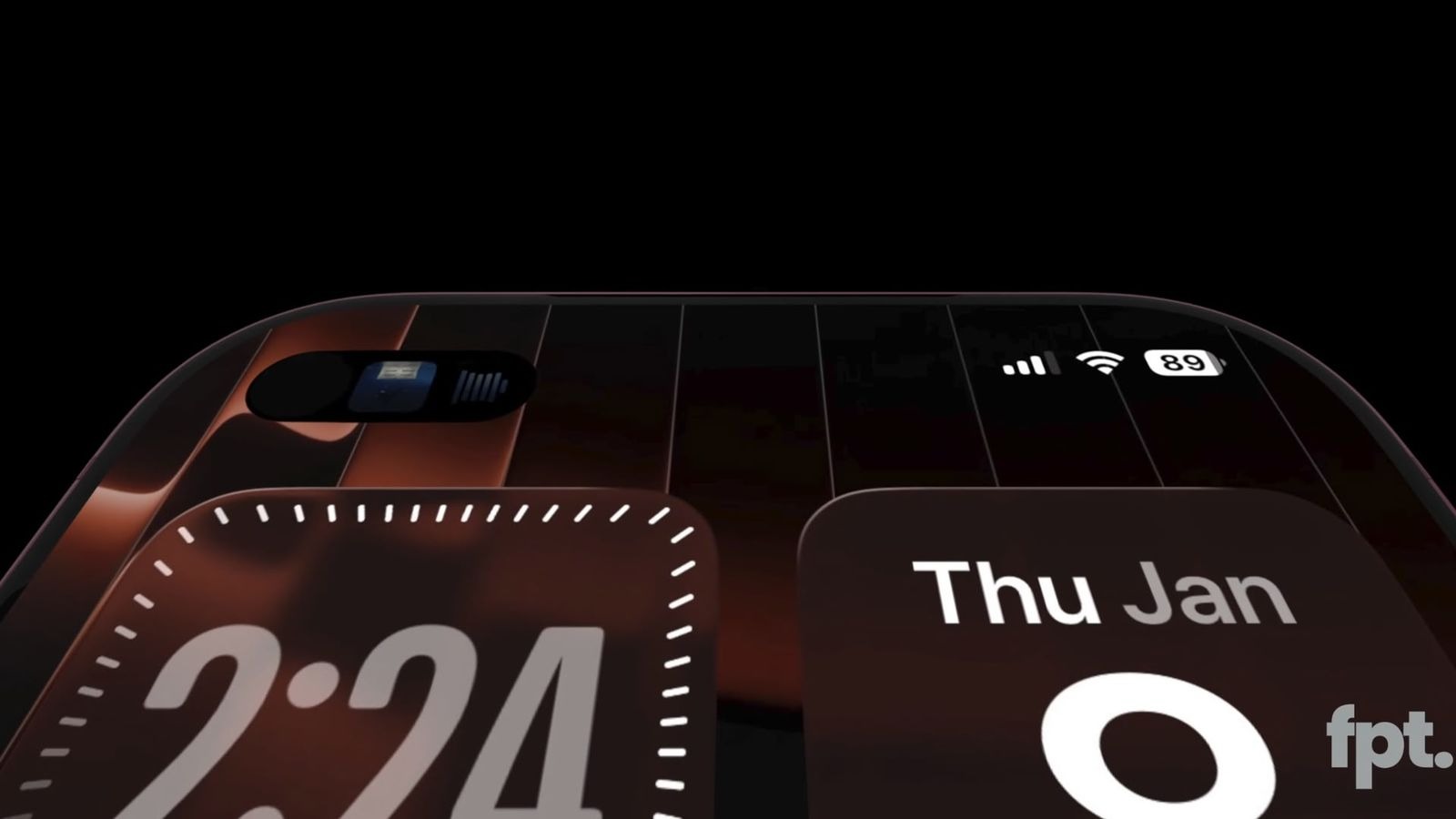
A new leak suggests Apple may move the Dynamic Island on the iPhone 18 Pro to the top-left corner of the display. If accurate, the change would mark Apple’s first major rethinking of the feature’s placement since its debut.
Apple’s next iPhone redesign may not be about removing the Dynamic Island—but repositioning it. According to reporting from MacRumors, leaked information suggests the iPhone 18 Pro could relocate the Dynamic Island from its current centered position to the top-left corner of the display.
At first glance, the change appears minor. In practice, it would represent a meaningful departure from Apple’s recent design language and could signal deeper shifts in how the company integrates sensors, cameras, and user interface elements into future iPhones.
As with all pre-release information, Apple has not confirmed the details, and the final product could differ. Still, the leak offers insight into how Apple may be rethinking one of its most visible interface features.
What the leak is claiming
Apple introduced the Dynamic Island as a central, software-driven replacement for the notch, designed to blend hardware cutouts with interactive UI elements. The MacRumors report cites sources suggesting that, on at least some iPhone 18 Pro models, this cutout could shift to the top-left corner.
The report does not indicate whether the Dynamic Island would change in size or functionality—only its position. It is also unclear whether the adjustment would apply exclusively to Pro models or eventually extend across the broader iPhone lineup.
Apple has not commented on the report, and no corroborating supply-chain confirmations have been made public so far.
Why Apple might move the Dynamic Island
Relocating the Dynamic Island could reflect practical constraints rather than aesthetic experimentation. As Apple continues to integrate more advanced front-facing components—such as under-display sensors or new camera systems—the internal layout of the display may require rebalancing.
Moving the cutout away from the center could free up space for other components or enable a more flexible software layout, particularly as Apple experiments with immersive and edge-to-edge displays.
There is also a usability angle. Shifting the Dynamic Island to one side could reduce visual obstruction during video playback or gaming, especially as screen sizes continue to grow.
Design consistency versus functional evolution
Since the introduction of Face ID, Apple has favored symmetrical, centered display elements. A move to an off-center Dynamic Island would challenge that consistency, suggesting Apple is willing to prioritize functional optimization over strict visual symmetry.
This would not be unprecedented. Apple has historically adjusted internal layouts when technology demands it, even if it means rethinking established design conventions.
If the change is limited to Pro models, it would also reinforce Apple’s strategy of using its high-end devices as a testing ground for future design directions.
Implications for developers and startups
For app developers, even small shifts in system UI placement can have ripple effects. Interfaces, gesture zones, and immersive layouts may need to account for new screen geometries, particularly in media, gaming, and productivity apps.
Startups building UI frameworks, design tools, or accessibility solutions would need to adapt quickly if Apple introduces a non-centered system element across millions of devices.
Hardware suppliers and component startups may also be affected. A new cutout position could imply changes in display manufacturing processes, sensor placement, or yield optimization—areas where Apple’s decisions often influence the broader market.
How competitors may interpret the move
Apple’s Dynamic Island has already influenced competing smartphone designs, even when rivals implemented similar features differently. A visible change in its placement would likely prompt renewed experimentation across the industry.
Android manufacturers, in particular, watch Apple’s design moves closely—not to copy directly, but to anticipate shifts in consumer expectations around screen usability and aesthetics.
What remains uncertain
The biggest unknown is whether this design ever reaches consumers. Apple is known to prototype multiple display configurations internally, many of which never ship.
Manufacturing complexity, cost, or software implications could all lead Apple to abandon or delay the change. Until Apple formally unveils the iPhone 18 lineup, the report should be treated as an indicator of exploration rather than confirmation.
A small move with outsized meaning
If the Dynamic Island does migrate to the top-left corner, it would be a reminder that Apple’s design evolution often happens in measured steps rather than dramatic leaps.
For users, the experience may feel subtly different. For the industry, it would signal that even Apple’s newest interface concepts are still open to refinement.
In a mature smartphone market, those refinements can matter more than they first appear.
This article is based on publicly available reporting from MacRumors and industry analysis. Apple has not officially confirmed iPhone 18 Pro design details, and plans may change.