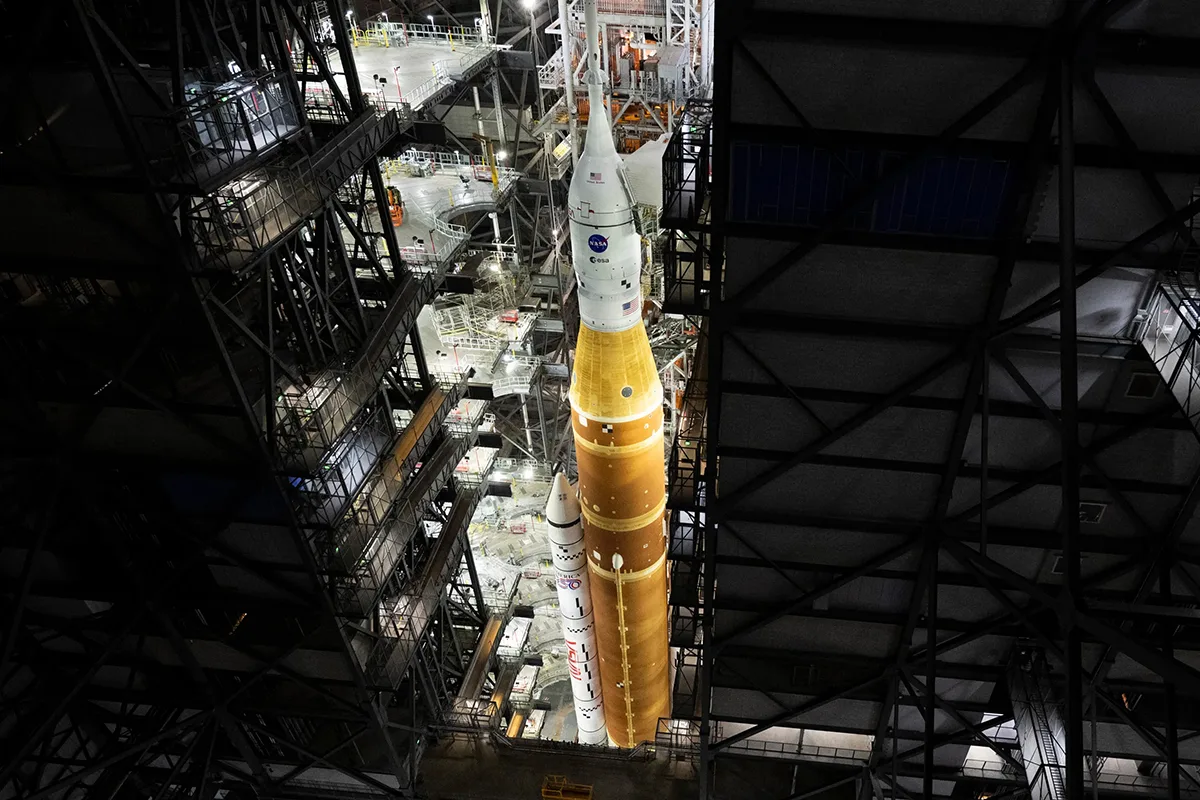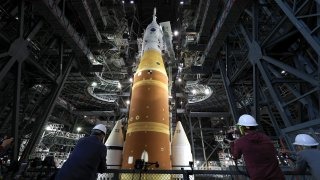
NASA has moved its Artemis II Space Launch System rocket to the launch pad, a major milestone ahead of the first crewed lunar mission in more than five decades. The rollout signals growing momentum in the U.S. lunar program and the broader space technology ecosystem.
NASA’s return to the Moon has entered a highly visible phase. On January 17, the agency confirmed that the Artemis II rocket has reached the launch pad, completing a complex rollout that brings the first crewed mission of the Artemis era one step closer to flight.
According to NASA, the fully stacked Space Launch System rocket—topped with the Orion crew capsule—was transported from the Vehicle Assembly Building to Launch Complex 39B at Kennedy Space Center. While no launch date has been finalized, the move marks a key transition from assembly to integrated testing.
For the global space sector, the milestone is more than symbolic. It represents tangible progress in a program that underpins U.S. lunar strategy and fuels demand across aerospace manufacturing, software, and deep-tech startups.
What the rollout confirms about Artemis II readiness
NASA described the rollout as part of final preparations for Artemis II, the mission that will carry astronauts on a multi-day journey around the Moon and back to Earth. The rocket’s arrival at the pad enables a series of critical checks, including power-up tests, communications validation, and countdown rehearsals.
Artemis II will be the first crewed flight of the Space Launch System and Orion spacecraft. Unlike Artemis I, which flew uncrewed in 2022, this mission is designed to evaluate how the spacecraft and rocket perform with humans onboard in deep space.
NASA has confirmed the mission objectives and crew, but has not yet announced a precise launch window. As with all human spaceflight programs, schedules remain contingent on testing outcomes and safety reviews.
Why this milestone matters beyond NASA
Rolling a rocket to the launch pad may appear procedural, but it is one of the most risk-reducing steps in any space program. It signals that major integration hurdles have been cleared and that hardware is performing within expected parameters.
For policymakers, Artemis II is a demonstration of sustained investment in lunar exploration after years of delays and scrutiny. For international partners, it reinforces the United States’ intent to lead a coalition-based return to the Moon.
For the private sector, the signal is even more direct: Artemis is no longer a distant roadmap item. It is an active program entering execution.
The startup and commercial space implications
Artemis II sits at the center of a growing commercial ecosystem. While NASA operates the mission, its supply chain spans large contractors and smaller startups working on avionics, propulsion components, simulation software, data analytics, and mission support tools.
The closer Artemis II gets to launch, the more confidence flows into adjacent lunar ventures—from surface robotics and communications networks to future cargo and crew services.
Startups focused on space infrastructure view Artemis as a demand anchor. A sustained human presence near the Moon creates downstream needs that government programs alone are unlikely to fulfill.
Remaining risks and open questions
Despite the progress, Artemis II still faces challenges. Crewed deep-space missions involve inherent risk, and NASA has emphasized that safety will dictate the pace of final preparations.
It remains unclear whether Artemis II will launch exactly on its current planning timeline, as additional testing or technical issues could prompt adjustments. Cost pressures and political oversight also continue to shape the broader Artemis program.
NASA has acknowledged these uncertainties, positioning Artemis II as a deliberate step forward rather than a race against the calendar.
A visible step toward the Moon—and beyond
With the Artemis II rocket now standing at the launch pad, NASA’s return to crewed lunar flight is no longer an abstract goal. It is a physical presence on the Florida coast, visible proof of a program moving from planning into execution.
For the technology and startup ecosystem, the message is clear: lunar exploration is re-emerging as a platform for innovation, not just a historical achievement. Artemis II is the bridge—and its rollout marks the moment that bridge became real.
This article is based on publicly available information from NASA. Launch timelines and technical details may evolve as testing and readiness reviews continue.