Apple’s Next OLED Devices Signal a Broader Display Transition

Share via:

Apple is expected to introduce OLED displays across five additional products in the coming years, expanding the technology beyond iPhones. The move signals a long-term shift in Apple’s display strategy with implications for suppliers, developers, and competitors.

Apple’s gradual embrace of OLED displays appears to be accelerating. According to reporting by MacRumors, the company is preparing to bring OLED technology to five more Apple products, extending its use well beyond the iPhone and signaling a structural change in how Apple approaches display design across its ecosystem.

While Apple has relied heavily on LCD and mini-LED panels for iPads and Macs, the new roadmap suggests OLED is moving toward the center of its hardware strategy. If the reported plans hold, the transition would unfold over several product generations rather than as a single, sweeping launch—consistent with Apple’s historically cautious approach to display technology.

For the global consumer electronics market, the significance lies less in any single device and more in the cumulative shift now underway.

Which products are expected to adopt OLED

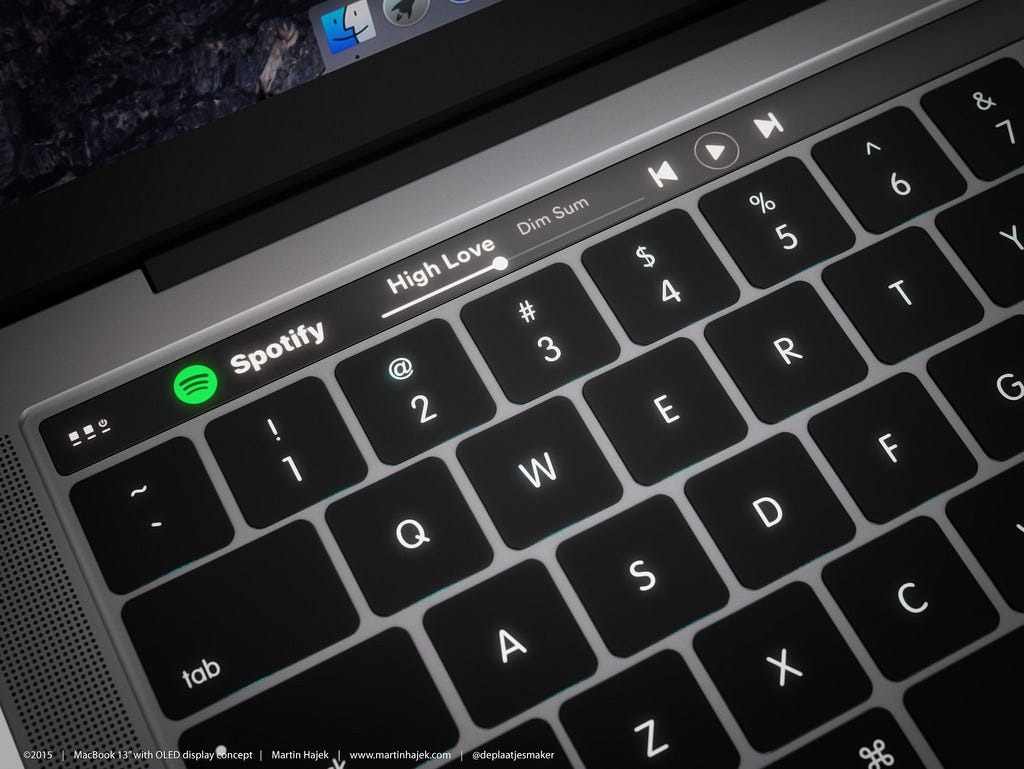
The company has not publicly confirmed the full list, but MacRumors reports that five upcoming products are expected to feature OLED displays over the next few years. These reportedly include future models of the iPad Pro, iPad Air, MacBook Pro, MacBook Air, and potentially other form factors as Apple refines larger OLED panels.

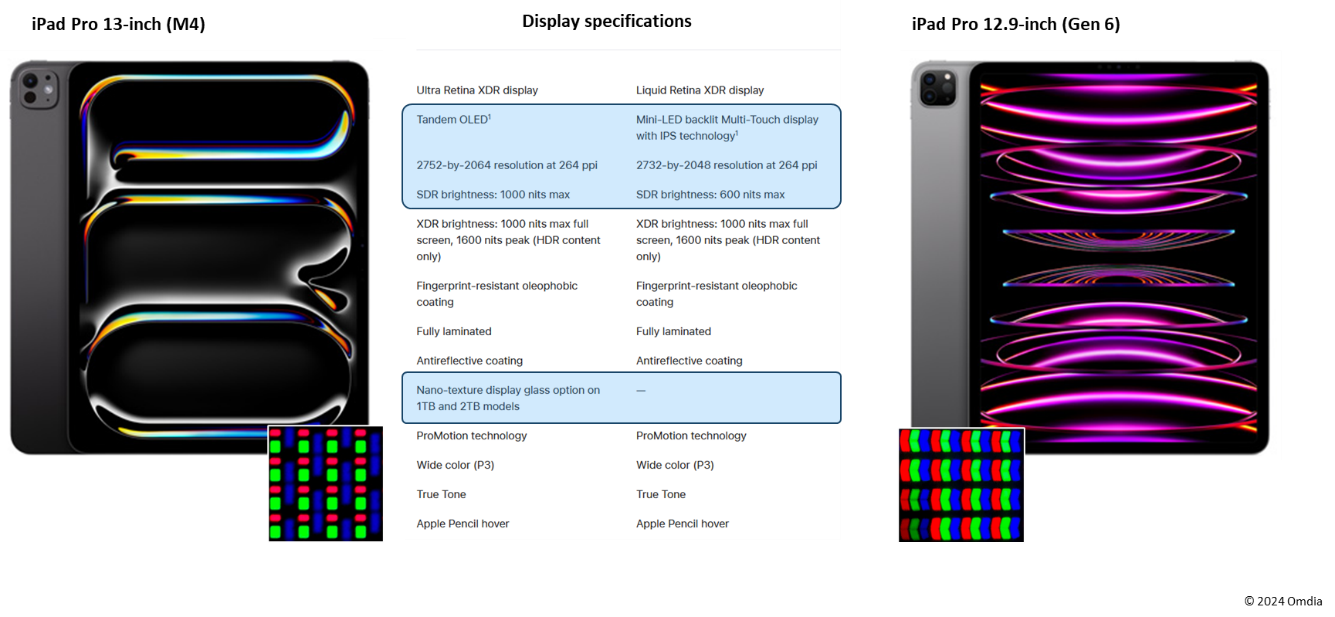
Not all OLED implementations are expected to be identical. Larger devices are likely to use advanced configurations—such as tandem OLED stacks—to improve brightness, longevity, and power efficiency. This distinction matters, as OLED panels designed for laptops and tablets face different durability and thermal demands than smartphone displays.

Exact launch timelines remain unclear, and its plans could shift depending on supplier readiness and production yields.

Why Apple is expanding OLED now

OLED displays offer deeper blacks, higher contrast ratios, and better power efficiency than traditional LCD panels. For the company, these advantages align with broader goals around thinner designs, longer battery life, and tighter hardware-software integration.

Just as importantly, OLED provides more consistent visual performance across device categories. As users move between iPhones, iPads, and Macs, the company has increasingly emphasized continuity—not just in software, but in how screens look and feel.

Mini-LED helped Apple bridge part of that gap, particularly for professional workflows. OLED now appears positioned as the next step.

Supply chain pressure and opportunity

Apple’s display decisions reverberate across the global supply chain. A multi-product OLED rollout would significantly increase demand for high-quality panels, particularly in sizes where production remains complex and capital-intensive.

This shift is likely to benefit large display manufacturers with the scale and technical capability to meet Apple’s requirements. At the same time, it raises barriers for smaller suppliers, reinforcing consolidation in parts of the display ecosystem.

For startups operating in display materials, manufacturing equipment, and testing automation, its roadmap could unlock new demand—but only for those able to meet stringent reliability and volume standards.

Competitive implications across devices

OLED adoption is already widespread in smartphones, but its penetration into laptops and tablets has been slower. Its move could accelerate industry-wide adoption, particularly in premium segments.

Competitors may feel pressure to match OLED quality and efficiency, even if margins are thinner. Historically, when the company commits to a component technology at scale, it tends to redefine customer expectations rather than merely follow market trends.

This could reshape how consumers evaluate displays on non-Apple devices, especially in creative and professional markets.

What this means for developers and users

For developers, broader OLED adoption across its devices has practical implications. OLED panels behave differently in terms of brightness, color calibration, and power usage, making dark-mode optimization and UI contrast more important than ever.

Startups building creative software, accessibility tools, or power-sensitive applications may need to rethink design assumptions as OLED becomes more common across Macs and iPads.

For users, the benefits are more immediate: richer visuals, improved battery efficiency in many scenarios, and a more consistent display experience across Apple’s ecosystem.

Open questions remain

Despite the momentum, uncertainties persist. OLED panels are more expensive than LCDs, particularly at larger sizes, and long-term durability remains a concern for devices expected to last many years.

It is also unclear how Apple will segment OLED adoption across product tiers. Premium models are likely to lead, but whether OLED becomes standard across all Macs and iPads—or remains a differentiator—remains to be seen.

As with many Apple hardware transitions, execution will matter as much as ambition.

A signal of Apple’s long-term direction

Taken together, the reported OLED expansion reflects Apple’s preference for incremental but decisive shifts. Rather than rushing OLED everywhere at once, the company appears to be laying the groundwork for a multi-year transition that balances innovation with control.

For the broader tech industry, the message is clear: OLED is no longer a niche or luxury component in Apple’s world. It is becoming foundational.

This article is based on publicly available reporting and industry analysis. Apple has not officially confirmed product timelines or specifications, and details may evolve.

Disclaimer

We strive to uphold the highest ethical standards in all of our reporting and coverage. We StartupNews.fyi want to be transparent with our readers about any potential conflicts of interest that may arise in our work. It’s possible that some of the investors we feature may have connections to other businesses, including competitors or companies we write about. However, we want to assure our readers that this will not have any impact on the integrity or impartiality of our reporting. We are committed to delivering accurate, unbiased news and information to our audience, and we will continue to uphold our ethics and principles in all of our work. Thank you for your trust and support.

Popular

More Like this

Apple’s Next OLED Devices Signal a Broader Display Transition

Apple is expected to introduce OLED displays across five additional products in the coming years, expanding the technology beyond iPhones. The move signals a long-term shift in Apple’s display strategy with implications for suppliers, developers, and competitors.

Apple’s gradual embrace of OLED displays appears to be accelerating. According to reporting by MacRumors, the company is preparing to bring OLED technology to five more Apple products, extending its use well beyond the iPhone and signaling a structural change in how Apple approaches display design across its ecosystem.

While Apple has relied heavily on LCD and mini-LED panels for iPads and Macs, the new roadmap suggests OLED is moving toward the center of its hardware strategy. If the reported plans hold, the transition would unfold over several product generations rather than as a single, sweeping launch—consistent with Apple’s historically cautious approach to display technology.

For the global consumer electronics market, the significance lies less in any single device and more in the cumulative shift now underway.

Which products are expected to adopt OLED

The company has not publicly confirmed the full list, but MacRumors reports that five upcoming products are expected to feature OLED displays over the next few years. These reportedly include future models of the iPad Pro, iPad Air, MacBook Pro, MacBook Air, and potentially other form factors as Apple refines larger OLED panels.

Not all OLED implementations are expected to be identical. Larger devices are likely to use advanced configurations—such as tandem OLED stacks—to improve brightness, longevity, and power efficiency. This distinction matters, as OLED panels designed for laptops and tablets face different durability and thermal demands than smartphone displays.

Exact launch timelines remain unclear, and its plans could shift depending on supplier readiness and production yields.

Why Apple is expanding OLED now

OLED displays offer deeper blacks, higher contrast ratios, and better power efficiency than traditional LCD panels. For the company, these advantages align with broader goals around thinner designs, longer battery life, and tighter hardware-software integration.

Just as importantly, OLED provides more consistent visual performance across device categories. As users move between iPhones, iPads, and Macs, the company has increasingly emphasized continuity—not just in software, but in how screens look and feel.

Mini-LED helped Apple bridge part of that gap, particularly for professional workflows. OLED now appears positioned as the next step.

Supply chain pressure and opportunity

Apple’s display decisions reverberate across the global supply chain. A multi-product OLED rollout would significantly increase demand for high-quality panels, particularly in sizes where production remains complex and capital-intensive.

This shift is likely to benefit large display manufacturers with the scale and technical capability to meet Apple’s requirements. At the same time, it raises barriers for smaller suppliers, reinforcing consolidation in parts of the display ecosystem.

For startups operating in display materials, manufacturing equipment, and testing automation, its roadmap could unlock new demand—but only for those able to meet stringent reliability and volume standards.

Competitive implications across devices

OLED adoption is already widespread in smartphones, but its penetration into laptops and tablets has been slower. Its move could accelerate industry-wide adoption, particularly in premium segments.

Competitors may feel pressure to match OLED quality and efficiency, even if margins are thinner. Historically, when the company commits to a component technology at scale, it tends to redefine customer expectations rather than merely follow market trends.

This could reshape how consumers evaluate displays on non-Apple devices, especially in creative and professional markets.

What this means for developers and users

For developers, broader OLED adoption across its devices has practical implications. OLED panels behave differently in terms of brightness, color calibration, and power usage, making dark-mode optimization and UI contrast more important than ever.

Startups building creative software, accessibility tools, or power-sensitive applications may need to rethink design assumptions as OLED becomes more common across Macs and iPads.

For users, the benefits are more immediate: richer visuals, improved battery efficiency in many scenarios, and a more consistent display experience across Apple’s ecosystem.

Open questions remain

Despite the momentum, uncertainties persist. OLED panels are more expensive than LCDs, particularly at larger sizes, and long-term durability remains a concern for devices expected to last many years.

It is also unclear how Apple will segment OLED adoption across product tiers. Premium models are likely to lead, but whether OLED becomes standard across all Macs and iPads—or remains a differentiator—remains to be seen.

As with many Apple hardware transitions, execution will matter as much as ambition.

A signal of Apple’s long-term direction

Taken together, the reported OLED expansion reflects Apple’s preference for incremental but decisive shifts. Rather than rushing OLED everywhere at once, the company appears to be laying the groundwork for a multi-year transition that balances innovation with control.

For the broader tech industry, the message is clear: OLED is no longer a niche or luxury component in Apple’s world. It is becoming foundational.

This article is based on publicly available reporting and industry analysis. Apple has not officially confirmed product timelines or specifications, and details may evolve.

Disclaimer

We strive to uphold the highest ethical standards in all of our reporting and coverage. We StartupNews.fyi want to be transparent with our readers about any potential conflicts of interest that may arise in our work. It’s possible that some of the investors we feature may have connections to other businesses, including competitors or companies we write about. However, we want to assure our readers that this will not have any impact on the integrity or impartiality of our reporting. We are committed to delivering accurate, unbiased news and information to our audience, and we will continue to uphold our ethics and principles in all of our work. Thank you for your trust and support.

Website Upgradation is going on for any glitch kindly connect at office@startupnews.fyi

More like this

Republic Day 2026: AI-guided arrivals, smart parking in Delhi...

From AI-generated informational videos to car-calling systems, Delhi...

How To Analyze Google Discover

TL;DR To generate the most value from Discover, view...

Apple $150,000 Fine Signals Critical Shift in Apple’s Business...

Apple $150,000 fine: What the settlement means Apple $150,000 fine...

Popular

melhor-iptv-portugal melhor-iptv-portugal melhor-iptv-portugal melhor-iptv-portugal melhor-iptv-portugal melhor-iptv-portugal melhor-iptv-portugal melhor-iptv-portugal melhor-iptv-portugal melhor-iptv-portugal melhor-iptv-portugal melhor-iptv-portugal melhor-iptv-portugal melhor-iptv-portugal melhor-iptv-portugal melhor-iptv-portugal melhor-iptv-portugal melhor-iptv-portugal melhor-iptv-portugal melhor-iptv-portugal melhor-iptv-portugal melhor-iptv-portugal melhor-iptv-portugal melhor-iptv-portugal melhor-iptv-portugal melhor-iptv-portugal melhor-iptv-portugal melhor-iptv-portugal melhor-iptv-portugal melhor-iptv-portugal melhor-iptv-portugal melhor-iptv-portugal melhor-iptv-portugal melhor-iptv-portugal melhor-iptv-portugal melhor-iptv-portugal melhor-iptv-portugal melhor-iptv-portugal melhor-iptv-portugal melhor-iptv-portugal melhor-iptv-portugal melhor-iptv-portugal melhor-iptv-portugal melhor-iptv-portugal melhor-iptv-portugal melhor-iptv-portugal melhor-iptv-portugal melhor-iptv-portugal melhor-iptv-portugal melhor-iptv-portugal melhor-iptv-portugal melhor-iptv-portugal melhor-iptv-portugal melhor-iptv-portugal melhor-iptv-portugal melhor-iptv-portugal melhor-iptv-portugal melhor-iptv-portugal melhor-iptv-portugal melhor-iptv-portugal melhor-iptv-portugal melhor-iptv-portugal melhor-iptv-portugal melhor-iptv-portugal melhor-iptv-portugal melhor-iptv-portugal melhor-iptv-portugal melhor-iptv-portugal melhor-iptv-portugal melhor-iptv-portugal melhor-iptv-portugal melhor-iptv-portugal melhor-iptv-portugal melhor-iptv-portugal
