

OpenAI has reached $3.4 billion in annualized revenue, according to its chief financial officer. The figure highlights how generative AI is rapidly transitioning from experimental technology to a large-scale commercial platform
OpenAI is beginning to put concrete financial numbers behind the generative AI, boom. According to reporting by Yahoo Finance, the company’s chief financial officer said OpenAI has now reached $3.4 billion in annualized revenue, a sharp increase that underscores how quickly demand for AI tools has translated into real business scale.
The disclosure offers one of the clearest signals yet that generative AI is moving beyond experimentation and pilot programs into sustained enterprise and consumer adoption. While OpenAI has not disclosed profitability or detailed financials, the revenue figure alone places the company among the fastest-growing technology platforms in recent history.
What OpenAI has confirmed
OpenAI CFO Sarah Friar said the company’s revenue has reached an annualized run rate of $3.4 billion, reflecting growing use of its AI models across consumer products, enterprise software, and developer platforms.
Annualized revenue refers to projected yearly income based on recent performance rather than audited full-year results. OpenAI has not published a breakdown of revenue sources, nor has it disclosed margins, costs, or net income.
The company also has not clarified how much of the revenue comes from direct subscriptions, enterprise licensing, API usage, or strategic partnerships.
Why the number matters
The $3.4 billion figure is significant not just for OpenAI, but for the broader AI industry. It suggests that large language models and generative AI systems are already producing revenue at a scale typically associated with mature software companies, not emerging technologies.
This challenges earlier skepticism that generative AI would struggle to convert technical breakthroughs into sustainable business models. Instead, OpenAI appears to be demonstrating that demand for AI-powered productivity, automation, and analysis is strong enough to support multi-billion-dollar revenue streams.
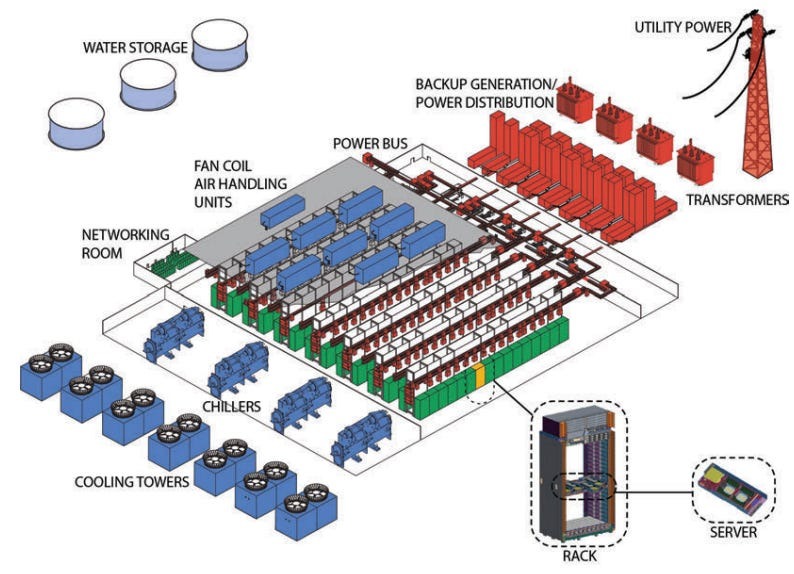
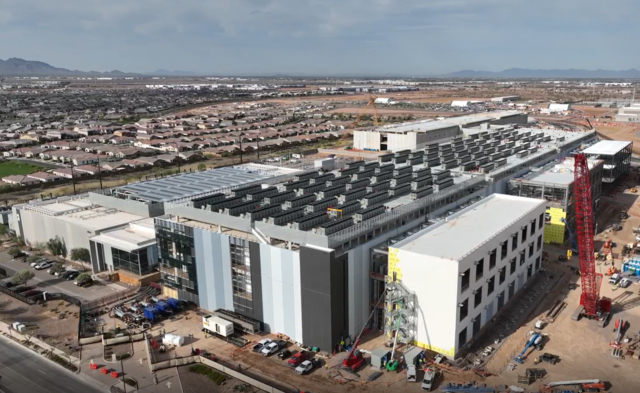
At the same time, the number highlights the stakes involved. Generative AI infrastructure is expensive, requiring massive ongoing investment in compute, data centers, and specialized hardware.
Enterprise adoption drives the shift
Much of OpenAI’s recent growth appears tied to enterprise adoption, where companies are embedding AI into customer support, software development, data analysis, and internal operations.
Large organizations are increasingly willing to pay for AI tools that deliver measurable efficiency gains rather than experimental capabilities. This aligns with OpenAI’s previously stated focus on practical adoption and real-world deployment over pure research milestones.
For CIOs and CTOs, the question has shifted from whether generative AI works to whether it delivers reliable value at scale.
Implications for startups and developers
For startups building on OpenAI’s technology, the revenue milestone sends mixed signals. On one hand, it validates the commercial viability of generative AI and strengthens confidence in the platform’s longevity.
On the other, it raises questions about pricing power, cost structure, and platform dependence. As OpenAI scales, developers will be watching closely for signals around API pricing stability, service-level guarantees, and long-term roadmap commitments.
The figure also intensifies competition. Rival AI providers are under pressure to show similar revenue traction or risk being viewed as technically impressive but commercially unproven.
The broader AI market context
OpenAI’s growth comes amid a broader recalibration in the AI sector. Investors are increasingly focused on revenue, customer retention, and unit economics rather than model size or benchmark performance alone.
Regulators are also paying closer attention. As AI becomes embedded in critical business processes, transparency, governance, and accountability are moving from policy discussions into operational requirements.
A company generating billions in AI revenue is no longer just a research lab—it is infrastructure.
What remains unclear
Despite the headline number, key questions remain unanswered. OpenAI has not disclosed whether it is cash-flow positive, how quickly costs are rising, or how revenue growth compares with compute spending.
It is also unclear how sustainable the current growth rate will be as competition intensifies and customers become more cost-sensitive.
Until audited financials are released, the $3.4 billion figure should be viewed as an indicator of scale rather than a full picture of financial health.
A defining moment for generative AI
OpenAI’s revenue milestone marks a turning point for the AI industry. Generative AI is no longer defined solely by technological possibility—it is increasingly defined by business execution.
For startups, enterprises, and policymakers, the message is clear: AI has entered its commercial era, and the companies that master adoption, reliability, and economics will shape what comes next.
This article is based on publicly available reporting from Yahoo Finance. OpenAI has not released detailed financial statements, and revenue figures cited are annualized estimates that may change.


