

Warren Buffett says artificial intelligence and the global power transition will reshape economies, but he cautions against assuming technology alone guarantees progress. His comments highlight the importance of infrastructure, reliability, and long-term capital in the next phase of innovation
As artificial intelligence accelerates and governments push toward cleaner energy systems, Warren Buffett is urging restraint. In a recent interview reported by Futu News, the veteran investor reflected on both AI’s potential and the risks surrounding the global power transition, offering a perspective shaped less by technological possibility and more by economic and infrastructural reality.
Buffett’s remarks stand out at a time when AI investment narratives often emphasize exponential gains, while energy transition debates focus on speed. Instead, he framed both as long-term transformations constrained by physical systems, capital intensity, and reliability requirements.
For technology leaders and startups operating at the intersection of AI and infrastructure, the message is sobering—and increasingly relevant.
Buffett’s view on artificial intelligence
Warren Buffett has repeatedly said he does not invest based on technologies he does not fully understand, and his stance on AI remains consistent with that philosophy. While acknowledging that AI will have broad economic impact, Buffett reportedly compared its influence to other transformative tools whose effects unfolded over decades rather than overnight.
He did not dismiss AI’s importance, but he stopped short of endorsing current enthusiasm as a clear investment signal. That distinction matters. In Buffett’s framework, technological power does not automatically translate into durable business value unless it produces predictable cash flows and defensible advantages.
The interview did not include specific commentary on AI companies or models, and Buffett did not outline any direct investment plans related to AI.
The power transition as a limiting factor
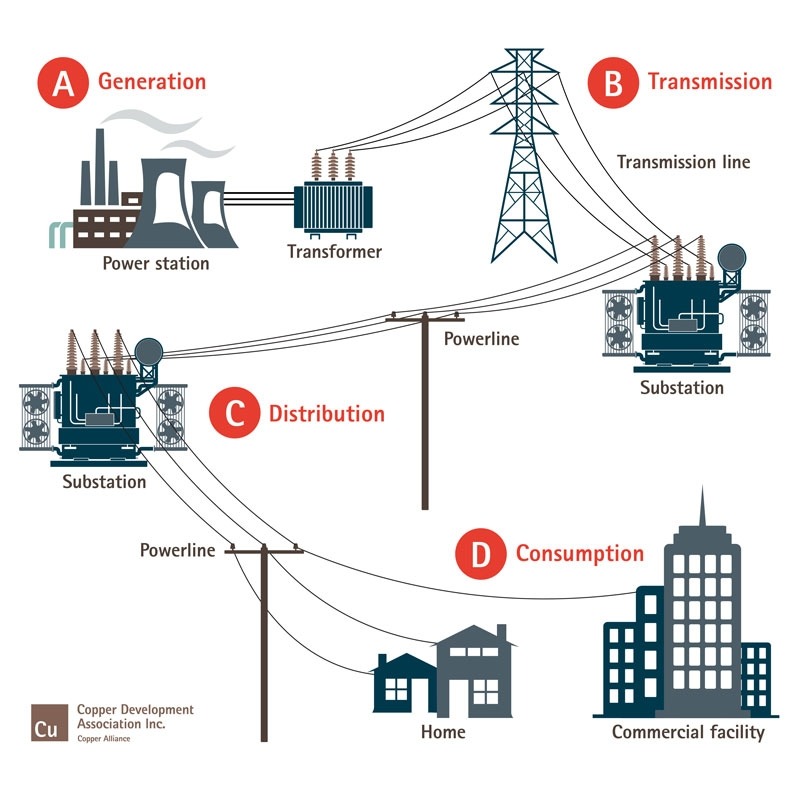
Buffett placed particular emphasis on the global power transition, arguing that electrification, renewables, and rising data center demand will test existing energy systems. AI, in his view, intensifies this challenge by dramatically increasing electricity consumption.
Through Berkshire Hathaway’s energy businesses, Buffett has long been exposed to the realities of grid upgrades, generation capacity, and regulatory complexity. His comments suggest skepticism toward timelines that assume rapid transition without massive, sustained infrastructure investment.
This perspective contrasts with the optimism often found in tech circles, where energy constraints are treated as secondary problems rather than foundational ones.
What this means for startups
For startups building AI models, data centers, or energy-intensive platforms, Buffett’s remarks highlight a growing bottleneck: power availability. As AI workloads scale, access to reliable and affordable electricity is becoming a competitive differentiator rather than a background assumption.
Energy-tech startups may find opportunity here, particularly those focused on grid optimization, storage, and efficiency. At the same time, software-first AI companies may face higher costs and regulatory scrutiny as infrastructure struggles to keep pace.
Buffett’s framing reinforces a reality many founders are beginning to confront—innovation does not occur in isolation from physical systems.
A broader investment signal
Buffett’s caution does not imply opposition to AI or clean energy. Instead, it reflects a preference for businesses positioned to benefit from long-term, incremental change rather than short-term disruption narratives.
Historically, Buffett has favored companies that provide essential services during transitions—railroads, utilities, and insurers—rather than the technologies driving the transition itself. That pattern may repeat as AI and electrification reshape the economy.
For investors, the signal is to look beyond algorithms and apps toward the infrastructure that enables them.
A counterbalance to tech exuberance
At a moment when AI valuations are rising rapidly and governments are setting aggressive energy targets, Buffett’s remarks serve as a counterweight. Progress, he suggests, is constrained not by ambition but by execution, capital, and time.
For the technology sector, that perspective may feel conservative. But as AI adoption collides with power limits, regulatory complexity, and cost pressures, it may also prove prescient.
Buffett is not predicting an AI slowdown. He is reminding the market that revolutions are built on foundations—and foundations take time.


