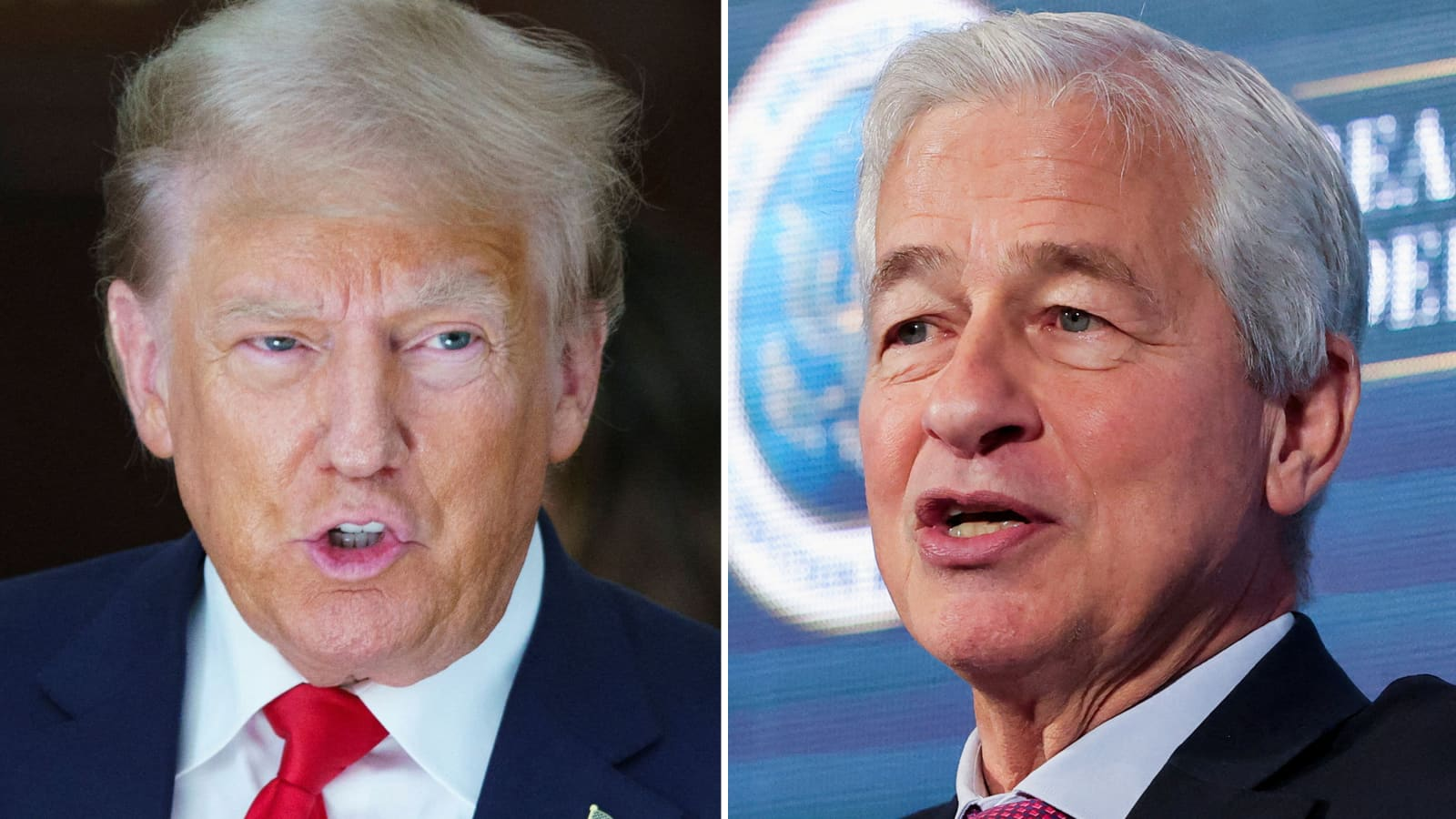
Trump Sues JPMorgan and Jamie Dimon Over Alleged “Debanking”

Share via:

Donald Trump has filed a lawsuit against JPMorgan Chase and its CEO Jamie Dimon, alleging that the bank unlawfully restricted or terminated financial services for political reasons. JPMorgan denies the claims, framing the dispute as a standard business and risk-management decision.

Donald Trump has taken the growing political debate over “debanking” into the courtroom. The former U.S. president has sued JPMorgan Chase and its chief executive, Jamie Dimon, accusing the bank of discriminating against him and his businesses by limiting access to financial services.

The lawsuit, filed this week, alleges that JPMorgan’s actions were politically motivated and part of a broader pattern of financial institutions denying services to individuals or groups deemed controversial. JPMorgan has rejected that characterization, saying its decisions were based on standard risk, compliance, and reputational considerations.

The case arrives as banks, regulators, and lawmakers are increasingly entangled in disputes over where financial risk management ends and political discrimination begins.

What Trump alleges

According to the complaint, Trump argues that JPMorgan improperly closed or restricted accounts linked to him and his affiliated entities, effectively “debanking” them without legitimate justification. The suit contends that these actions harmed his businesses and violated contractual and legal obligations.

Trump has publicly framed the issue as an abuse of power by large financial institutions, arguing that banks are using their gatekeeping role to enforce ideological preferences rather than neutral business standards.

The lawsuit names both JPMorgan and Dimon personally, escalating the dispute beyond corporate policy into executive accountability.

JPMorgan’s response

JPMorgan has denied any wrongdoing. The bank says it does not make decisions based on political views and that account actions are driven by regulatory requirements, risk assessments, and compliance obligations.

Large banks operate under extensive anti-money laundering, fraud prevention, and reputational risk frameworks. Institutions argue that these obligations sometimes require them to exit relationships that present elevated legal or operational risk, regardless of political identity.

So far, JPMorgan has not indicated any intention to change its policies as a result of the lawsuit.

Why “debanking” has become a flashpoint

The term “debanking” has gained traction among politicians and advocacy groups who argue that financial institutions are increasingly unwilling to serve controversial clients. Critics say the practice threatens economic participation by allowing private companies to effectively exclude individuals from the financial system.

Supporters of banks counter that financial institutions are not public utilities and must retain discretion to manage risk, particularly in an era of heightened regulatory scrutiny and enforcement penalties.

Trump’s lawsuit pushes that debate into the judicial system, where courts may be asked to draw clearer lines between lawful risk management and unlawful discrimination.

Broader implications for banks and politics

The case could have implications far beyond Trump himself. If courts are willing to second-guess banks’ account termination decisions, financial institutions may face increased legal exposure when exiting customer relationships.

For banks, that raises concerns about compliance flexibility. For politicians, the lawsuit reinforces calls for legislation that would limit banks’ ability to deny services based on subjective criteria.

The dispute also reflects a broader trend: financial services are increasingly entangled with political identity, social policy, and public trust, making neutrality harder to maintain.
What comes next

The lawsuit is in its early stages, and no court has yet weighed in on the merits of Trump’s claims. JPMorgan is expected to seek dismissal, arguing that the bank acted within its contractual and regulatory rights.

Regardless of the outcome, the case is likely to amplify scrutiny of how major banks make customer decisions and how those decisions intersect with politics.

For now, Trump’s legal action marks one of the most high-profile challenges yet to the modern banking industry’s approach to risk — and a test of how far courts are willing to intervene.


Disclaimer

We strive to uphold the highest ethical standards in all of our reporting and coverage. We StartupNews.fyi want to be transparent with our readers about any potential conflicts of interest that may arise in our work. It’s possible that some of the investors we feature may have connections to other businesses, including competitors or companies we write about. However, we want to assure our readers that this will not have any impact on the integrity or impartiality of our reporting. We are committed to delivering accurate, unbiased news and information to our audience, and we will continue to uphold our ethics and principles in all of our work. Thank you for your trust and support.

Sreejit
Sreejit Kumar is a media and communications professional with over two years of experience across digital publishing, social media marketing, and content management. With a background in journalism and advertising, he focuses on crafting and managing multi-platform news content that drives audience engagement and measurable growth.

Popular

More Like this

Trump Sues JPMorgan and Jamie Dimon Over Alleged “Debanking”

Donald Trump has filed a lawsuit against JPMorgan Chase and its CEO Jamie Dimon, alleging that the bank unlawfully restricted or terminated financial services for political reasons. JPMorgan denies the claims, framing the dispute as a standard business and risk-management decision.

Donald Trump has taken the growing political debate over “debanking” into the courtroom. The former U.S. president has sued JPMorgan Chase and its chief executive, Jamie Dimon, accusing the bank of discriminating against him and his businesses by limiting access to financial services.

The lawsuit, filed this week, alleges that JPMorgan’s actions were politically motivated and part of a broader pattern of financial institutions denying services to individuals or groups deemed controversial. JPMorgan has rejected that characterization, saying its decisions were based on standard risk, compliance, and reputational considerations.

The case arrives as banks, regulators, and lawmakers are increasingly entangled in disputes over where financial risk management ends and political discrimination begins.

What Trump alleges

According to the complaint, Trump argues that JPMorgan improperly closed or restricted accounts linked to him and his affiliated entities, effectively “debanking” them without legitimate justification. The suit contends that these actions harmed his businesses and violated contractual and legal obligations.

Trump has publicly framed the issue as an abuse of power by large financial institutions, arguing that banks are using their gatekeeping role to enforce ideological preferences rather than neutral business standards.

The lawsuit names both JPMorgan and Dimon personally, escalating the dispute beyond corporate policy into executive accountability.

JPMorgan’s response

JPMorgan has denied any wrongdoing. The bank says it does not make decisions based on political views and that account actions are driven by regulatory requirements, risk assessments, and compliance obligations.

Large banks operate under extensive anti-money laundering, fraud prevention, and reputational risk frameworks. Institutions argue that these obligations sometimes require them to exit relationships that present elevated legal or operational risk, regardless of political identity.

So far, JPMorgan has not indicated any intention to change its policies as a result of the lawsuit.

Why “debanking” has become a flashpoint

The term “debanking” has gained traction among politicians and advocacy groups who argue that financial institutions are increasingly unwilling to serve controversial clients. Critics say the practice threatens economic participation by allowing private companies to effectively exclude individuals from the financial system.

Supporters of banks counter that financial institutions are not public utilities and must retain discretion to manage risk, particularly in an era of heightened regulatory scrutiny and enforcement penalties.

Trump’s lawsuit pushes that debate into the judicial system, where courts may be asked to draw clearer lines between lawful risk management and unlawful discrimination.

Broader implications for banks and politics

The case could have implications far beyond Trump himself. If courts are willing to second-guess banks’ account termination decisions, financial institutions may face increased legal exposure when exiting customer relationships.

For banks, that raises concerns about compliance flexibility. For politicians, the lawsuit reinforces calls for legislation that would limit banks’ ability to deny services based on subjective criteria.

The dispute also reflects a broader trend: financial services are increasingly entangled with political identity, social policy, and public trust, making neutrality harder to maintain.

What comes next

The lawsuit is in its early stages, and no court has yet weighed in on the merits of Trump’s claims. JPMorgan is expected to seek dismissal, arguing that the bank acted within its contractual and regulatory rights.

Regardless of the outcome, the case is likely to amplify scrutiny of how major banks make customer decisions and how those decisions intersect with politics.

For now, Trump’s legal action marks one of the most high-profile challenges yet to the modern banking industry’s approach to risk — and a test of how far courts are willing to intervene.

Disclaimer

We strive to uphold the highest ethical standards in all of our reporting and coverage. We StartupNews.fyi want to be transparent with our readers about any potential conflicts of interest that may arise in our work. It’s possible that some of the investors we feature may have connections to other businesses, including competitors or companies we write about. However, we want to assure our readers that this will not have any impact on the integrity or impartiality of our reporting. We are committed to delivering accurate, unbiased news and information to our audience, and we will continue to uphold our ethics and principles in all of our work. Thank you for your trust and support.

Website Upgradation is going on for any glitch kindly connect at office@startupnews.fyi

Sreejit
Sreejit Kumar is a media and communications professional with over two years of experience across digital publishing, social media marketing, and content management. With a background in journalism and advertising, he focuses on crafting and managing multi-platform news content that drives audience engagement and measurable growth.

More like this

Samsung refutes claims of ‘80% price hike’ across all...

Samsung was quick to respond this morning when speculators...

AI Boosts Research Careers But Flattens Scientific Discovery

Ancient Slashdot reader erice shares the findings from...

Beware: New Android malware uses AI to sneakily commit...

TL;DR A newly discovered type of malware uses machine learning...

Popular

iptv best provider iptv best provider iptv best provider iptv best provider iptv best provider iptv best provider iptv best provider iptv best provider iptv best provider iptv best provider iptv best provider iptv best provider iptv best provider iptv best provider iptv best provider iptv best provider iptv best provider iptv best provider iptv best provider iptv best provider iptv best provider iptv best provider iptv best provider iptv best provider iptv best provider iptv best provider iptv best provider iptv best provider iptv best provider iptv best provider iptv best provider iptv best provider iptv best provider iptv best provider iptv best provider iptv best provider iptv best provider iptv best provider iptv best provider iptv best provider iptv best provider iptv best provider iptv best provider iptv best provider iptv best provider iptv best provider iptv best provider iptv best provider iptv best provider iptv best provider iptv best provider iptv best provider iptv best provider iptv best provider iptv best provider iptv best provider iptv best provider iptv best provider iptv best provider iptv best provider iptv best provider iptv best provider iptv best provider iptv best provider iptv best provider iptv best provider iptv best provider iptv best provider iptv best provider iptv best provider iptv best provider iptv best provider iptv best provider iptv best provider iptv best provider iptv best provider iptv best provider iptv best provider iptv best provider iptv best provider iptv best provider iptv best provider iptv best provider iptv best provider iptv best provider iptv best provider iptv best provider iptv best provider iptv best provider iptv best provider iptv best provider iptv best provider iptv best provider iptv best provider iptv best provider iptv best provider iptv best provider iptv best provider iptv best provider iptv best provider iptv best provider iptv best provider iptv best provider iptv best provider iptv best provider iptv best provider iptv best provider iptv best provider iptv best provider iptv best provider iptv best provider iptv best provider iptv best provider iptv best provider iptv best provider iptv best provider iptv best provider iptv best provider iptv best provider iptv best provider iptv best provider iptv best provider iptv best provider iptv best provider iptv best provider iptv best provider iptv best provider iptv best provider iptv best provider iptv best provider iptv best provider iptv best provider iptv best provider iptv best provider iptv best provider iptv best provider iptv best provider iptv best provider iptv best provider iptv best provider iptv best provider iptv best provider iptv best provider iptv best provider iptv best provider iptv best provider iptv best provider iptv best provider iptv best provider iptv best provider iptv best provider iptv best provider iptv best provider iptv best provider iptv best provider iptv best provider iptv best provider iptv best provider iptv best provider iptv best provider iptv best provider iptv best provider iptv best provider iptv best provider iptv best provider iptv best provider iptv best provider iptv best provider iptv best provider iptv best provider iptv best provider iptv best provider iptv best provider iptv best provider iptv best provider iptv best provider iptv best provider iptv best provider iptv best provider iptv best provider iptv best provider iptv best provider iptv best provider iptv best provider iptv best provider iptv best provider iptv best provider iptv best provider iptv best provider iptv best provider iptv best provider iptv best provider iptv best provider iptv best provider iptv best provider iptv best provider iptv best provider iptv best provider iptv best provider