

Asia’s mergers and acquisitions market is no longer driven by volume. Instead, it is being reshaped by selectivity, strategic intent, and capital discipline, as companies, investors, and governments recalibrate growth priorities amid higher interest rates, geopolitical fragmentation, and uneven post-pandemic recoveries. While overall deal counts across the region have softened compared to the 2021–2022 peak, M&A activity remains active in specific sectors where scale, profitability, and strategic positioning are now non-negotiable.
Rather than broad-based expansion, the current cycle is defined by targeted acquisitions, carve-outs, and restructurings, particularly in technology, fintech, logistics, and traditional industries undergoing digital transformation. The result is a more rational, but no less consequential, M&A environment across Asia.
Technology and Digital Assets Remain the Core Deal Drivers
Profitability Replaces Growth-at-All-Costs
Technology continues to anchor Asia’s M&A narrative, but with a clear shift in valuation logic. Buyers are prioritising companies with proven revenue models, defensible margins, and clear paths to profitability. Venture-backed firms that once relied on abundant capital are increasingly becoming acquisition targets as funding tightens and IPO windows remain narrow.
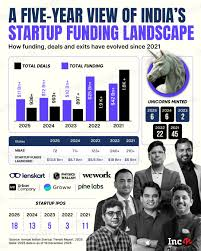
Large regional platforms are using M&A to consolidate fragmented markets, acquire specialised capabilities, and accelerate time-to-market, particularly in enterprise software, cybersecurity, AI infrastructure, and vertical SaaS. Cross-border acquisitions within Asia are also increasing, as companies look to expand regionally without the execution risk of organic entry.
Fintech Consolidation Signals a Maturing Market
Fintech, once Asia’s most exuberant deal segment, is now entering a consolidation phase. Wallets, BNPL players, and digital lenders are combining to reduce customer acquisition costs, improve compliance capabilities, and achieve operational scale. In markets such as Southeast Asia and India, regulators are also indirectly shaping M&A by raising compliance standards that smaller players struggle to meet independently.
Strategic Buyers Take the Lead as Financial Sponsors Turn Cautious
Corporates Regain Influence
Strategic buyers are now driving a larger share of Asia’s M&A activity, particularly in sectors tied to core operations such as logistics, manufacturing, energy, healthcare, and education. These buyers are less sensitive to short-term market volatility and more focused on long-term synergies, supply chain resilience, and digital capability building.
In contrast, private equity and venture capital firms are proceeding more cautiously. While dry powder remains substantial, deployment is increasingly concentrated in control transactions, platform roll-ups, and distressed or special situations, rather than high-multiple growth bets.
State-Linked Capital Plays a Stabilising Role
In several Asian markets, sovereign wealth funds and state-linked investors continue to act as counter-cyclical forces, supporting strategic mergers in infrastructure, energy transition, semiconductors, and national digital champions. This dynamic is particularly visible in the Gulf-Asia investment corridor, where cross-regional acquisitions are being used to secure long-term economic and technological partnerships.
Cross-Border Deals Reflect a More Fragmented Global Economy
Regionalisation Over Globalisation
Cross-border M&A has not disappeared, but it is becoming more regional in nature. Asian companies are increasingly acquiring within Asia, rather than pursuing large Western acquisitions, reflecting regulatory scrutiny, political risk, and integration complexity. Deals between Southeast Asia, India, the Middle East, and parts of East Asia are rising, underpinned by trade flows, diaspora links, and complementary growth profiles.
At the same time, outbound acquisitions into the US and Europe are more selective and often focused on acquiring intellectual property, R&D talent, or niche technologies rather than consumer-facing brands.

What the Current Cycle Signals for Founders and Investors
For founders, the M&A market is shifting from optional upside to strategic necessity. Companies with strong fundamentals, clean governance, and clear strategic relevance are finding buyers, while those built primarily for capital markets are facing tougher outcomes. For investors, exits are increasingly driven by trade sales rather than listings, reinforcing the importance of building businesses that are valuable to strategic acquirers.
Looking ahead, Asia’s M&A market is unlikely to return to the excesses of the last cycle. Instead, it is evolving into a more disciplined, impact-driven environment, where consolidation is less about ambition and more about survival, efficiency, and long-term positioning. In that sense, the current slowdown is not a retreat, but a reset.


