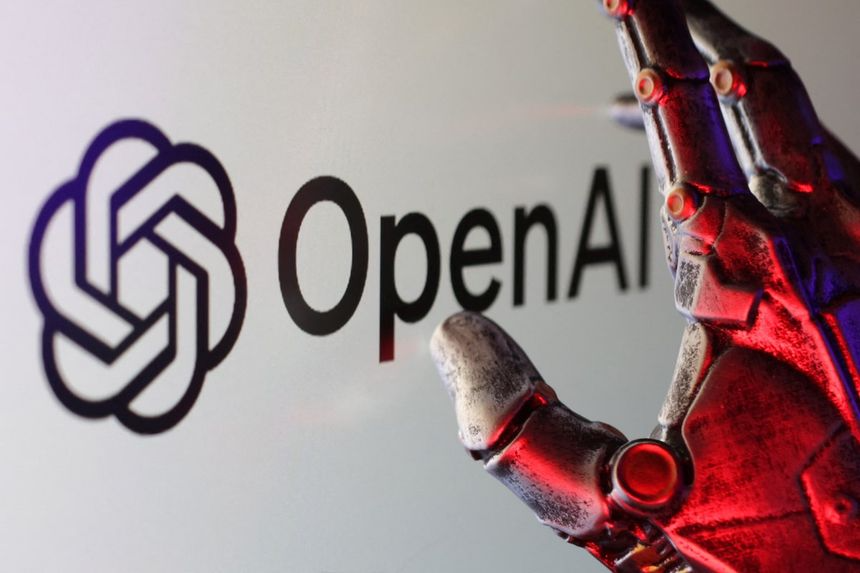
Big Tech Eyes $60B OpenAI Investment as AI Race Intensifies

Share via:

Nvidia, Microsoft, and Amazon are reportedly in talks to collectively invest up to $60 billion in OpenAI, underscoring how capital-intensive generative AI has become. The discussions reflect mounting competition among Big Tech firms to secure influence over foundational AI platforms and the infrastructure that powers them.

A reported $60 billion investment round involving Nvidia, Microsoft, and Amazon would mark one of the largest private capital infusions in technology history—and a decisive moment in the global AI arms race.

According to Tech in Asia, the three companies are in discussions to back OpenAI, the creator of ChatGPT, as demand for advanced AI models drives unprecedented spending on data centers, chips, and cloud capacity. While details remain unconfirmed and no terms have been finalized, the scale alone signals how foundational AI is reshaping capital allocation across the tech sector.

If completed, the investment would significantly deepen Big Tech’s financial and strategic entanglement with OpenAI at a time when generative AI models are becoming core infrastructure for software, cloud services, and consumer applications.

Why OpenAI now requires unprecedented capital

OpenAI’s models have grown rapidly in both capability and cost. Training and operating frontier models increasingly depends on massive clusters of GPUs, specialized networking, and long-term access to electricity and real estate for data centers.

Industry analysts widely acknowledge that the economics of large language models have shifted: innovation is no longer constrained by research talent alone, but by access to capital and compute. A multi-tens-of-billions-dollar raise would allow OpenAI to secure long-term infrastructure capacity rather than relying solely on short-term cloud contracts.

For OpenAI, the timing matters. Competition from Google, Anthropic, Meta, and a growing cohort of open-source challengers has accelerated model releases, raising both operational costs and expectations from enterprise customers.
https://www.nvidia.com/content/dam/en-zz/Solutions/about-nvidia/logo-and-brand/01-nvidia-logo-vert-500x200-2c50-d%402x.png

Nvidia’s strategic position at the center of AI compute

For Nvidia, participation would reinforce its position as the indispensable supplier of AI hardware. The company already dominates the market for AI accelerators used to train and run large models, and closer alignment with OpenAI could further entrench that dominance.

Rather than simply selling chips, Nvidia has increasingly positioned itself as a full-stack AI infrastructure provider, spanning hardware, software, and optimized systems. An equity stake in OpenAI would deepen its insight into future model requirements—an advantage competitors would struggle to replicate.

Microsoft and Amazon: cloud rivalry moves upstream

Microsoft is already OpenAI’s largest strategic partner, with its Azure cloud tightly integrated into OpenAI’s commercial offerings. A larger investment would help Microsoft defend that relationship as cloud competition intensifies.

https://cdn-dynmedia-1.microsoft.com/is/image/microsoftcorp/RWCZER-Legal-IP-Trademarks-CP-MS-logo-740x417-1?fit=crop&hei=230&resSharp=1&wid=406

Amazon’s reported involvement is more striking. Through AWS, Amazon has been backing alternative AI developers and promoting its own foundation models. An OpenAI investment would suggest a more pragmatic approach: ensuring access to leading models even if exclusivity is no longer realistic in a multi-cloud world.

For both companies, influence over OpenAI is about more than prestige. Generative AI workloads are among the fastest-growing drivers of cloud demand, and long-term alignment with a leading model provider could shape customer migration and retention for years

What this signals for the broader AI ecosystem

For startups, the reported talks underline a hard reality: frontier AI is becoming a capital game few independent players can afford to play. As model development concentrates among well-funded incumbents, smaller companies are likely to focus on applications, fine-tuning, and industry-specific layers rather than foundational research.

Investors, meanwhile, may see the deal as confirmation that the next phase of AI competition will hinge on infrastructure control rather than model novelty alone. The lines between chipmakers, cloud providers, and AI labs are increasingly blurred.

Regulators are also likely to pay close attention. A deeper financial web linking OpenAI with multiple Big Tech firms could raise questions around market power, access, and competition—particularly in the U.S. and Europe, where scrutiny of AI partnerships is already intensifying.

A turning point, even without a final deal

Even if the reported $60 billion investment does not materialize in its current form, the discussions themselves mark a turning point. They illustrate how generative AI has moved from experimental technology to strategic infrastructure—one that demands scale, patience, and balance-sheet strength.

Looking ahead, the outcome will be closely watched not just for who writes the checks, but for how much independence OpenAI retains—and how the balance of power in AI development continues to shift toward those who control the compute beneath the models.


Disclaimer

We strive to uphold the highest ethical standards in all of our reporting and coverage. We StartupNews.fyi want to be transparent with our readers about any potential conflicts of interest that may arise in our work. It’s possible that some of the investors we feature may have connections to other businesses, including competitors or companies we write about. However, we want to assure our readers that this will not have any impact on the integrity or impartiality of our reporting. We are committed to delivering accurate, unbiased news and information to our audience, and we will continue to uphold our ethics and principles in all of our work. Thank you for your trust and support.

Editorial Team
StartupNews.fyi is a leading global startup and technology media platform known for its end-to-end coverage of the startup ecosystem across India and key international markets. Launched with the vision of becoming a single gateway for founders, investors, and ecosystem enablers, StartupNews.fyi has grown steadily over the years by publishing tens of thousands of verified news stories, insights, and ecosystem updates, reaching millions of startup enthusiasts every month through its digital platforms and communities.

Popular

More Like this

Big Tech Eyes $60B OpenAI Investment as AI Race Intensifies

Nvidia, Microsoft, and Amazon are reportedly in talks to collectively invest up to $60 billion in OpenAI, underscoring how capital-intensive generative AI has become. The discussions reflect mounting competition among Big Tech firms to secure influence over foundational AI platforms and the infrastructure that powers them.

A reported $60 billion investment round involving Nvidia, Microsoft, and Amazon would mark one of the largest private capital infusions in technology history—and a decisive moment in the global AI arms race.

According to Tech in Asia, the three companies are in discussions to back OpenAI, the creator of ChatGPT, as demand for advanced AI models drives unprecedented spending on data centers, chips, and cloud capacity. While details remain unconfirmed and no terms have been finalized, the scale alone signals how foundational AI is reshaping capital allocation across the tech sector.

If completed, the investment would significantly deepen Big Tech’s financial and strategic entanglement with OpenAI at a time when generative AI models are becoming core infrastructure for software, cloud services, and consumer applications.

Why OpenAI now requires unprecedented capital

OpenAI’s models have grown rapidly in both capability and cost. Training and operating frontier models increasingly depends on massive clusters of GPUs, specialized networking, and long-term access to electricity and real estate for data centers.

Industry analysts widely acknowledge that the economics of large language models have shifted: innovation is no longer constrained by research talent alone, but by access to capital and compute. A multi-tens-of-billions-dollar raise would allow OpenAI to secure long-term infrastructure capacity rather than relying solely on short-term cloud contracts.

For OpenAI, the timing matters. Competition from Google, Anthropic, Meta, and a growing cohort of open-source challengers has accelerated model releases, raising both operational costs and expectations from enterprise customers.

https://www.nvidia.com/content/dam/en-zz/Solutions/about-nvidia/logo-and-brand/01-nvidia-logo-vert-500x200-2c50-d%402x.png

Nvidia’s strategic position at the center of AI compute

For Nvidia, participation would reinforce its position as the indispensable supplier of AI hardware. The company already dominates the market for AI accelerators used to train and run large models, and closer alignment with OpenAI could further entrench that dominance.

Rather than simply selling chips, Nvidia has increasingly positioned itself as a full-stack AI infrastructure provider, spanning hardware, software, and optimized systems. An equity stake in OpenAI would deepen its insight into future model requirements—an advantage competitors would struggle to replicate.

Microsoft and Amazon: cloud rivalry moves upstream

Microsoft is already OpenAI’s largest strategic partner, with its Azure cloud tightly integrated into OpenAI’s commercial offerings. A larger investment would help Microsoft defend that relationship as cloud competition intensifies.

https://cdn-dynmedia-1.microsoft.com/is/image/microsoftcorp/RWCZER-Legal-IP-Trademarks-CP-MS-logo-740x417-1?fit=crop&hei=230&resSharp=1&wid=406

Amazon’s reported involvement is more striking. Through AWS, Amazon has been backing alternative AI developers and promoting its own foundation models. An OpenAI investment would suggest a more pragmatic approach: ensuring access to leading models even if exclusivity is no longer realistic in a multi-cloud world.

For both companies, influence over OpenAI is about more than prestige. Generative AI workloads are among the fastest-growing drivers of cloud demand, and long-term alignment with a leading model provider could shape customer migration and retention for years

What this signals for the broader AI ecosystem

For startups, the reported talks underline a hard reality: frontier AI is becoming a capital game few independent players can afford to play. As model development concentrates among well-funded incumbents, smaller companies are likely to focus on applications, fine-tuning, and industry-specific layers rather than foundational research.

Investors, meanwhile, may see the deal as confirmation that the next phase of AI competition will hinge on infrastructure control rather than model novelty alone. The lines between chipmakers, cloud providers, and AI labs are increasingly blurred.

Regulators are also likely to pay close attention. A deeper financial web linking OpenAI with multiple Big Tech firms could raise questions around market power, access, and competition—particularly in the U.S. and Europe, where scrutiny of AI partnerships is already intensifying.

A turning point, even without a final deal

Even if the reported $60 billion investment does not materialize in its current form, the discussions themselves mark a turning point. They illustrate how generative AI has moved from experimental technology to strategic infrastructure—one that demands scale, patience, and balance-sheet strength.

Looking ahead, the outcome will be closely watched not just for who writes the checks, but for how much independence OpenAI retains—and how the balance of power in AI development continues to shift toward those who control the compute beneath the models.

Disclaimer

We strive to uphold the highest ethical standards in all of our reporting and coverage. We StartupNews.fyi want to be transparent with our readers about any potential conflicts of interest that may arise in our work. It’s possible that some of the investors we feature may have connections to other businesses, including competitors or companies we write about. However, we want to assure our readers that this will not have any impact on the integrity or impartiality of our reporting. We are committed to delivering accurate, unbiased news and information to our audience, and we will continue to uphold our ethics and principles in all of our work. Thank you for your trust and support.

Website Upgradation is going on for any glitch kindly connect at office@startupnews.fyi

Editorial Team
StartupNews.fyi is a leading global startup and technology media platform known for its end-to-end coverage of the startup ecosystem across India and key international markets. Launched with the vision of becoming a single gateway for founders, investors, and ecosystem enablers, StartupNews.fyi has grown steadily over the years by publishing tens of thousands of verified news stories, insights, and ecosystem updates, reaching millions of startup enthusiasts every month through its digital platforms and communities.

More like this

Meta Reality Labs $6B Q4 Loss Deepens VR Drag

Meta’s immersive tech division, Reality Labs, reported an unexpectedly...

Gyde’s $60M Raise Signals AI’s Move Into Insurance Brokerage

Gyde, an AI-native brokerage platform based in Austin, Texas,...

Nikhil Kamath invests $2.7 million in longevity startup Biopeak

Longevity startup Biopeak has secured $2.7 million in...

Popular

best iptv best iptv best iptv best iptv best iptv best iptv best iptv best iptv best iptv best iptv best iptv best iptv best iptv best iptv best iptv best iptv best iptv best iptv best iptv best iptv best iptv best iptv best iptv best iptv best iptv best iptv best iptv best iptv best iptv best iptv best iptv best iptv best iptv best iptv best iptv best iptv best iptv best iptv best iptv best iptv best iptv best iptv best iptv best iptv best iptv best iptv best iptv best iptv best iptv best iptv best iptv best iptv best iptv best iptv best iptv best iptv best iptv best iptv best iptv best iptv best iptv best iptv best iptv best iptv best iptv best iptv best iptv best iptv best iptv best iptv best iptv best iptv best iptv best iptv best iptv best iptv best iptv best iptv best iptv best iptv best iptv best iptv best iptv best iptv best iptv best iptv best iptv best iptv best iptv best iptv best iptv best iptv best iptv best iptv best iptv best iptv best iptv best iptv best iptv best iptv best iptv best iptv best iptv best iptv best iptv best iptv best iptv best iptv best iptv best iptv best iptv best iptv best iptv best iptv best iptv best iptv best iptv best iptv best iptv best iptv best iptv best iptv best iptv best iptv best iptv best iptv best iptv best iptv best iptv best iptv best iptv best iptv best iptv best iptv best iptv best iptv best iptv best iptv best iptv best iptv best iptv best iptv best iptv best iptv best iptv best iptv best iptv best iptv best iptv best iptv best iptv best iptv best iptv best iptv best iptv best iptv best iptv best iptv best iptv best iptv best iptv best iptv best iptv best iptv best iptv best iptv best iptv best iptv best iptv best iptv best iptv best iptv best iptv best iptv best iptv best iptv best iptv best iptv best iptv best iptv best iptv best iptv best iptv best iptv best iptv best iptv best iptv best iptv best iptv best iptv best iptv best iptv best iptv best iptv best iptv best iptv best iptv best iptv best iptv iptv iptv iptv iptv iptv iptv iptv iptv iptv iptv iptv iptv iptv portugal iptv portugal iptv portugal iptv portugal iptv portugal iptv portugal iptv portugal iptv portugal iptv portugal iptv portugal iptv portugal iptv portugal iptv iptv iptv iptv iptv iptv iptv iptv iptv iptv iptv iptv