
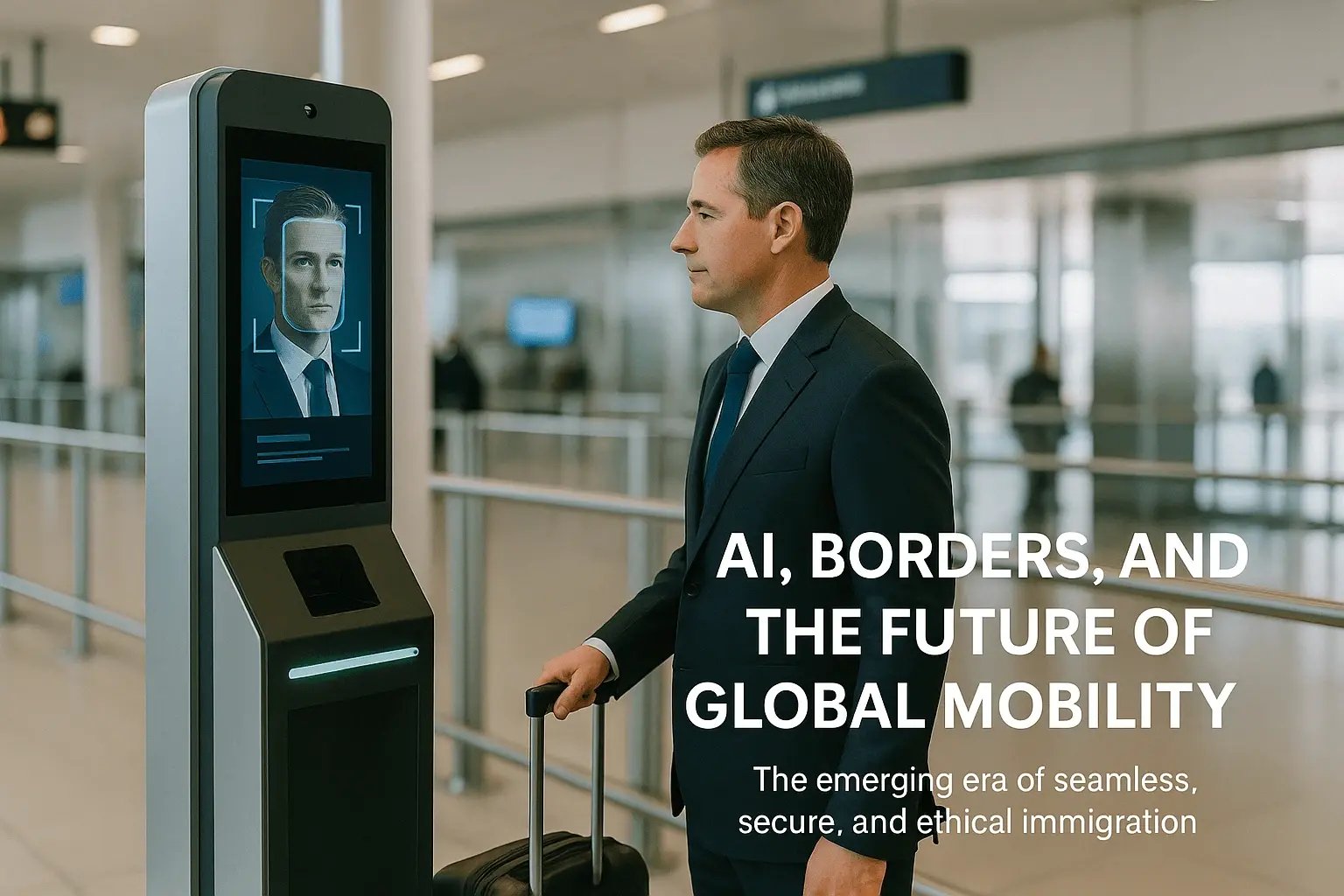
An AI-powered platform is promising to compress weeks of visa and cross-border compliance paperwork into minutes, targeting one of the most persistent bottlenecks in global hiring. The push reflects rising demand from companies expanding internationally while immigration systems remain slow, fragmented, and manual.
A Chronic Bottleneck Meets AI Automation
As global companies accelerate cross-border hiring, visa and immigration compliance has quietly become one of the most painful operational choke points. Processes remain fragmented across jurisdictions, heavily paper-based, and dependent on manual interpretation of constantly changing rules. Against that backdrop, a new wave of Artificial Intelligence-powered platforms is emerging with a clear pitch: automate the most complex parts of visa processing and cut timelines from weeks to minutes.
According to reporting by Tech in Asia, one such platform is positioning itself as an end-to-end solution for handling visas, work permits, and cross-border documentation using artificial intelligence. The goal is not to replace governments or immigration authorities, but to sit between employers, employees, and regulators—reducing friction, errors, and delays that often derail international expansion.
Why Visa Paperwork Is Still Broken
Despite decades of digital transformation elsewhere in enterprise operations, immigration workflows have lagged behind. Each country has its own forms, eligibility criteria, timelines, and compliance risks. Even within a single jurisdiction, requirements can vary by role, nationality, salary band, or employer profile. For HR teams and founders, this creates a high-risk environment where small mistakes can lead to rejections, penalties, or stalled onboarding.
Traditional solutions—immigration lawyers and relocation agencies—remain expensive, slow, and difficult to scale. As distributed teams and remote-first hiring models become more common, companies are increasingly looking for technology-driven alternatives that offer speed without sacrificing compliance.
How AI Changes the Equation

The new generation of platforms uses Artificial Intelligence to parse visa requirements, auto-fill documentation, flag compliance risks, and guide users through complex decision trees. By combining structured rules with machine learning models trained on historical cases, these systems aim to deliver outcomes that previously required weeks of back-and-forth with consultants.
Rather than presenting immigration as a black box, the software breaks it down into discrete, automatable steps: eligibility assessment, document validation, submission tracking, and ongoing compliance monitoring. In theory, this allows companies to onboard talent across borders with the same operational confidence they apply to payroll or benefits.
Crucially, these platforms are being built for enterprises and fast-scaling startups alike, reflecting how global hiring is no longer limited to multinationals.
Demand Is Being Pulled by the Market
The timing is not accidental. Venture-backed startups are hiring internationally earlier in their lifecycle, while larger enterprises are decentralising teams across regions to manage costs and access specialised talent. At the same time, governments are tightening scrutiny around work authorisation and compliance, increasing the cost of mistakes.
This combination—more cross-border hiring and stricter enforcement—has created a strong pull for automation. Artificial Intelligence-driven visa platforms are positioning themselves as risk-management tools as much as productivity software, promising fewer errors, faster turnaround, and clearer audit trails.
Not Just About Speed
While “minutes instead of weeks” makes for a compelling headline, founders in this space argue that speed is only part of the value proposition. Consistency, transparency, and predictability matter just as much. For employees, visa uncertainty is deeply personal, affecting relocation plans, families, and job security. For employers, delays can mean lost candidates and missed market opportunities.
By standardising workflows and surfacing issues early, Artificial Intelligence platforms aim to reduce the emotional and financial toll of immigration uncertainty. That positioning helps explain why interest is coming not only from HR teams, but also from legal, finance, and operations leaders.
Competitive and Regulatory Realities
Still, this is not an easy market to crack. Immigration law is highly regulated, and Artificial Intelligence systems must be carefully designed to avoid overpromising or giving incorrect guidance. Most platforms stress that they do not provide legal advice, instead framing their role as decision-support and process automation.
Competition is also intensifying, with global HR tech players, employer-of-record firms, and legal-tech startups all moving into adjacent territory. Differentiation increasingly comes down to depth of jurisdictional coverage, quality of data, and the ability to keep pace with policy changes.
A Signal of Where Enterprise AI Is Headed
Beyond immigration, the rise of AI-powered visa platforms highlights a broader trend in enterprise Artificial Intelligence adoption. Rather than generic copilots or broad automation tools, companies are increasingly willing to pay for narrow, high-impact systems that solve painful, regulated problems.
Visa processing fits that profile perfectly: high stakes, low tolerance for error, and clear economic upside when done well. If these platforms deliver on their promises, they could quietly reshape how companies think about global mobility.
For now, the ambition is clear. As cross-border work becomes normalised, the infrastructure supporting it is finally catching up—and AI is being asked to fix one of the most stubborn pieces of global bureaucracy.


