

Apple has introduced a new security feature that limits how cellular networks collect precise location data from iPhones and iPads. The move reduces background tracking by mobile carriers and strengthens Apple’s privacy-first positioning.
Apple Reduces Carrier-Level Location Access
Apple has quietly introduced a new privacy safeguard that limits how much precise location data cellular networks can collect from iPhones and iPads, tightening controls beyond app-level permissions. The feature, reported following Apple’s latest software updates, prevents mobile carriers from continuously accessing fine-grained device location data when it is not strictly required for connectivity. The change applies to cellular-enabled iPhones and iPads and operates at the operating system level, reducing exposure even outside user-facing apps.
Why Cellular Location Data Matters
Unlike app-based tracking, which is governed by explicit user permissions, cellular location data is generated as devices connect to nearby cell towers. This information can reveal detailed movement patterns and has historically been accessible to carriers for network management, analytics, and, in some cases, commercial use. Apple’s update narrows this data flow, ensuring carriers receive only coarse or essential location signals rather than precise, continuous coordinates, aligning with Apple’s long-standing position that location data should be minimised wherever possible.
How the New Feature Works
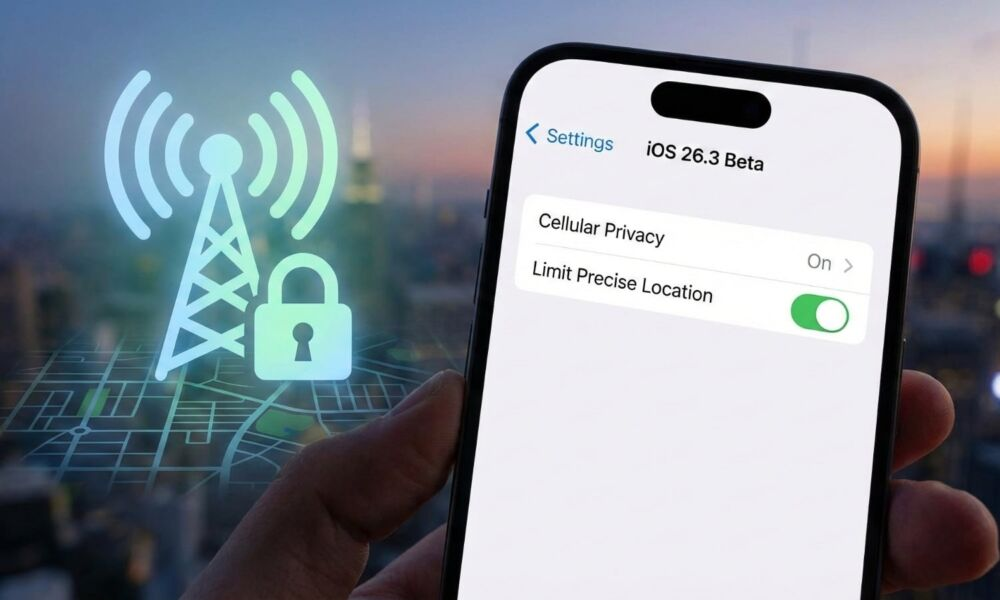
The new control limits the precision of location data shared at the modem and operating system layer, rather than relying on app permissions alone. By abstracting or generalising location signals sent to cellular networks, Apple reduces the ability of carriers to infer exact device movements over time. While Apple has not detailed the full technical implementation publicly, the approach mirrors its broader strategy of data minimisation, where systems are designed to share the least amount of personal data necessary to function.
Privacy Strategy in Context
This update reinforces Apple’s broader privacy narrative, which has increasingly focused on reducing passive data collection by third parties, not just apps. Over recent years, Apple has introduced features such as App Tracking Transparency, Mail Privacy Protection, and on-device processing for sensitive data. Limiting carrier-level location precision extends this philosophy into an area that has traditionally been opaque to users and difficult to control.

Implications for Users and Carriers
For users, the change means less background location exposure without any action required, strengthening default privacy protections. For mobile carriers, it may limit the granularity of data available for analytics or value-added services, though core network functionality is expected to remain unaffected. The move also sets a precedent, signalling that operating system vendors may increasingly intervene at the network interface layer to enforce privacy standards.
A Subtle but Significant Shift
While the feature does not introduce new settings or prompts, its impact lies in quietly reducing a category of data collection that most users are unaware of. As regulators and consumers place greater scrutiny on how location data is collected and monetised, Apple’s decision positions the company ahead of potential policy shifts, reinforcing privacy as a competitive differentiator in the smartphone market.


