
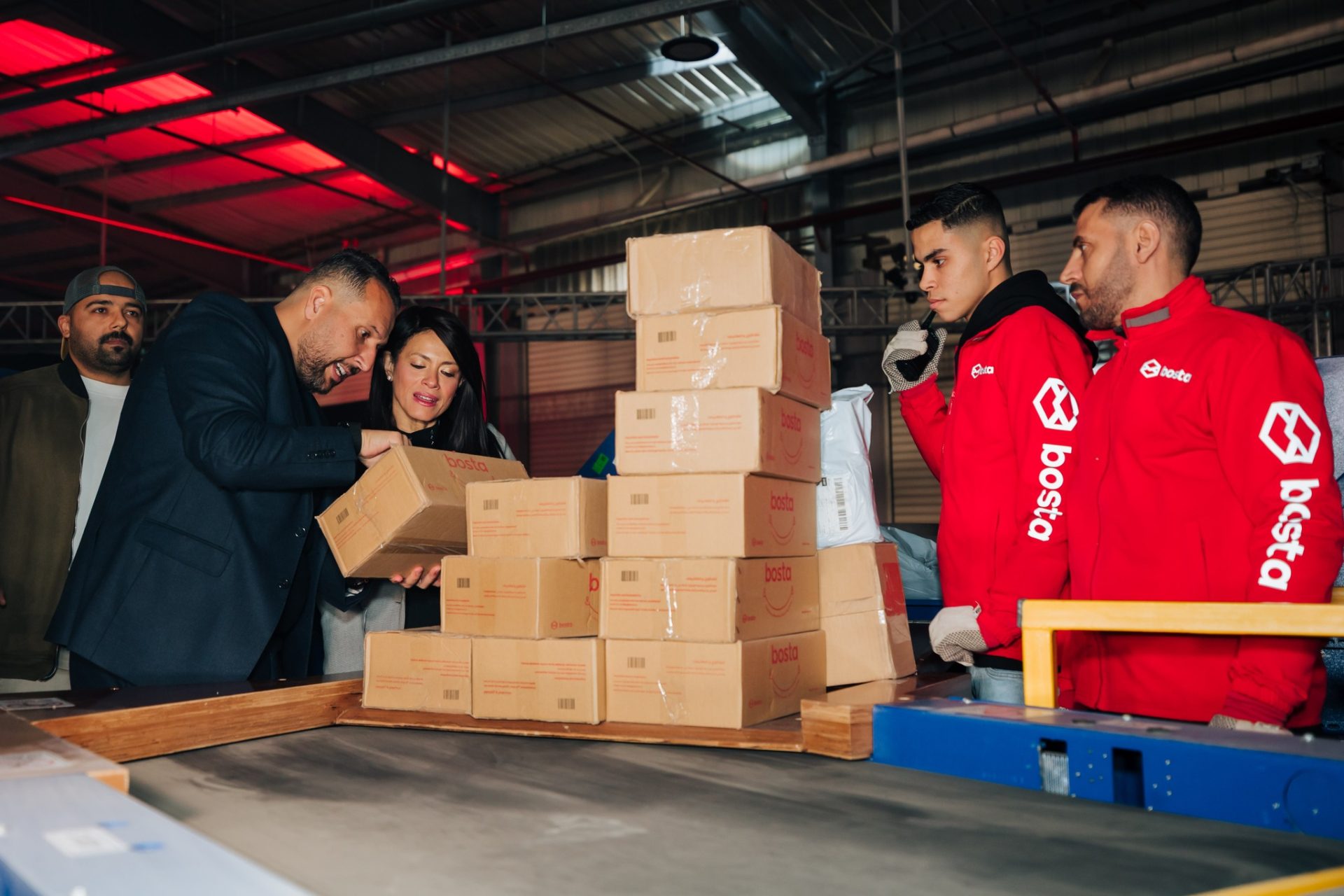
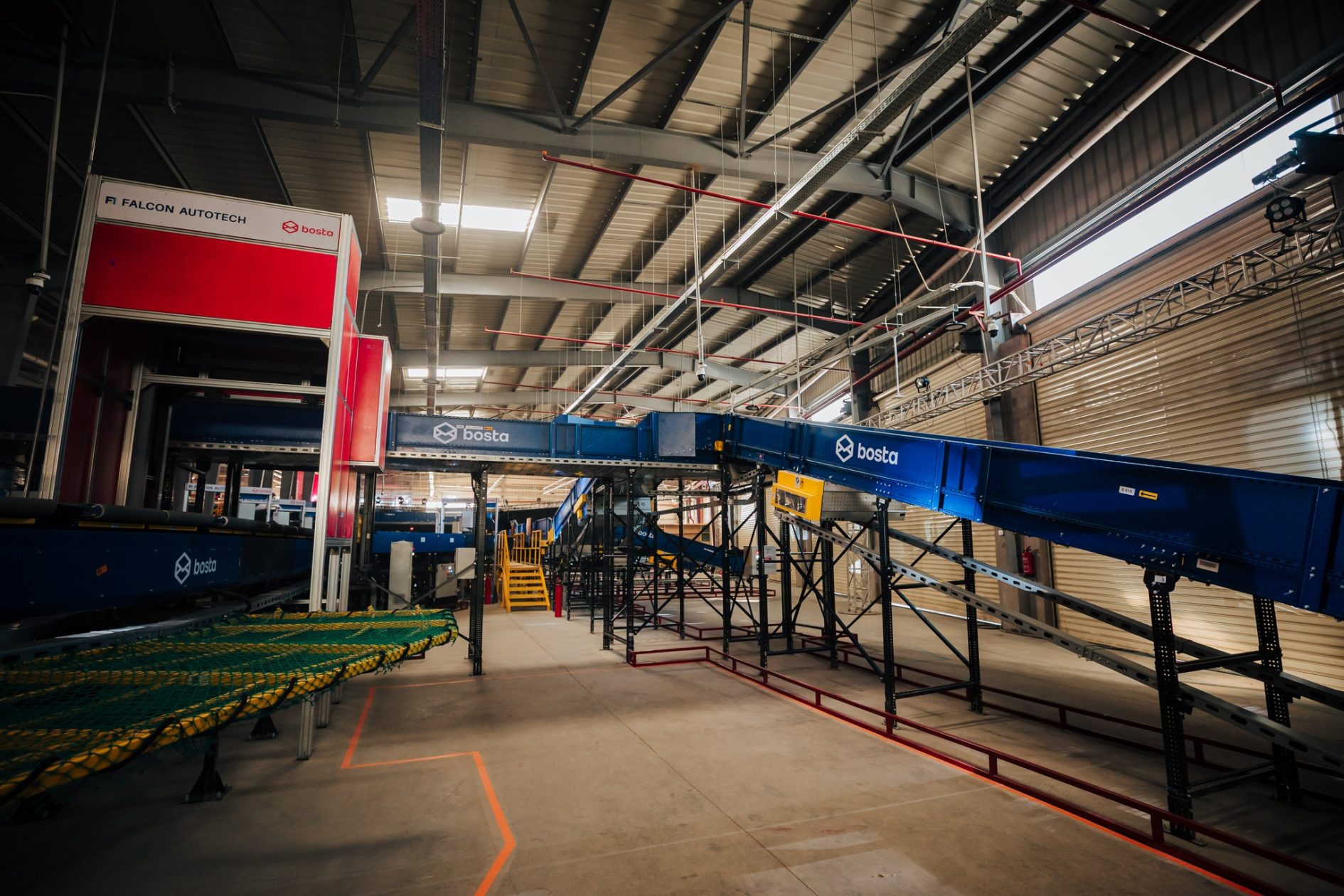
Egyptian logistics company Bosta has unveiled the Middle East’s largest automated sorting machine, backed by a USD 5 million investment. The move signals a strategic push to future-proof Egypt’s logistics infrastructure as e-commerce volumes accelerate sharply across the country.
A Capital-Intensive Signal to the Market
Egypt’s logistics sector is entering a new phase of industrialisation. Bosta, one of the country’s fastest-growing delivery and fulfilment providers, has launched what it describes as the largest automated parcel sorting machine in the Middle East, marking one of the most significant single infrastructure investments in the region’s last-mile ecosystem.
The announcement was made during an official event in Cairo attended by Rania Al-Mashat, alongside industry leaders, entrepreneurs, and partners. The timing underscores growing government and private-sector alignment around modernising logistics as a pillar of Egypt’s digital economy.
Why Automation Matters Now
E-commerce growth in Egypt has placed increasing strain on legacy logistics networks that rely heavily on manual sorting and fragmented operations. Bosta’s new system is designed to address exactly that bottleneck.
According to the company, the machine can process up to 11,000 parcels per hour and more than 250,000 parcels per day, distributing shipments across 50+ operational hubs nationwide. That scale positions the facility not just as an internal efficiency upgrade, but as a structural capacity expansion for the broader ecosystem.
For merchants, faster and more accurate sorting translates directly into shorter delivery windows, lower error rates, and better customer experience—critical factors as consumer expectations continue to rise.
A USD 5 Million Bet on Scale
Mohamed Ezzat, CEO of Bosta, said the automated sorting machine alone represents an investment of USD 5 million, bringing the company’s cumulative investments to USD 27 million to date. In local terms, that exceeds EGP 1.2 billion, a notable figure in a sector where underinvestment has historically limited scalability.
The logic is clear: logistics is no longer just a cost centre. It is becoming a competitive differentiator, particularly for e-commerce platforms and SMEs that depend on reliable delivery to grow beyond major urban centres.
By embedding automation at the core of its operations, Bosta is signalling long-term confidence in sustained parcel volume growth.
Volumes Are Driving the Urgency
The scale of Bosta’s ambition is tied directly to shipment growth. Chief Operating Officer Karim El Deeb noted that the company processed 37 million parcels in 2025 and is targeting more than 80 million parcels in 2026.
Without automation, that trajectory would likely strain manual systems beyond viability. The new machine increases daily processing capacity from 100,000 parcels to over 250,000, and monthly throughput to more than 6 million parcels, enabling the company to absorb demand spikes without compromising speed or accuracy.
This matters not just for Bosta, but for the merchants that rely on it as their primary logistics partner.
Supporting SMEs, Not Just Scale Players
While large e-commerce platforms often attract the spotlight, Egypt’s digital commerce growth is heavily driven by small and medium-sized enterprises. Bosta has positioned itself as an integrated partner for these businesses, offering delivery, warehousing, fulfilment, order management, and even financing tools.
Automation strengthens that value proposition. Faster processing and fewer errors reduce returns and customer complaints—pain points that disproportionately affect smaller sellers with limited margins.
In this sense, the investment is as much about ecosystem resilience as it is about operational efficiency.
A Broader Signal for Egypt’s Logistics Sector
Bosta’s move reflects a wider shift underway in Egypt and the Middle East, where logistics providers are beginning to adopt industrial-scale automation previously seen mainly in more mature markets. As cross-border trade, digital payments, and marketplace-driven commerce expand, logistics infrastructure is being forced to catch up.
Public-sector interest, as reflected by the presence of senior government officials at the launch, suggests that logistics is increasingly viewed as strategic national infrastructure rather than a back-office service.
Long-Term Implications
The deployment of the region’s largest automated sorting machine places Bosta several steps ahead of many regional peers. However, automation also raises the bar for the entire sector. Competitors may be forced to invest, consolidate, or specialise to remain relevant.
For Egypt’s e-commerce economy, that could mean faster delivery standards, more predictable service levels, and stronger foundations for cross-border expansion.
A Structural Shift, Not a One-Off Upgrade
Bosta’s latest investment is best understood not as a single technology rollout, but as part of a broader re-engineering of how logistics works in Egypt. As parcel volumes double and consumer expectations harden, manual systems become liabilities rather than stopgaps.
By committing capital at this scale, Bosta is effectively betting that automation is no longer optional—it is the price of participation in the next phase of Middle Eastern e-commerce.


