
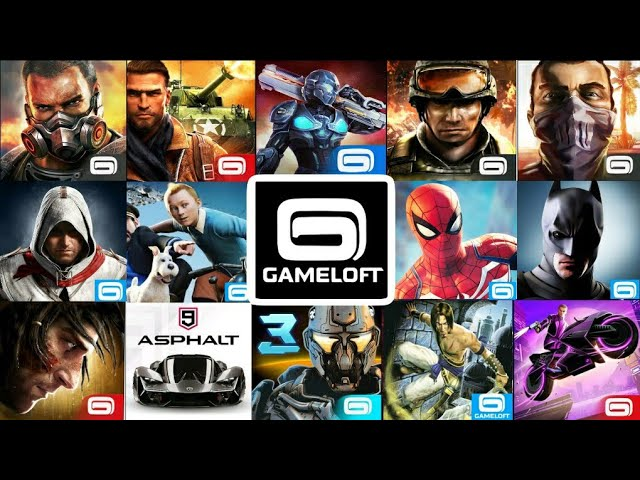
Founded in 1999, Gameloft helped define mobile gaming long before smartphones became mainstream. From early Java games to global franchises like Asphalt and Modern Combat, the studio’s evolution mirrors the rise of mobile gaming itself.
From Paris Roots to a Global Vision
For more than two decades, Gameloft has played a defining role in how games are built, distributed, and experienced on mobile devices. Founded on 14 December 1999 in Paris by Michel Guillemot, one of the original co-founders of Ubisoft, the company was born at a time when mobile gaming was still largely experimental. Guillemot’s ambition was clear early on: bring console-like experiences to the limited hardware of early mobile phones and make games accessible anywhere.
Operating initially as Gameloft.com during the dot-com era, the company navigated early market volatility but quickly carved out a niche by focusing relentlessly on mobile-first development, rather than treating mobile as an afterthought.
Scaling Game Development Alongside Mobile Technology
As mobile hardware evolved, so did Gameloft’s strategy. In the early 2000s, the studio aggressively expanded its catalogue, developing games for Java-enabled phones and later feature phones. By 2003, Gameloft had reached profitability, supporting more than 100 compatible devices and releasing titles across racing, action, sports, and puzzle genres. This device-agnostic approach allowed the company to scale globally while competitors were still experimenting with the medium.
By the mid-2000s, Gameloft had established studios across Europe, the Americas, and Asia, enabling regional localisation and faster production cycles. This global studio model helped the company distribute games in more than 120 countries, long before app stores simplified international reach.
Franchises That Defined Mobile Gaming
Gameloft’s long-term influence is inseparable from the franchises it built. The Asphalt series, launched in 2004 with Asphalt: Urban GT, became one of the most enduring mobile racing franchises, setting benchmarks for graphics and arcade-style gameplay on phones. Modern Combat brought first-person shooters to mobile audiences with a console-inspired feel, while Dungeon Hunter demonstrated that deep role-playing mechanics could thrive on handheld devices.
Other hits such as Minion Rush and Dragon Mania Legends expanded Gameloft’s reach into casual and social gaming, broadening its audience well beyond core gamers. The company was also among the first developers to publish games on Apple’s App Store in 2008, securing a strategic advantage as smartphones transformed the industry.
Technology, Licensing, and Live-Service Innovation
Beyond original IP, Gameloft has built a substantial business around licensed games, partnering with major entertainment brands including Disney, LEGO, and Universal. These collaborations allowed the studio to blend familiar IP with proven mobile gameplay systems, driving mass-market appeal.
At the same time, Gameloft consistently adapted to industry shifts, investing in new game engines, cloud-based services, and Games-as-a-Service models. Ongoing content updates, live events, and community engagement became central to its design philosophy, helping extend the lifespan of titles in an increasingly competitive app ecosystem.
Acquisition and Corporate Transformation
A major inflection point came in 2016, when French media conglomerate Vivendi acquired Gameloft, taking it private after years as a publicly listed company on Euronext Paris. The acquisition integrated Gameloft into a broader entertainment portfolio and opened the door to cross-media synergies, while also supporting expansion beyond mobile into PC and console development.
This transition marked a shift from a pure mobile pioneer to a more diversified game publisher, capable of operating across platforms while retaining its mobile DNA.
Global Reach and Enduring Legacy
Today, Gameloft employs thousands of developers and creatives across studios worldwide, with millions of active players engaging with its games each month. Its portfolio continues to evolve with cross-platform releases and new IP, but the company’s legacy remains firmly rooted in its early belief that mobile gaming could rival traditional platforms in depth and scale.
Gameloft’s story matters because it reflects the broader evolution of digital entertainment. From early experimentation on basic handsets to live-service games played by global audiences, the studio’s 25-plus-year journey shows how early vision, disciplined execution, and willingness to adapt can shape an entire medium far beyond its Parisian origins.


