
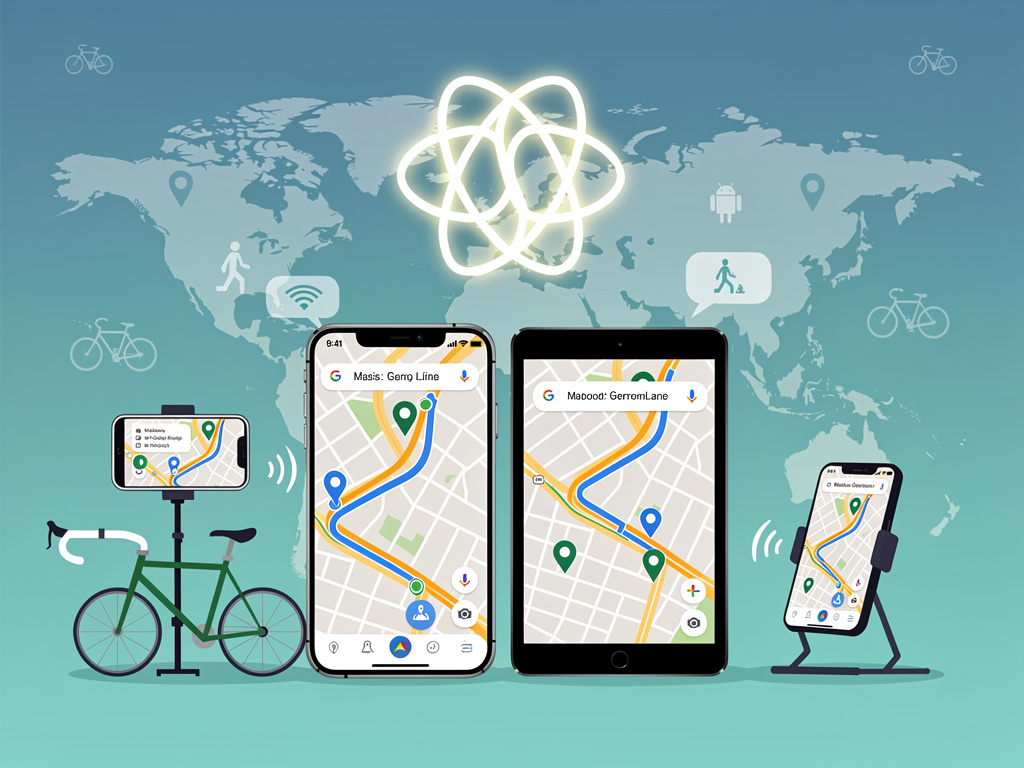
Google has expanded Gemini integration in Google Maps, allowing users to access AI assistance while walking or cycling. The update brings contextual queries and hands-free help into real-world navigation, extending Google’s push to embed AI into everyday mobility
Google pushes AI deeper into everyday navigation
Google is extending the role of AI in everyday mobility by allowing users to access Gemini directly within Google Maps while walking or cycling. The update, rolling out globally, removes a key limitation of earlier Gemini integrations that were largely confined to driving mode or stationary use. The change reflects Google’s broader effort to make AI assistants useful in motion, where attention is fragmented and interactions need to be fast, contextual, and largely hands-free.
How Gemini works on foot and on a bike
With the update, users navigating on foot or by bicycle can ask Gemini natural-language questions without interrupting their route. Instead of switching apps or stopping navigation, they can surface contextual information such as nearby cafés, landmarks, or practical queries like where to find a pharmacy along the route. Gemini draws on Google Maps’ location data and real-time context, aiming to act as an ambient layer rather than a separate search experience. Google says the feature is designed to work with voice input, reducing the need to look at the screen while moving.
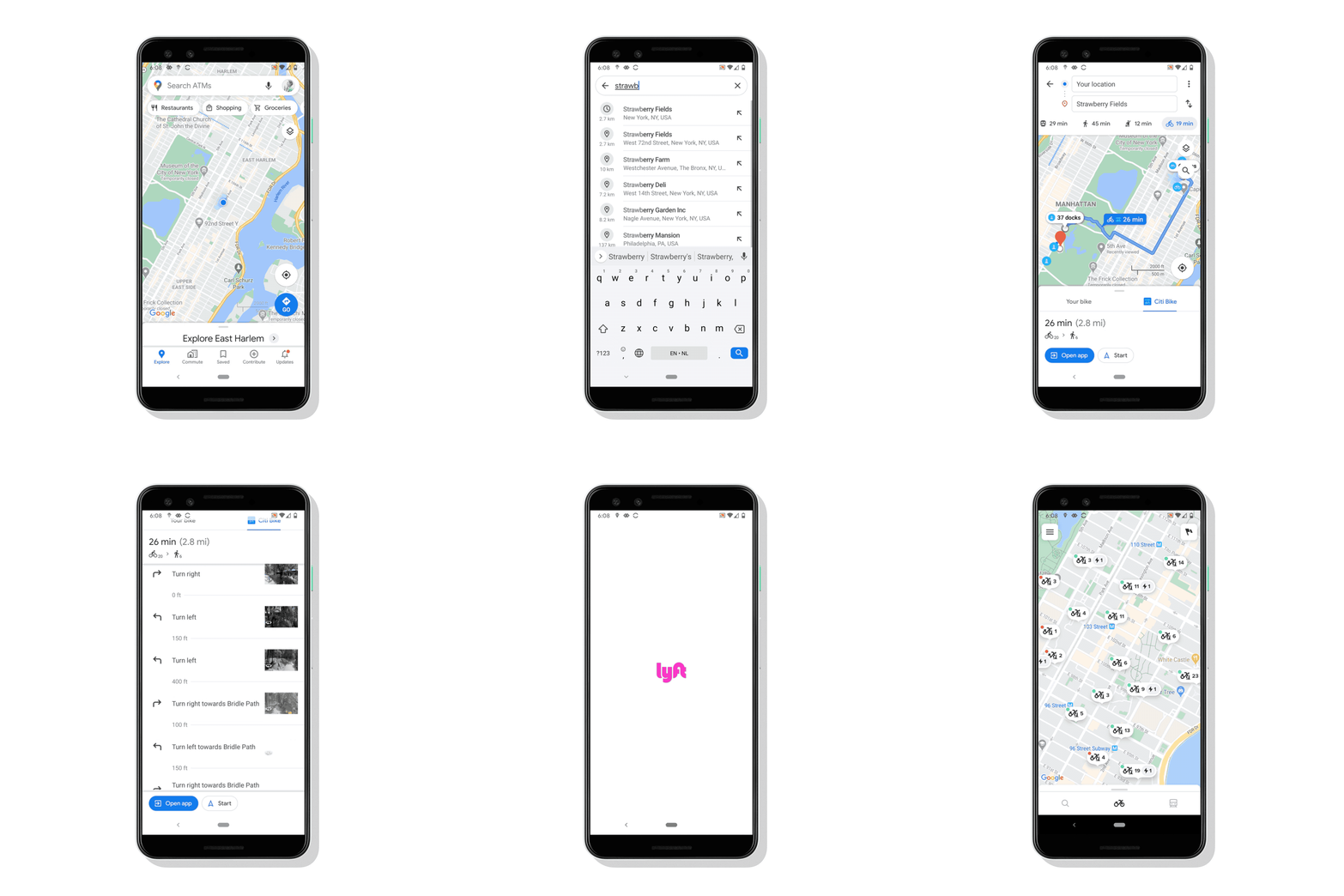
From turn-by-turn directions to contextual assistance
The integration signals a shift in how Google views navigation. Rather than treating Maps purely as a turn-by-turn tool, Gemini positions it as a situational assistant that understands where a user is, how they are moving, and what they might need next. For pedestrians and cyclists, that context is often more fluid than for drivers, with frequent stops, detours, and spontaneous decisions. Gemini’s role is to adapt to those moments, answering follow-up questions like whether a detour adds time or if a nearby place fits dietary or accessibility needs.
Why this matters for Google’s AI strategy

The expansion comes as Google races to embed Gemini across its core consumer products, from Search to Android. Walking and cycling navigation represent high-frequency, everyday use cases where AI can demonstrate tangible utility. By integrating Gemini into Maps beyond cars, Google is testing whether AI assistance can become a default layer of interaction, rather than a novelty feature. It also positions Google against competitors building AI-first navigation and local discovery experiences.
What users can expect next
Google has indicated that Gemini’s Maps capabilities will continue to evolve, with deeper contextual understanding and more proactive suggestions over time. For now, the focus is on making AI accessible in motion without increasing cognitive load. If successful, the update could redefine how users interact with maps, shifting from passive directions to an ongoing conversation with their surroundings as they move through the city.


