
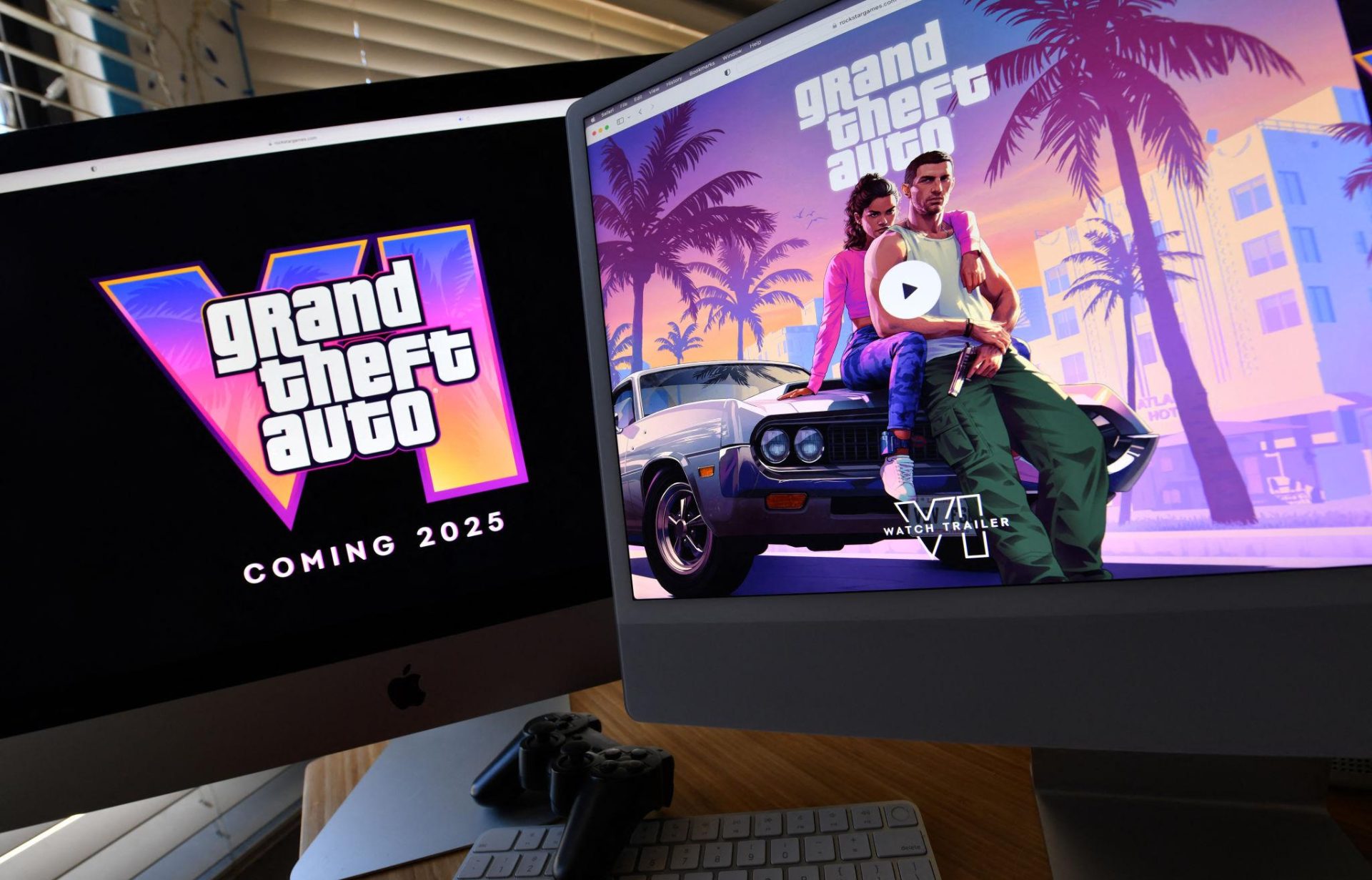
Rockstar Games’ confirmation of a release date for GTA VI has triggered an explosion of online debate, expectations, and backlash—signaling that the cultural battle around the game may rival the game itself.
After more than a decade of anticipation, Rockstar Games has finally confirmed a release window for Grand Theft Auto VI. The announcement should have been a moment of near-universal celebration. Instead, it has ignited one of the most intense and fragmented waves of online discourse the gaming industry has ever seen.
Within hours, social platforms were flooded with conflicting reactions—excitement, skepticism, outrage, nostalgia, and fear—often all from the same users. The response illustrates how much the cultural environment around gaming has changed since GTA V launched in 2013.
A decade of expectations turned into pressure
GTA VI is not just another sequel. It carries the weight of being the successor to one of the most successful entertainment products in history. Over the past decade, expectations have inflated beyond gameplay into ideology, representation, monetization, and corporate ethics.
Every rumor, leak, and design choice is now filtered through multiple lenses: technical ambition, social values, nostalgia, and distrust of AAA publishers. The result is a discourse environment where no creative decision can remain neutral.
Rockstar is releasing GTA VI into a world where the internet no longer simply reacts—it pre-judges.
From hype cycles to culture wars
Earlier GTA launches sparked controversy, but largely after release. GTA VI faces scrutiny before it even arrives. Discussions now extend far beyond crime, violence, or satire—the series’ traditional flashpoints.
Instead, debates swirl around character identity, political subtext, open-world realism, online monetization fears, and whether Rockstar can still deliver cultural edge without triggering backlash from multiple sides.
Gaming discourse has become inseparable from broader culture wars, and GTA VI sits squarely at that intersection.
Social media amplifies extremes
Platforms like X, Reddit, TikTok, and YouTube reward strong opinions, not measured takes. GTA VI content performs best when it is framed as outrage, alarm, or absolute certainty—either that the game will be a masterpiece or a disaster.
This incentive structure makes it nearly impossible for nuanced discussion to dominate. Influencers, commentators, and even journalists are pushed toward definitive judgments long before meaningful information is available.
For Rockstar, this means losing narrative control earlier than ever before.
The burden of nostalgia
Another challenge is nostalgia itself. GTA V has lived for over a decade across multiple console generations, becoming a shared cultural reference point. For many players, GTA VI is competing not just with expectations—but with their own memories.
Any deviation from the past risks disappointment; any repetition risks accusations of stagnation. This paradox defines modern AAA development but is especially acute for GTA, where tone and satire are core to the brand.
Rockstar must modernize without alienating an audience that increasingly disagrees with itself.
Monetization fears loom large
Perhaps the most unifying anxiety in the discourse is monetization. GTA Online’s success transformed Rockstar’s business model, but also reshaped player trust.
Many fans worry GTA VI will prioritize online revenue systems at the expense of single-player depth. Even without evidence, this fear has become a dominant narrative—reflecting broader industry fatigue with live-service mechanics.
Whether justified or not, the perception alone will shape reception.
Why discourse may overshadow the game

The irony is that GTA VI will almost certainly be technically impressive. Rockstar’s production standards remain among the highest in the industry.
But in 2026’s attention economy, success is no longer measured purely by quality. It is measured by control of narrative, expectation management, and post-launch conversation.
GTA VI may become the rare case where the cultural noise around a game rivals—or exceeds—the experience of playing it.
Rockstar’s silence as strategy
Rockstar’s historically minimal communication may now be both strength and liability. Silence builds mystique, but it also allows speculation to spiral unchecked.
In today’s hyperconnected ecosystem, absence of information does not pause discussion—it accelerates it.
Whether Rockstar adapts its communication approach remains unclear. What is clear is that GTA VI is entering the most hostile and fragmented discourse environment the franchise has ever faced.
The real launch happens before release
By the time GTA VI actually ships, millions of players will already believe they know what it represents—for better or worse.
That reality marks a fundamental shift in gaming culture. The launch is no longer the release date. It is the discourse that precedes it.
And GTA VI may be the most extreme test yet of whether a game can still speak for itself.



