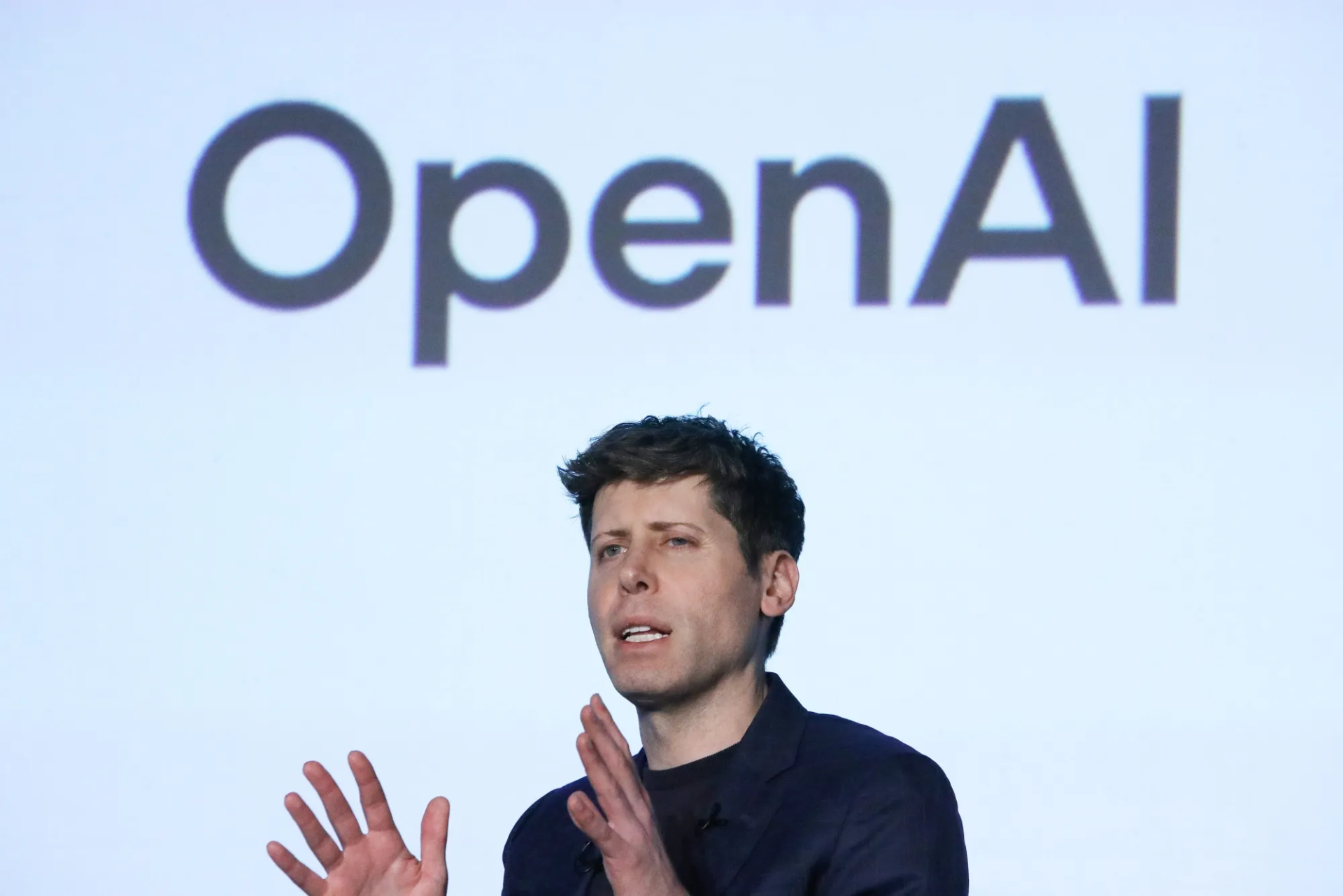
OpenAI CEO Sam Altman publicly criticized Anthropic’s Claude Super Bowl advertising, revealing intensifying competition and sensitivities in the consumer AI market.
The race to define consumer artificial intelligence spilled into public view this week after Sam Altman, chief executive of OpenAI, reacted sharply to a series of Super Bowl advertisements promoting Claude, the AI assistant developed by Anthropic.
Altman’s unusually blunt comments, made in response to social media discussion around the ads, underscore how fiercely contested the consumer AI space has become—and how sensitive leading players are to brand positioning at a moment when public perception may shape long-term market leadership.
A Super Bowl moment for consumer AI
Anthropic’s decision to advertise Claude during the Super Bowl marked a milestone for consumer-facing AI. The game’s advertising slots, among the most expensive in the world, are traditionally reserved for mass-market brands seeking cultural relevance.
By placing Claude alongside household names, Anthropic signaled its ambition to compete not just on technical benchmarks but on mindshare.
Industry observers viewed the move as a direct challenge to OpenAI’s ChatGPT, which has so far relied more on organic adoption and platform integrations than splashy advertising.
Altman’s reaction breaks pattern
Altman’s public response stood out because OpenAI executives have typically avoided direct commentary on competitors. His remarks, described by observers as “testy,” suggested irritation not just with the ads themselves, but with the framing of Claude as a safer, more responsible alternative to rival AI systems.
While Altman did not dispute Anthropic’s right to advertise, the tone implied that OpenAI sees the messaging as misrepresentative—or at least strategically provocative.
The exchange highlights how branding, not just model performance, is becoming a battleground.
Marketing meets AI ethics
Anthropic has consistently emphasized safety and alignment as central to Claude’s identity. Its Super Bowl messaging leaned into themes of trust, reliability, and responsible AI.
OpenAI, meanwhile, has faced scrutiny over governance, partnerships, and the pace of commercialization. Critics argue that Anthropic’s ads implicitly contrast its caution with OpenAI’s scale and speed.
Altman’s response suggests frustration with what OpenAI may perceive as moral positioning being used as a competitive weapon.
Consumer AI enters a new phase

The episode reflects a broader shift: consumer AI is moving from early adoption to mass-market competition. As usage saturates early adopters, companies are turning to traditional marketing channels to reach mainstream users.
This transition introduces new pressures:
- Clear brand differentiation
- Simple narratives for complex technology
- Public trust as a competitive asset
Super Bowl advertising, in this context, is less about immediate sign-ups and more about legitimacy.
Why this matters for OpenAI
ChatGPT remains the most widely recognized AI chatbot, but competition is intensifying. Google, Anthropic, Meta, and others are all vying for default positions across devices and platforms.
In that environment, being perceived as reckless—or conversely, as overly constrained—can influence partnerships, regulation, and consumer adoption.
Altman’s reaction suggests OpenAI is acutely aware that narrative control may be as important as technical leadership.
Rivalry without open warfare
Despite the sharp tone, neither company appears interested in escalating publicly. The AI sector remains interdependent, with shared research roots and overlapping talent pools.
Still, the incident marks a departure from the industry’s previously restrained public discourse. As AI becomes embedded in daily life, executives may find it harder to stay silent when competitors define the conversation.
A preview of what’s ahead
The Claude Super Bowl ads and Altman’s response may be remembered less for their immediate impact than for what they represent: AI companies behaving like consumer brands, with all the attendant rivalry, ego, and messaging battles.
As AI assistants compete for trust, attention, and default status, moments like this may become more common—and more consequential.