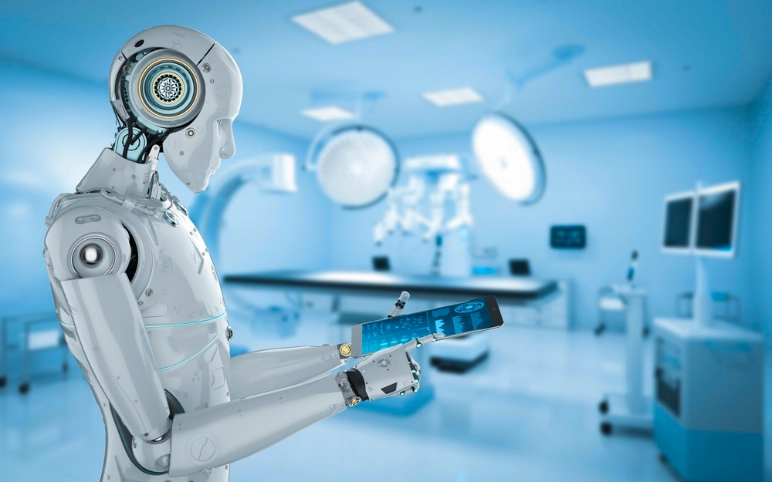
AI is increasingly being used to support the diagnosis and treatment of rare diseases, as hospitals and biotech companies face chronic shortages of specialized clinicians. The tools are aimed less at replacing doctors than at reducing manual workloads that slow care for small patient populations.
Hospitals treating rare diseases are turning to artificial intelligence not because it promises dramatic breakthroughs, but because the human infrastructure needed to deliver care is under sustained strain.
Across genetic clinics, specialty labs, and research hospitals, the number of trained clinicians able to diagnose and manage rare conditions has failed to keep pace with demand. Artificial intelligence systems—once pitched as experimental or futuristic—are now being deployed as practical labor-saving tools, handling tasks that would otherwise require scarce specialist time.
The shift reflects a broader recalibration in healthcare Artificial intelligence. Rather than focusing solely on headline-grabbing diagnostics, companies are positioning their tools as workforce support systems in areas where the economics of care are already fragile.
A labor problem unique to rare diseases
Rare diseases, by definition, affect small patient populations, but collectively they are estimated to impact hundreds of millions of people worldwide. Diagnosis is often slow, requiring extensive chart reviews, genetic analysis, and coordination across specialties.
That process depends heavily on clinicians with deep domain expertise—geneticists, neurologists, metabolic specialists—roles that are already in short supply. Unlike more common conditions, rare disease care offers limited opportunities to scale staffing efficiently, making burnout and backlogs persistent problems.
Artificial intelligence systems are increasingly being applied to this bottleneck. Tools can scan medical records to flag patterns consistent with known rare conditions, prioritize genetic variants for review, or automate portions of documentation and case preparation. The goal is not to replace clinical judgment, but to narrow the funnel so specialists spend more time on decision-making and less on data triage.
From research aid to operational tool

Until recently, many Artificial intelligence applications in rare disease care lived primarily in research settings. What is changing now is where they are being used.
Hospitals and biotech firms are integrating Artificial intelligence directly into clinical workflows, often through partnerships with digital health startups. These systems can process large volumes of patient data—imaging, genomic sequences, clinical notes—far faster than human teams, identifying candidates for further review or clinical trials.
For drug developers, the labor constraints are equally acute. Recruiting patients for rare disease trials is notoriously difficult, and clinical teams are small. Artificial intelligence tools that automate patient matching or monitor disease progression remotely can reduce the staffing burden while accelerating development timelines.
Why adoption is accelerating now
Several forces are converging to push AI adoption beyond pilot programs.
Healthcare systems in the U.S. and Europe continue to face staffing shortages exacerbated by burnout, aging workforces, and budget pressures. At the same time, regulatory agencies have become more familiar with AI-assisted tools, particularly when they are framed as decision support rather than autonomous systems.
There is also a financial logic at play. Rare disease programs are expensive to operate, and inefficiencies carry outsized costs. Automating even small portions of the workflow—data extraction, preliminary analysis, follow-up monitoring—can have a measurable impact on both speed and sustainability.
Crucially, these tools are being positioned as conservative by design. Most systems are built to assist, not overrule, clinicians, reducing regulatory risk and easing internal adoption.
Limits, risks, and unanswered questions
Despite the momentum, AI is not a cure for the structural problems facing rare disease care.
Models trained on limited or biased datasets may underperform for ultra-rare conditions. Errors in automated prioritization can still delay diagnosis if not carefully monitored. And smaller hospitals may lack the technical infrastructure to deploy advanced systems effectively.
There are also unresolved questions about accountability. When AI tools influence diagnostic pathways, responsibility still rests with human clinicians—adding oversight demands rather than eliminating them.
For now, most deployments reflect a pragmatic compromise: AI as an efficiency layer rather than a clinical authority.
A signal for the broader health tech market
For startups and investors, the trend signals where near-term value may lie. Rather than betting on fully autonomous diagnostics, companies that focus on reducing clinician workload in high-friction areas are finding clearer paths to adoption.
In the rare disease ecosystem, where every hour of specialist time is scarce, that framing resonates. AI’s role is less about disruption and more about keeping a strained system functioning.
As workforce pressures persist, similar dynamics are likely to emerge in other specialty areas. Rare disease care may simply be where the labor math made the case first.