
Bosta and RiseUp have announced a strategic partnership aimed at helping startups overcome logistics and operational barriers as they scale across Egypt and the wider region.
As funding tightens and expectations rise, startups in the Middle East and Africa are being pushed to solve operational problems earlier than ever. Logistics is often near the top of that list.
Against that backdrop, Egyptian logistics company Bosta has announced a strategic partnership with RiseUp, aligning a core infrastructure provider with one of the region’s most influential entrepreneurship platforms.
The collaboration was unveiled during RiseUp Summit 2026, held at the Grand Egyptian Museum in Cairo under the theme “The Turning Point.”
Why logistics has become a bottleneck for startups
For early-stage companies, growth is no longer just about acquiring users. As startups expand beyond initial markets, fulfillment, delivery reliability, and cost control increasingly determine whether growth is sustainable.
Rising customer expectations—driven by global e-commerce standards—have made logistics a competitive differentiator rather than a back-office function.
By partnering with RiseUp, Bosta is positioning itself not just as a service provider, but as part of the startup support infrastructure, offering founders access to technology-driven delivery solutions designed to scale with their businesses.
RiseUp’s role in the ecosystem
RiseUp Summit has become one of the region’s central convening points for founders, investors, and operators, serving as a forum for knowledge exchange and ecosystem building.
The platform’s decision to formalize a partnership with a logistics provider reflects a broader shift in startup support—from inspiration and networking toward practical execution.
As startups mature faster and face earlier pressure to expand regionally, access to reliable operational partners is becoming as critical as access to capital.
A focus on scalability from day one
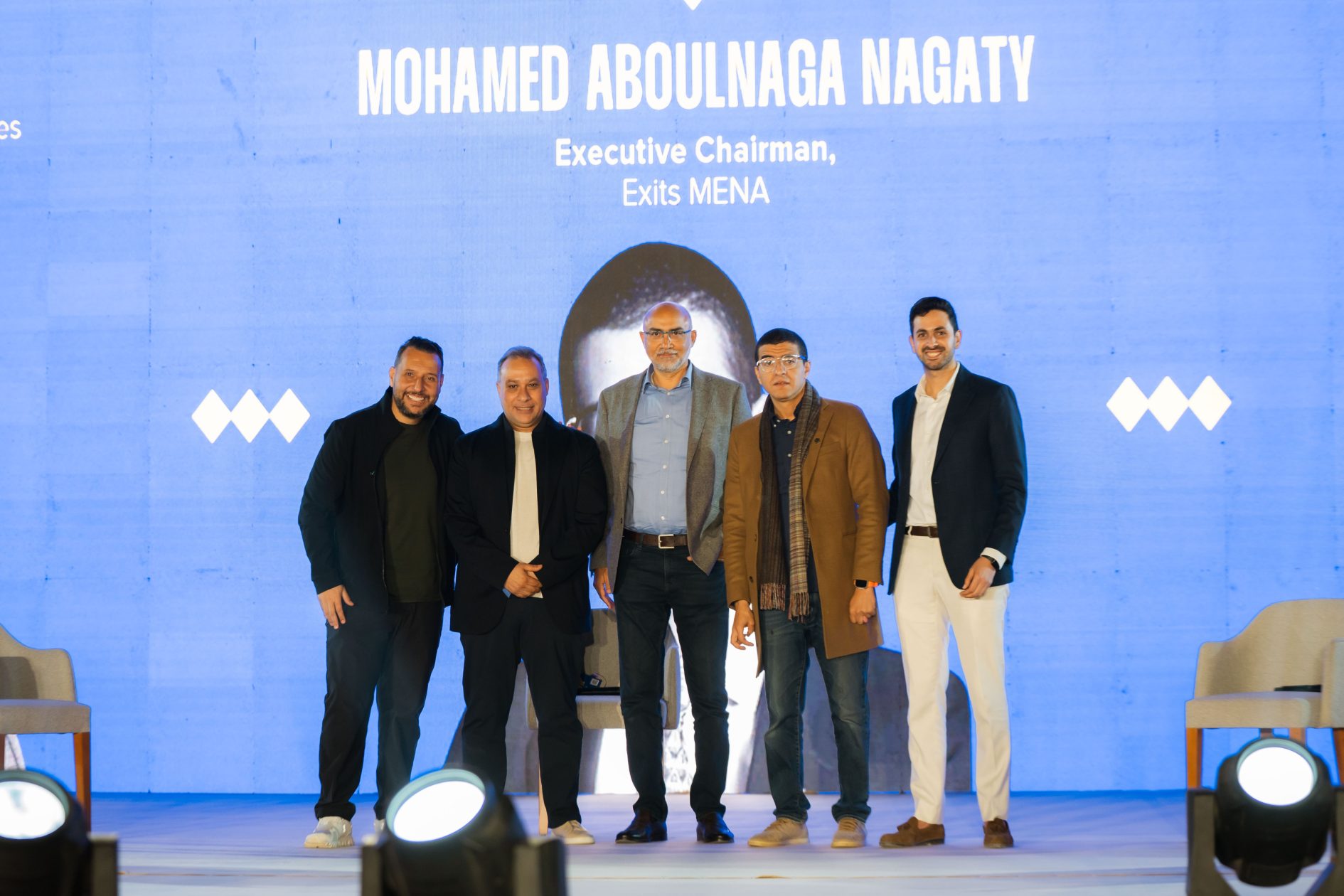
During the summit, Mohamed Ezzat, co-founder and CEO of Bosta, emphasized that market size alone is no longer sufficient.
Egypt, he noted, offers significant opportunity, but startups need to design products and business models with regional and global scalability in mind from the outset. That mindset, he argued, is increasingly decisive in attracting investment and unlocking long-term growth—whether through partnerships, acquisitions, or public markets.
The message aligns with investor sentiment across emerging markets, where governance, operational readiness, and scalability now weigh more heavily than pure growth metrics.
Exit paths under pressure
Ezzat also took part in a panel discussion examining startup exit strategies, titled “M&A or IPO?”. The conversation reflected a more sober market reality.
Panelists discussed how economic volatility and constrained capital markets have narrowed exit options, making timing, business fundamentals, and operational discipline critical. Rather than treating exits as aspirational milestones, founders are being encouraged to prepare for them structurally—long before they are imminent.
Logistics, governance, and repeatable operations featured prominently in that discussion.
What the partnership signals
The Bosta–RiseUp partnership is emblematic of a maturing ecosystem. Instead of focusing solely on funding rounds and valuations, the emphasis is shifting toward execution and resilience.
For startups, access to scalable logistics can remove a major friction point. For the ecosystem, the collaboration reflects a growing integration between private-sector operators and entrepreneurship platforms.
As regional expansion becomes less optional and more essential, partnerships like this suggest that infrastructure—not just ideas—will shape the next phase of startup growth in Egypt and beyond.