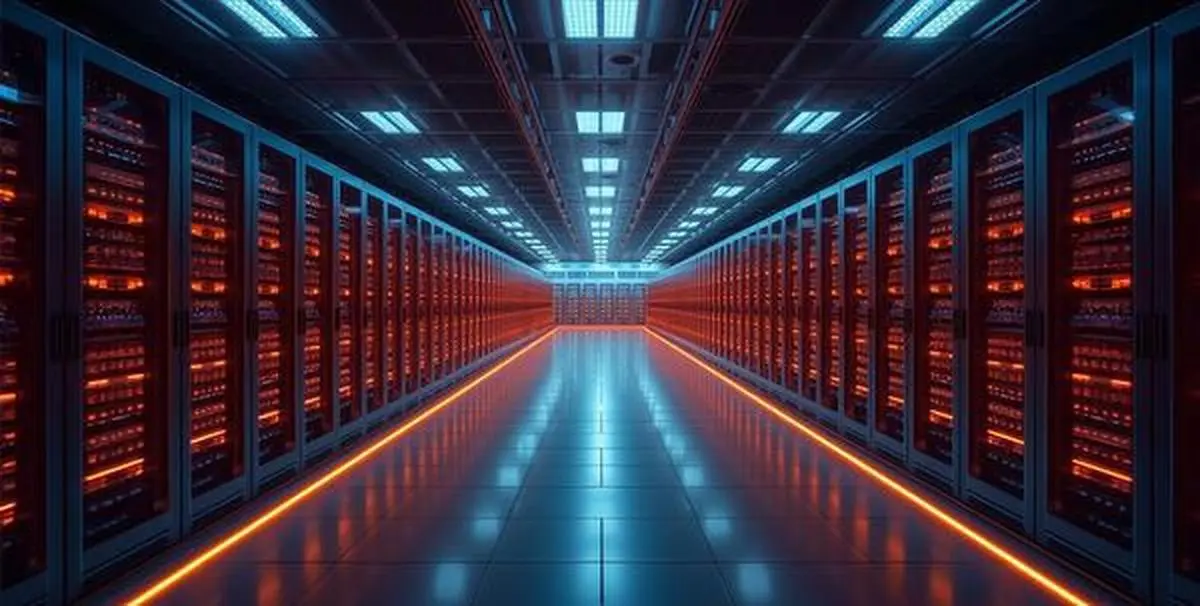
India and the United States have finalized a technology trade pact designed to ease imports of GPUs and data center equipment, supporting India’s fast-growing AI ambitions.
India’s push to become a serious player in artificial intelligence has run into a familiar constraint: access to hardware.
That constraint may be easing. India and the United States have sealed a technology trade agreement intended to smooth the import of high-performance GPUs and related data center equipment, according to officials familiar with the arrangement. The pact is aimed squarely at accelerating AI development while reducing friction in cross-border technology flows.
For India’s AI ecosystem, the timing is critical.
Why GPUs became a strategic issue
Modern AI systems depend on advanced chips, many of which are designed or manufactured by US-aligned companies and subject to export controls or complex licensing processes.
For Indian cloud providers, startups, and research institutions, delays in sourcing GPUs have slowed data center expansion and raised costs. The new agreement seeks to streamline approvals and clarify trade rules, making it easier for Indian operators to scale infrastructure.
The move also reflects US interest in strengthening trusted technology partnerships as global AI competition intensifies.
More than a supply chain fix

While the pact focuses on hardware, its implications extend further. Reliable access to compute is foundational for AI research, enterprise adoption, and startup experimentation.
By easing imports, India can attract more AI workloads, foreign investment, and hyperscaler interest—key ingredients for building a competitive ecosystem.
For the US, the agreement reinforces India’s role as a strategic technology partner rather than a peripheral market.
Data centers at the center of policy
India’s data center industry has expanded rapidly, driven by cloud adoption, digital services, and now AI workloads. But growth has exposed dependencies on foreign hardware.
The trade pact does not eliminate those dependencies, but it reduces uncertainty. That predictability matters for long-term capital planning in an industry where infrastructure investments run into billions of dollars.
A signal amid global fragmentation
As technology supply chains fragment along geopolitical lines, bilateral agreements are becoming essential tools.
The India–US pact illustrates how AI infrastructure is no longer just a commercial concern—it is a diplomatic one.
For India’s AI ambitions, access to GPUs may prove just as important as access to talent.