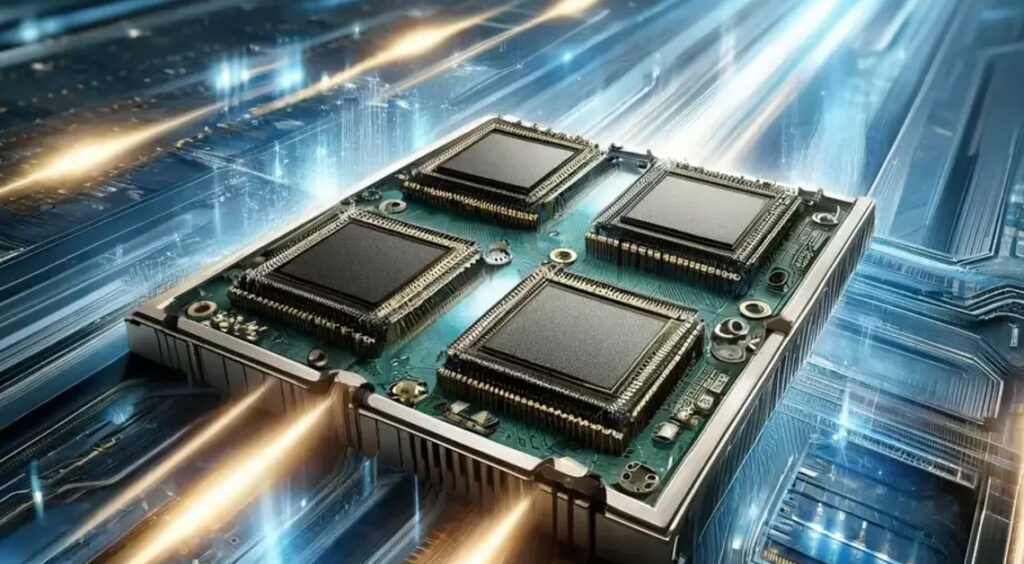
Samsung is set to begin mass production of its HBM4 memory, underscoring how high-bandwidth memory has become critical to AI performance.
The next phase of the AI hardware race is not just about processors—it is about memory.
Samsung Electronics is expected to begin mass production of its next-generation HBM4 memory chips as early as next week, according to industry sources. The move positions Samsung to compete more aggressively in a segment that has become essential to AI accelerators and data center performance.
High-bandwidth memory is now one of the tightest bottlenecks in AI systems.
Why HBM4 matters
As AI models grow larger and more complex, the speed at which data can move between memory and processors has become a limiting factor. HBM addresses that problem by stacking memory vertically and placing it close to compute units.
HBM4 represents a further leap in bandwidth and efficiency, enabling faster training and inference for large models. For AI chipmakers, access to cutting-edge HBM can be a competitive differentiator.
A competitive memory landscape
Samsung faces intense competition from other memory producers racing to supply AI-focused customers. Demand has surged alongside AI data center investment, straining supply and pushing memory technology to the forefront.
Starting mass production earlier gives Samsung a chance to lock in customers and demonstrate manufacturing reliability—crucial factors in long-term supply contracts.
Manufacturing complexity rises
Producing advanced HBM is technically demanding, involving precise stacking, thermal management, and yield optimization. Scaling production is as much an engineering challenge as a capacity one.
Samsung’s move signals confidence that it can manage that complexity while meeting rising demand from AI chipmakers and cloud providers.
Memory’s moment in AI
For years, processors dominated attention in semiconductor discussions. AI has changed that balance.
Memory performance now directly shapes model capability and cost efficiency. As a result, companies that control advanced HBM supply wield growing influence over the AI ecosystem.
Samsung’s HBM4 rollout suggests the memory race is entering a decisive phase—one where bandwidth, not just compute, defines who leads in AI hardware.