
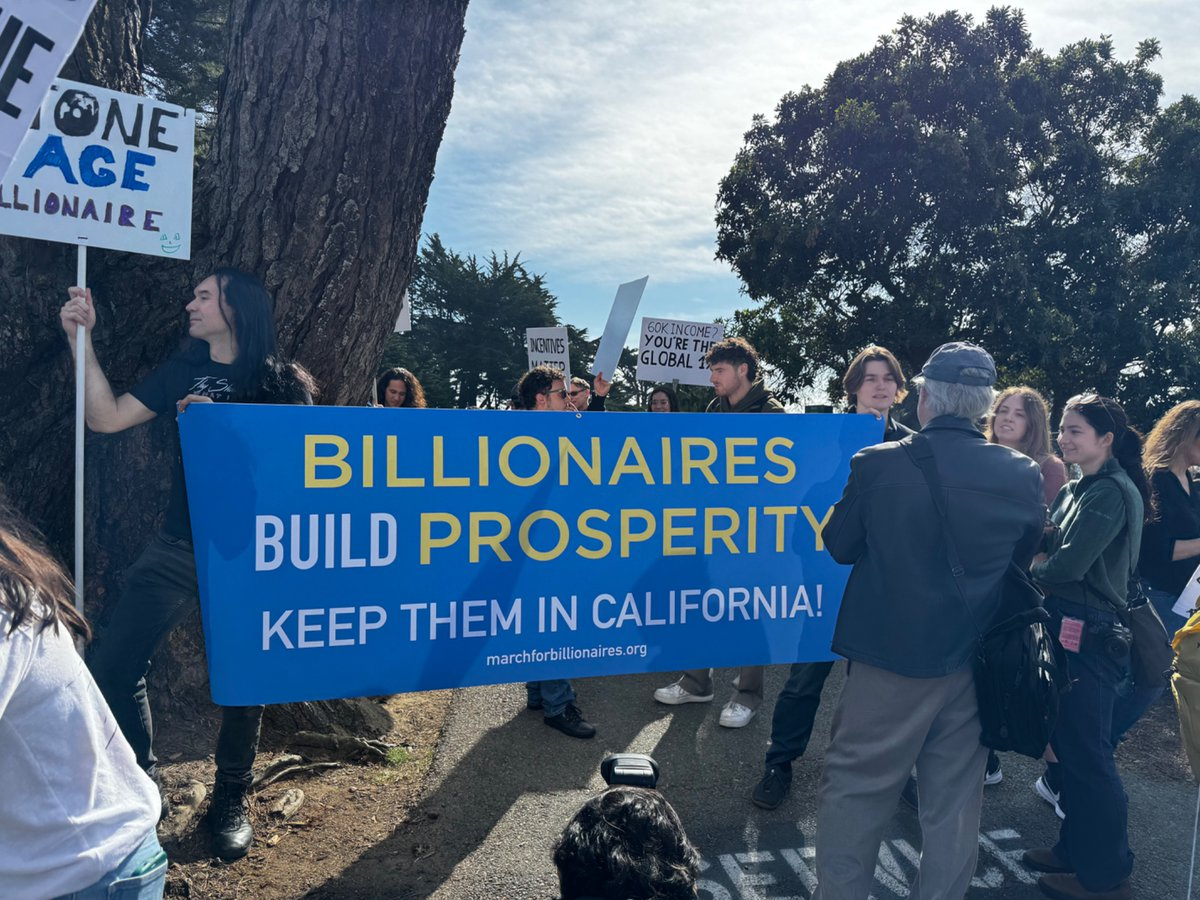
A pro-billionaire march in San Francisco drew only dozens of participants, but underscored deeper tensions around tech wealth, taxation, and political identity.
San Francisco has hosted no shortage of protests about wealth and power. A march in favor of billionaires is something else entirely.
Over the weekend, a small group of demonstrators gathered in the city to protest proposed wealth taxes and defend the role of billionaires in innovation and economic growth. Attendance was limited—dozens, not hundreds—but the event carried symbolic weight in a city that sits at the center of global tech wealth and inequality.
The march reflects how fractured the politics of technology have become, even within Silicon Valley itself.
A reaction to shifting political winds in San Francisco
The protest was framed as a response to rising scrutiny of extreme wealth, particularly proposals to tax billionaires more aggressively at the state and federal levels.
Supporters argue that punitive taxation risks driving capital and talent out of innovation hubs, weakening the very ecosystems that fund startups, research, and job creation.
Critics counter that the concentration of wealth has contributed to housing shortages, social strain, and political imbalance—especially in cities like San Francisco.
Why turnout matters

The modest turnout underscores a reality often missed in online discourse: vocal positions do not always translate into broad public support.
While many in the tech industry privately worry about taxes and regulation, few are willing to publicly rally around billionaires as a class. Even in a city shaped by venture capital and startup exits, overt pro-wealth activism remains niche.
That gap highlights how uncomfortable the conversation around wealth has become—caught between economic pragmatism and social accountability.
A mirror of tech’s identity crisis
The march also reflects a deeper identity struggle within tech. Early narratives cast founders and investors as builders solving real-world problems. Today, that image competes with criticism around monopolies, inequality, and political influence.
Defending billionaires outright risks reinforcing negative stereotypes, even among those who benefit from the system.
As a result, much of tech’s political engagement now happens quietly—through lobbying, donations, and policy work—rather than street-level activism.
Symbolism over scale
The significance of the march lies less in its size than in what it represents: a community unsure how to respond to growing backlash against wealth.
San Francisco remains a city powered by extreme success and extreme frustration. Public demonstrations, whether large or small, are symptoms of that imbalance.
The pro-billionaire march did not shift the debate. But it revealed how unsettled—and unresolved—that debate remains.



