
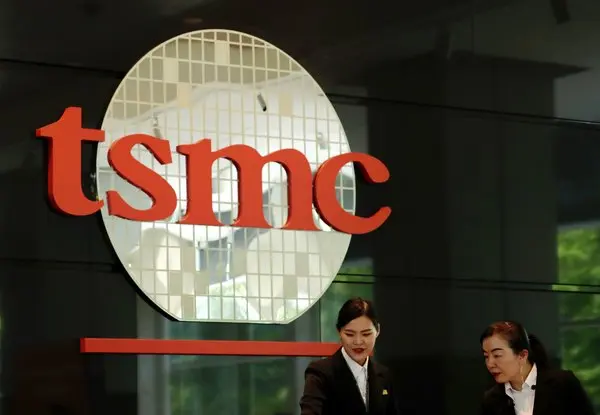
Taiwan has rejected US calls to move 40% of its semiconductor production overseas, signaling firm resistance to reshaping its chip industry under external pressure.
Taiwan is making clear that it will not hollow out the industry that underpins its economy.
The government has pushed back against US efforts to persuade Taiwan to shift as much as 40% of its semiconductor production abroad, reaffirming that advanced chipmaking will remain anchored on the island. The stance highlights the growing tension between national industrial strategy and allied efforts to rebalance global supply chains.
At stake is not just manufacturing capacity, but economic leverage and security.
Why Taiwan is resisting
Semiconductors are Taiwan’s most strategic industry, accounting for a significant share of exports, employment, and technological leadership. Moving large portions of production offshore would dilute that advantage.
While Taiwanese firms have invested abroad—particularly in the US and Japan—those projects are framed as diversification, not displacement. A forced reallocation of output would undermine the dense ecosystem of suppliers, talent, and infrastructure that gives Taiwan its edge.
For policymakers, protecting that ecosystem is non-negotiable.
The limits of reshoring diplomacy

Washington has pushed allies to localize chip production as part of a broader effort to reduce geopolitical risk and dependence on East Asia. But Taiwan’s response shows the limits of that approach.
Unlike countries seeking to build new industries, The company is being asked to redistribute an existing one—at significant cost. Officials have signaled that while cooperation is possible, control over production decisions will remain domestic.
That position complicates US ambitions to geographically rebalance advanced manufacturing.
What it means for chipmakers
For companies such as TSMC, the message is one of continuity. Overseas fabs may grow, but the most advanced processes are likely to stay close to home.
That has implications for customers and governments alike. Cutting-edge capacity will remain concentrated, even as investment spreads incrementally.
A broader strategic signal
The company’s stance underscores a reality often obscured in policy debates: semiconductor supply chains are not infinitely malleable.
National interest, economic concentration, and technical complexity all impose constraints. Allies can coordinate—but not dictate.
In drawing this line, Taiwan is asserting that cooperation does not mean concession, and that semiconductor leadership is something it intends to keep.



