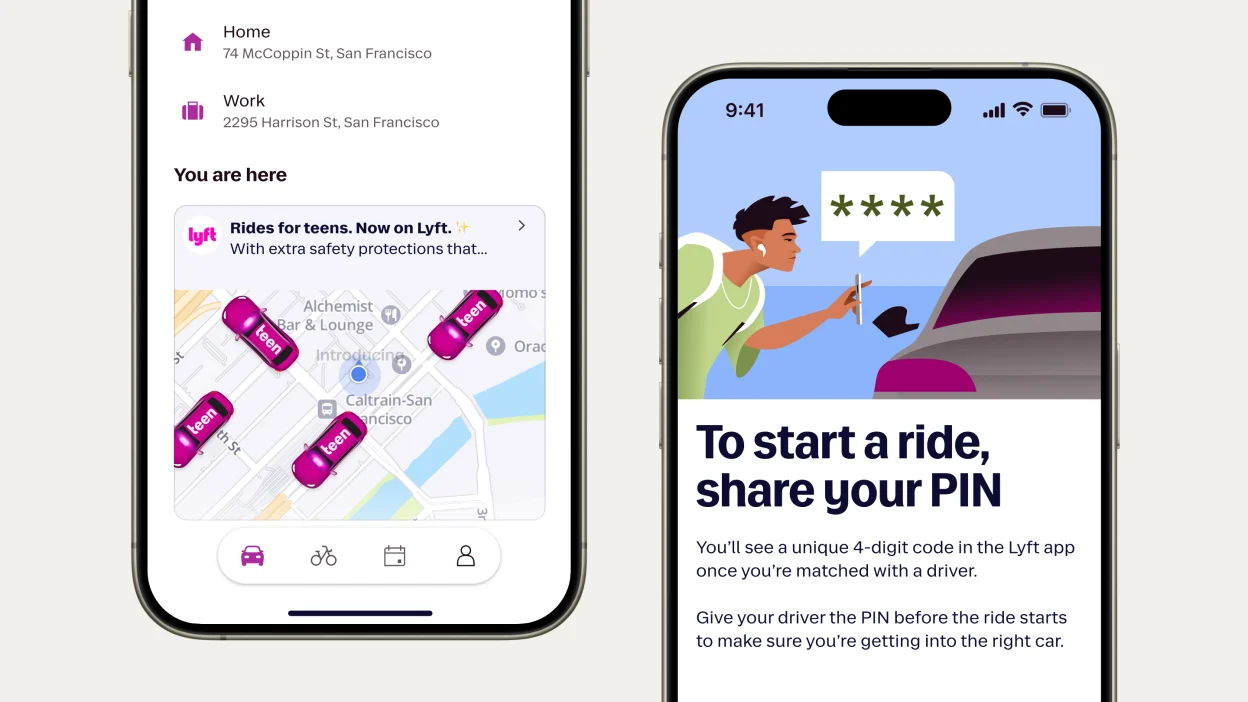
Lyft is broadening ride-hailing access for teenagers, adding safety and parental oversight features as platforms compete on trust and compliance.
Ride-hailing platforms are increasingly being judged not just on price and availability, but on who they allow to ride—and under what conditions.
Lyft is expanding access to its service for teenage riders, introducing additional controls designed to give parents visibility and oversight. The move reflects growing demand for structured transport options for younger users, as well as mounting regulatory and public pressure around platform safety.
Teen-focused features are fast becoming a strategic necessity.
Why teens matter to ride-hailing platforms
Teenagers represent a large but sensitive user segment. Families increasingly rely on app-based transport for school, extracurriculars, and social activities, especially in cities where public transport coverage is uneven.
At the same time, underage riders raise complex questions around consent, accountability, and risk management.
By formalising teen access rather than tolerating informal use, platforms like Lyft are attempting to bring a grey market into a governed environment.
Safety as a differentiator, not an add-on

Lyft’s teen expansion includes features such as ride tracking, trusted driver matching, and parental notifications—tools designed to reduce uncertainty rather than eliminate risk entirely.
These controls mirror a broader shift across consumer platforms: safety is no longer an optional feature, but a core part of the product offering.
For ride-hailing companies operating in tightly regulated environments, demonstrating proactive safeguards can also pre-empt regulatory intervention.
Competitive pressure in mobility
Lyft’s move follows similar efforts across the mobility sector to tailor services for families and younger users.
As growth in adult urban commuters plateaus in some markets, platforms are looking to adjacent segments—but only where risk can be managed.
Teen access, when structured carefully, offers both incremental demand and long-term brand loyalty.
Regulatory context looms large
Allowing minors onto ride-hailing platforms has historically drawn scrutiny from regulators and child safety advocates.
By expanding access with explicit safeguards, Lyft is signaling that it wants to shape the rules rather than react to them.
Whether regulators accept platform-defined guardrails remains an open question.
A cautious expansion
Lyft’s teen initiative is unlikely to dramatically shift ridership overnight. But it marks a strategic acknowledgment that mobility platforms are becoming part of everyday family logistics.
As digital services extend deeper into offline life, trust—not speed—may determine which platforms parents are willing to rely on.