
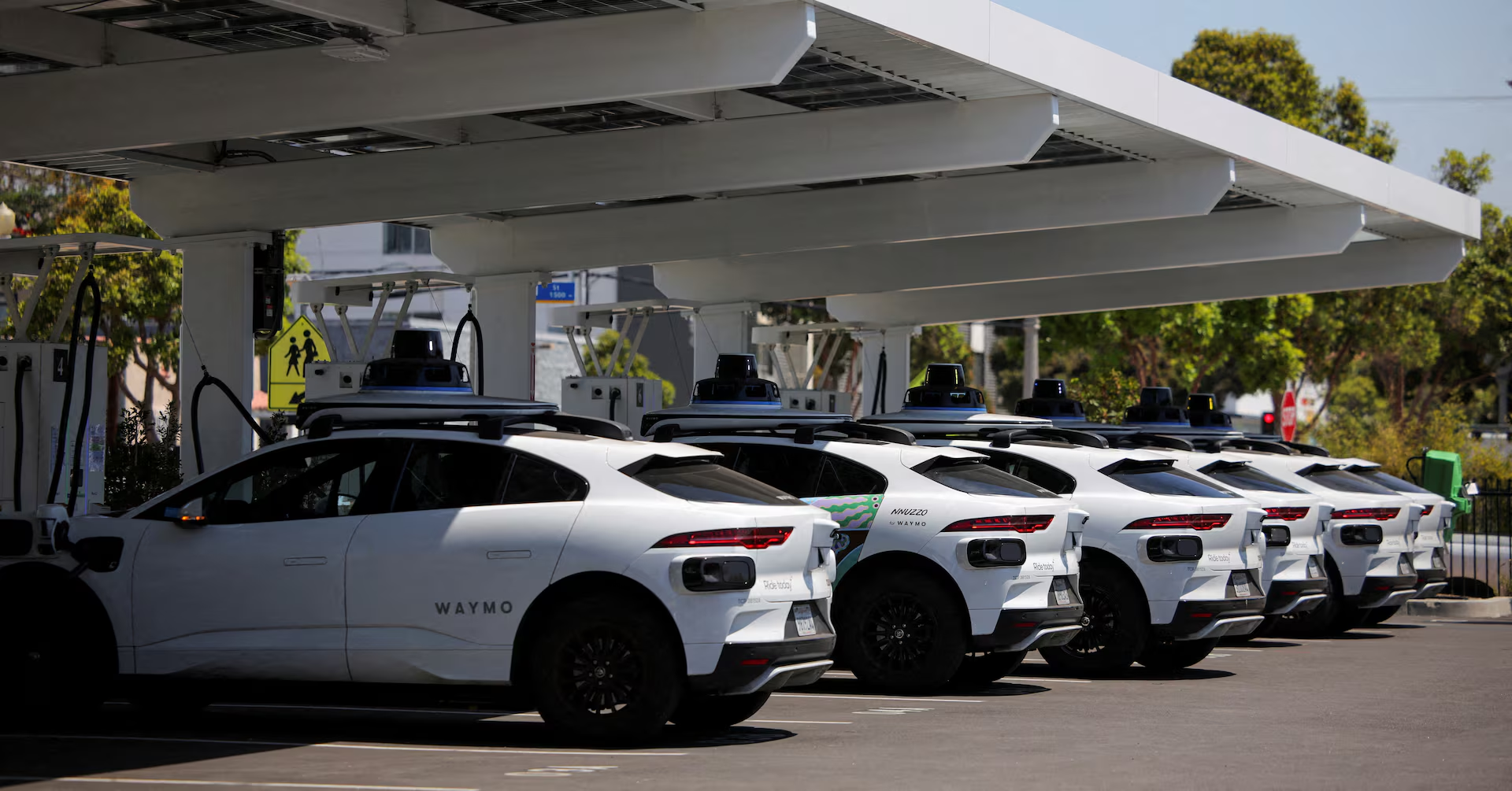
Waymo has launched a fully autonomous taxi service in Nashville, expanding its driverless operations beyond early pilot cities.
Autonomous vehicles are quietly becoming part of everyday urban transport.
Waymo, the self-driving unit of Alphabet, has launched a fully autonomous taxi service in Nashville, allowing riders to book trips with no human driver behind the wheel. The rollout marks another milestone as Waymo pushes beyond early adopter cities into a broader set of US markets.
Unlike test programs, the Nashville service operates as a commercial offering.
Why Nashville matters
Nashville represents a shift in Waymo’s expansion strategy. Rather than focusing solely on tech-forward cities, the company is entering fast-growing urban centers with diverse traffic patterns and less predictable driving environments.
Successfully operating in such cities strengthens Waymo’s case that its technology can generalize beyond carefully controlled conditions.
It also broadens public exposure to driverless vehicles in everyday contexts.
From pilots to operations
Waymo has spent years refining autonomous systems through limited pilots, safety drivers, and controlled geofenced areas. Fully driverless services indicate confidence not just in software, but in operational readiness—fleet management, customer support, and regulatory coordination.
That operational layer has often been underestimated in autonomy discussions.
For Waymo, scaling services city by city is as much a logistics challenge as a technical one.
Regulation remains central

The Nashville launch reflects cooperation with local authorities, but it does not eliminate regulatory complexity. Autonomous vehicle rules vary widely across states and municipalities.
Each new city requires approvals, data-sharing arrangements, and ongoing safety reporting. That patchwork continues to slow nationwide rollout.
Still, each successful deployment builds precedent.
Competition is heating up
Waymo is not alone in the robotaxi race, but it remains among the most advanced in real-world deployment. Other players face hurdles ranging from funding constraints to safety concerns.
Commercial operation—not demos—is becoming the key differentiator.
A gradual normalization
The Nashville launch will not transform urban mobility overnight. Ride volumes are likely to remain modest initially, and service areas limited.
But normalization often happens quietly.
As autonomous taxis appear in more cities, public perception shifts from novelty to utility. Waymo’s expansion suggests that phase is underway.
The real test now is not whether autonomy works—but whether it can scale sustainably.



