
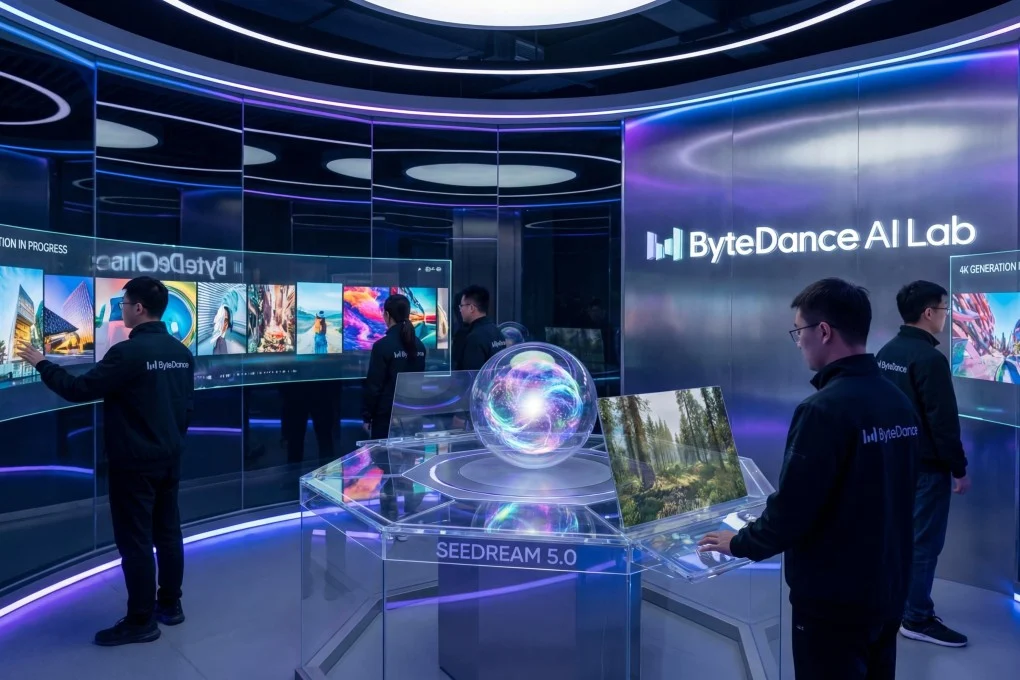
ByteDance and Alibaba have introduced new AI image generation tools, expanding their multimodal AI capabilities as competition intensifies in China’s generative AI market.
China’s generative AI competition is widening beyond chatbots.
ByteDance and Alibaba have both launched new AI-powered image generation tools, signaling an expansion into multimodal capabilities that combine text, image, and potentially video outputs.
The releases reflect how image generation is becoming a standard component of large AI platforms rather than a niche feature.
Multimodal models become the norm
AI image generation tools allow users to create visuals from text prompts, modify photos, or design creative assets. For major platforms, these tools serve multiple purposes—content creation, advertising, e-commerce enhancement, and developer integration.
By embedding image generation into broader AI ecosystems, companies aim to lock users into end-to-end creative workflows.
This shift mirrors global trends where text-only models are rapidly evolving into multimodal systems.
Platform competition intensifies
ByteDance and Alibaba operate in different core domains—short-form video and e-commerce/cloud computing, respectively—but AI capabilities increasingly overlap.
For ByteDance, generative image tools can enhance creator engagement and advertising products. For Alibaba, they can power merchant storefronts, product design, and enterprise applications.
In both cases, AI features strengthen platform stickiness.
Regulatory environment shapes rollout
China has introduced regulatory frameworks governing generative AI, including content compliance and data controls.
AI image tools must operate within these guardrails, particularly around misinformation and copyrighted content.
As companies scale multimodal features, compliance infrastructure becomes as critical as model performance.
Commercial use cases drive adoption
Unlike early-stage AI art tools aimed primarily at experimentation, current releases are increasingly tied to enterprise and commercial applications.
Retailers can generate product visuals, marketers can prototype campaigns, and developers can integrate image APIs into apps.
The monetization pathway is clearer than in purely experimental AI art phases.
A broader ecosystem shift
The simultaneous launches underscore how generative AI is becoming foundational infrastructure across Chinese tech giants.
As multimodal capabilities expand, differentiation may hinge less on raw generation quality and more on ecosystem integration, pricing, and compliance reliability.
The AI race in China is no longer just about chat—it is about creative tooling at scale.



