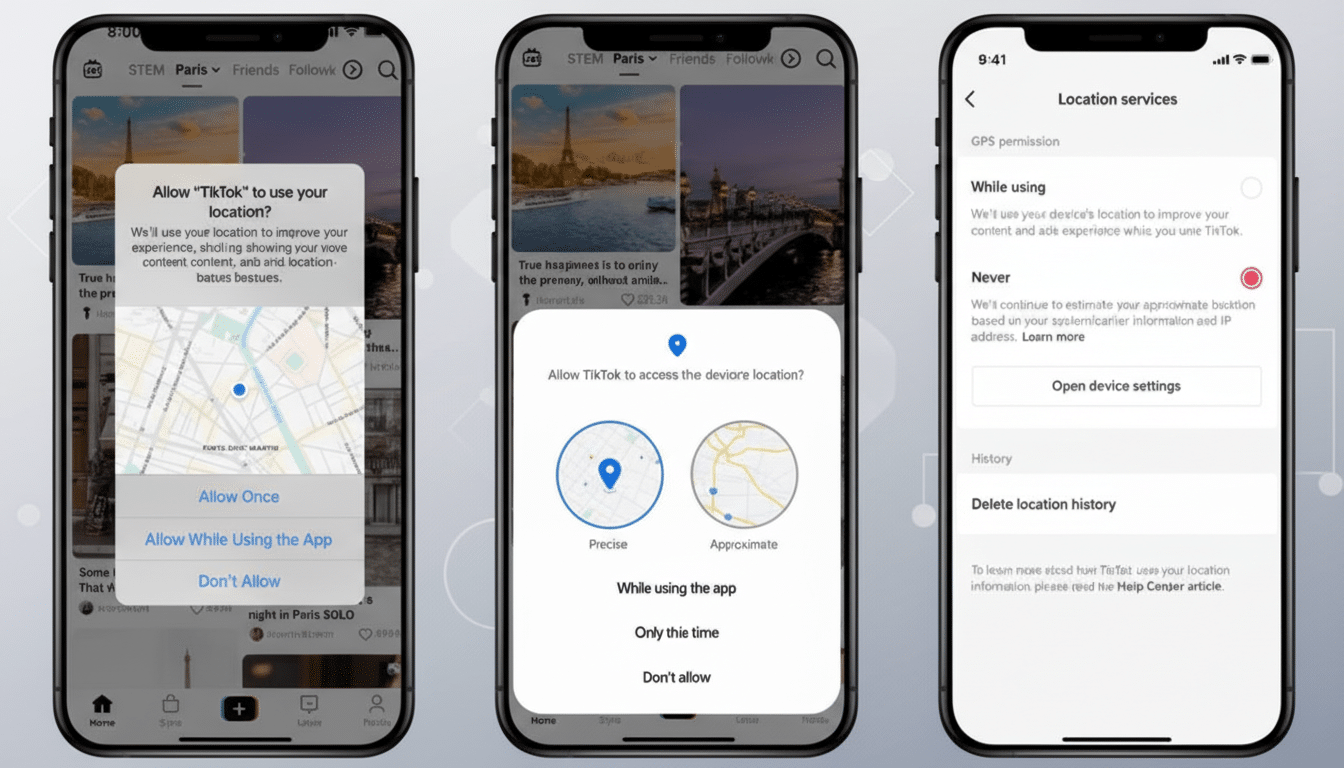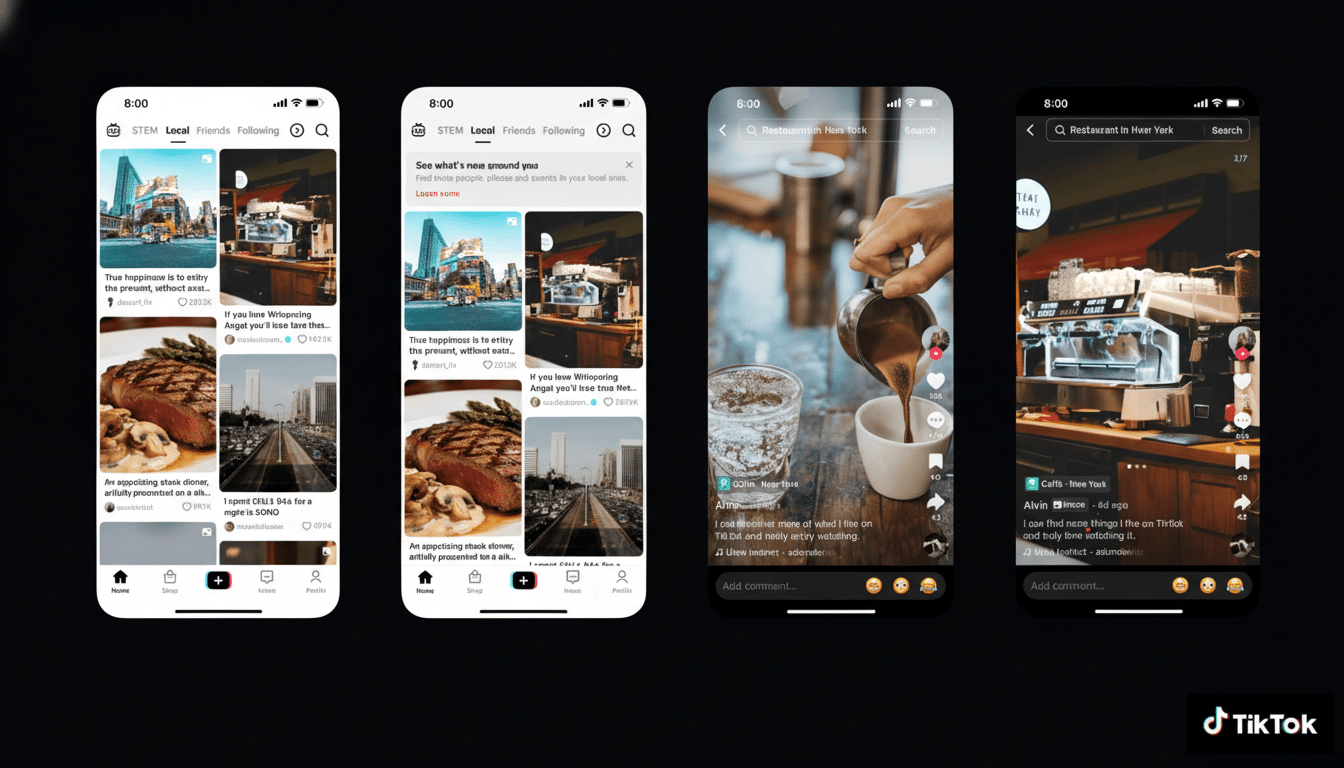
TikTok has launched an opt-in local feed in the United States that uses precise location data to surface nearby content and creators.
Social media platforms are doubling down on hyper-local discovery.
TikTok has introduced an opt-in local content feed in the United States, leveraging users’ precise location data to surface nearby posts, according to TechCrunch.
The feature reflects TikTok’s efforts to deepen engagement through geographic relevance.
How the local feed works
Users can choose to enable the feature, allowing the app to access precise location data beyond general IP-based estimates.
In return, TikTok surfaces content from creators and businesses in proximity to the user.
The company positions the update as a way to help users discover neighborhood events, restaurants, and community content.
Personalization versus privacy
Location-based features can increase engagement by making content feel immediately relevant.
However, collecting precise location data raises privacy considerations, particularly in a regulatory climate increasingly sensitive to data governance.
By making the feature opt-in, TikTok attempts to balance personalization with user control.
Still, critics may scrutinize how data is stored, processed, and potentially used for advertising.
Competitive context
Location-based discovery is not new in social media.
Platforms have historically experimented with geo-tagged feeds and neighborhood-based groups.
For TikTok, whose algorithm typically emphasizes interest-based discovery rather than geographic proximity, the feature marks a strategic shift.
Monetization implications
A local feed could open new revenue streams by connecting small businesses to nearby consumers.
Hyper-local advertising remains a major opportunity in digital marketing.
If adoption scales, TikTok may position the feature as a tool for local commerce.
Regulatory backdrop

TikTok continues to operate under heightened scrutiny in the United States over data practices and ownership concerns.
Any expansion of location data usage could attract attention from policymakers and privacy advocates.
The success of the feature may hinge as much on trust as on utility.
The evolving social feed
The launch signals a broader evolution in social platforms — from purely interest-driven feeds to hybrid models blending behavior, context, and geography.
Whether users embrace location-based discovery will determine how central the feature becomes.
For TikTok, the experiment reflects a familiar strategy: expand engagement vectors while navigating regulatory guardrails.
In a saturated social media market, proximity may become the next frontier in algorithmic relevance.