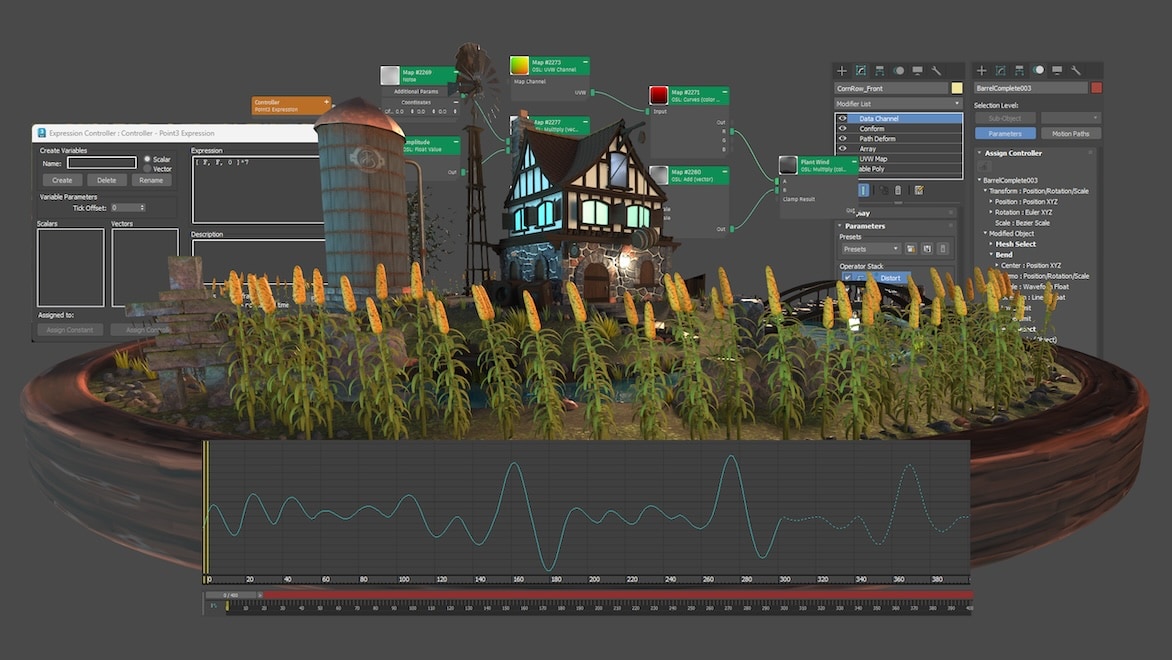
AI-driven world generation tools are beginning to reshape how video game environments are designed, enabling dynamic landscapes and adaptive storytelling. The shift raises technical, creative, and labor implications across the gaming industry.
For decades, building expansive game worlds required painstaking manual design.
Teams of artists, level designers, and writers crafted every asset, questline, and environmental detail. Today, generative AI is beginning to automate portions of that process — not by replacing designers outright, but by augmenting how worlds are constructed.
The implications extend beyond production efficiency. They challenge assumptions about authorship, player agency, and the future of interactive storytelling.
From procedural generation to generative AI
Procedural generation has long been part of gaming.
Titles have used algorithmic systems to create terrain layouts or randomized content. What distinguishes today’s AI-driven tools is adaptability.
Generative AI models can:
- Create textured environments
- Generate non-player character dialogue
- Design quest structures
- Adapt scenarios based on player behavior
Rather than relying solely on pre-coded randomness, AI systems can produce context-aware outputs that evolve during gameplay.
This introduces the possibility of game worlds that respond dynamically to player decisions at scale.
Efficiency and creative expansion
Game development timelines have expanded dramatically, particularly for open-world titles.
AI-assisted tools promise to reduce asset production time and enable smaller teams to build expansive environments.
For studios, potential benefits include:
- Faster prototyping
- Cost containment
- Expanded content variety
- Continuous world evolution post-launch
Developers may use AI to draft environmental layouts, then refine them manually — blending automation with artistic oversight.
Risks to creative control
The adoption of AI tools also raises concerns.
Creative teams may worry about reduced authorship control if world elements are generated algorithmically. Maintaining narrative coherence becomes more complex when environments evolve dynamically.
There are also labor implications.
If AI reduces the need for certain asset production roles, studios may restructure teams. However, new roles in AI supervision, model tuning, and ethical oversight may emerge.
The industry must balance efficiency gains with workforce stability.
Player experience transformation
From the player’s perspective, AI-generated worlds could increase replayability.
Imagine open worlds that:
- Introduce unique questlines per playthrough
- Modify environments based on choices
- Generate adaptive character relationships
Such systems could reduce predictability and enhance immersion.
However, unpredictability must remain bounded by design principles. Without careful constraints, AI-driven environments risk incoherence or imbalance.
Intellectual property and ownership

AI-generated content also introduces legal questions.
If game worlds are partially generated by AI models trained on external data, questions arise regarding intellectual property rights and derivative content.
Studios must ensure training datasets and model outputs comply with copyright frameworks.
Clear governance policies will be essential as AI tools become embedded in development pipelines.
A hybrid future
The likely trajectory is hybrid rather than fully automated.
Human designers will continue to define creative direction, world-building themes, and narrative arcs. AI tools may handle repetitive asset generation or environment scaling.
Large studios may integrate AI cautiously, while indie developers may embrace it more aggressively to overcome resource constraints.
A turning point in interactive media
Generative AI has already transformed text and image creation. Its application to interactive worlds marks a new frontier.
The technology remains early-stage in game production contexts, and practical limitations persist. Yet momentum is building.
As tools mature, AI-generated game worlds could shift how studios conceptualize scale, narrative fluidity, and player-driven storytelling.
The transformation will not be immediate. But as development costs rise and player expectations expand, automation may become less optional.
Interactive entertainment has always evolved alongside technology.
AI may represent its next structural inflection point.