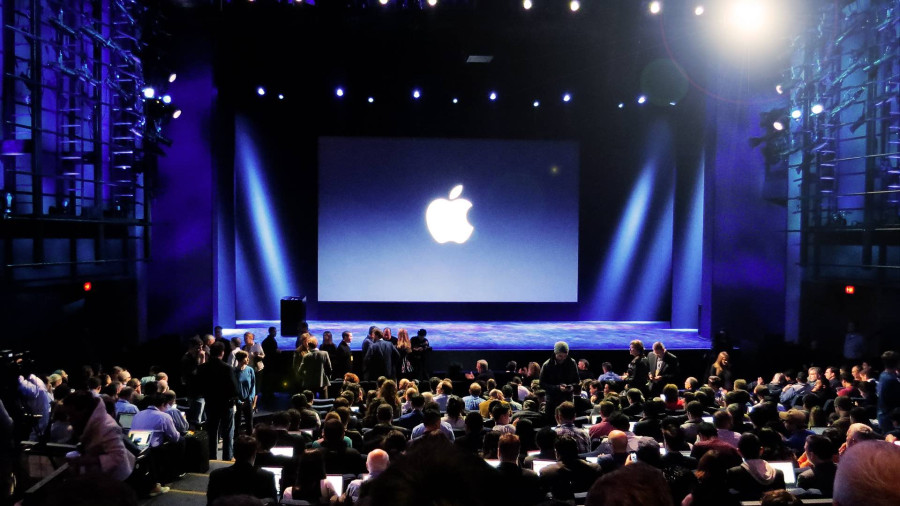
Apple will hold a product launch event on March 4, with new Mac models widely expected. The event comes as Apple continues advancing its Apple Silicon roadmap and recalibrating its personal computing lineup.
Apple is returning to the product stage at a moment when the personal computing market is showing early signs of stabilization after two years of uneven demand.
The company confirmed it will hold a launch event on March 4, where updated Mac hardware is expected to headline the announcement. While Apple has not detailed specific products, the timing aligns with its typical silicon refresh cadence and comes amid intensifying competition in AI-enabled PCs.
The event matters not just for consumers, but for the broader PC ecosystem.
A critical point in Apple’s silicon transition
Since shifting away from Intel processors in 2020, Apple has steadily rolled out successive generations of its in-house Apple Silicon chips across the Mac lineup.
Each iteration has emphasized performance-per-watt efficiency — a key differentiator against traditional x86 architectures.
The March 4 event is expected to continue that trajectory.
Industry observers anticipate updated MacBook Pro and possibly Mac Studio configurations incorporating the next generation of Apple-designed silicon. Such updates would reinforce Apple’s vertical integration strategy, where hardware, software, and chip design are tightly aligned.
That integration has allowed Apple to control:
- Thermal performance
- Battery optimization
- AI and machine learning acceleration
- System-level memory architecture
As AI workloads become more central to everyday computing, on-device performance is gaining strategic weight.
The AI PC competitive landscape
The broader PC market is shifting toward AI-centric marketing.
Microsoft and its hardware partners have promoted “AI PCs” equipped with neural processing units (NPUs) to support local generative AI tasks. Chipmakers including Intel and AMD are embedding AI acceleration directly into new processors.
The company, for its part, has historically avoided heavy branding around AI in its Mac marketing, despite incorporating machine learning engines into its silicon for years.
The upcoming Mac refresh could signal whether Apple intends to foreground AI capabilities more explicitly.
If Apple positions new Macs around AI performance benchmarks — including local inference, creative workflows, and developer tooling — it could reshape competitive messaging in the PC category.
Mac revenue stability is in focus
The company’s Mac business experienced volatility following the pandemic-era surge in laptop demand.
After peaking during remote work expansion, PC shipments declined globally. In recent quarters, however, the category has shown signs of gradual normalization.
Mac revenue plays a strategic role beyond raw sales figures.
Mac devices serve as development platforms for iOS and macOS ecosystems, anchor creative professional markets, and reinforce Apple’s premium hardware positioning.
A strong product refresh cycle can support:
- Enterprise adoption
- Developer engagement
- Education market share
- High-margin hardware sales
Investors will likely watch whether the March event translates into measurable revenue momentum later in the fiscal year.
Supply chain and geopolitical considerations
The company’s hardware launches now unfold within a more complex geopolitical and supply chain environment.
Ongoing diversification of manufacturing beyond China, including expansion into India and Vietnam, has become a central operational priority for the company.
Product timing, component sourcing, and regional rollout strategies are increasingly influenced by trade dynamics and regulatory scrutiny.
Any new Mac lineup will reflect not just design decisions but also supply chain adjustments aimed at reducing concentration risk.
Developer and creator implications
For software developers and creative professionals, Mac upgrades often signal capability shifts.
Enhanced GPU performance, improved memory bandwidth, and AI acceleration can enable more advanced video editing, 3D rendering, and machine learning development on-device.
If the new Macs significantly expand local AI processing capabilities, developers may explore hybrid workflows that reduce reliance on cloud-based inference for certain applications.
That could have downstream implications for:
- Cloud infrastructure demand
- Subscription software pricing
- Independent developer tooling
Apple’s hardware decisions therefore ripple into adjacent markets.
A measured launch in a maturing market
Unlike the iPhone, which commands global consumer spectacle, Mac launches tend to target a narrower but influential audience.
The March 4 event is unlikely to radically redefine personal computing overnight. Instead, it represents a steady continuation of Apple’s multi-year silicon strategy.
In a market increasingly defined by AI acceleration and performance efficiency, incremental gains can compound into strategic advantage.
For Apple, the objective is less about spectacle and more about reinforcing control over its computing stack.
The next Mac cycle will show whether that approach continues to pay dividends.