
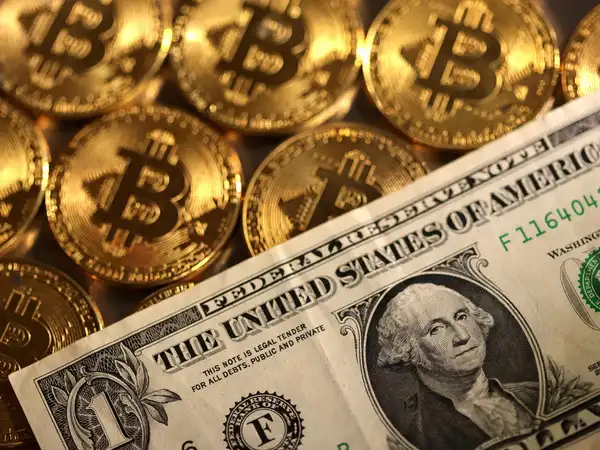
A survey by Bank of America shows record bearish positioning against the U.S. dollar among global fund managers. Historically, sustained dollar weakness has supported risk assets, including Bitcoin.
Institutional sentiment toward the U.S. dollar has reached a historic inflection point.
A Bank of America fund manager survey indicates record bearish positioning against the dollar, signaling that large investors increasingly expect depreciation. Such macro shifts rarely occur in isolation. Currency expectations ripple through equities, commodities, and digital assets — including Bitcoin.
For crypto markets, the implications are nuanced but potentially significant.
The dollar–Bitcoin relationship
Bitcoin’s price action has often shown inverse correlation with the dollar index.
When the dollar strengthens, global liquidity tightens, and risk assets can face pressure. Conversely, a weakening dollar environment tends to support:
- Emerging market capital flows
- Commodity price appreciation
- High-beta equity rallies
- Crypto market inflows
The logic is partly mechanical. A weaker dollar increases purchasing power for investors holding other currencies, while looser financial conditions can stimulate speculative positioning.
However, correlation is not causation. Bitcoin also responds to regulatory signals, ETF flows, and internal market dynamics.
Why investors are bearish on the dollar

Fund managers may be reassessing dollar strength due to several macro factors:
- Shifting Federal Reserve policy expectations
- Slowing U.S. economic momentum
- Improving outlooks in Europe and Asia
- Elevated fiscal deficits
If interest rate differentials narrow, capital flows may diversify away from dollar-denominated assets.
Such shifts often take time to materialize in spot currency markets, but positioning data suggests sentiment has already turned.
Bitcoin’s macro maturation
Unlike earlier cycles dominated by retail trading, today’s Bitcoin market includes substantial institutional participation.
Exchange-traded products, hedge funds, and corporate treasuries now contribute to liquidity.
As a result, Bitcoin is increasingly influenced by macroeconomic themes — including currency trends and liquidity cycles.
A sustained dollar downtrend could strengthen the narrative of Bitcoin as:
- A hedge against fiat debasement
- A store of value in volatile macro environments
- A beneficiary of global liquidity expansion
That narrative remains debated, but macro traders are paying attention.
Risks to the thesis

While bearish dollar positioning may benefit Bitcoin, several caveats apply.
If dollar weakness reflects deeper economic stress rather than controlled policy normalization, risk assets could still experience volatility.
Additionally, crypto-specific headwinds — such as regulatory developments or exchange liquidity shifts — may offset macro tailwinds.
Bitcoin’s price is rarely driven by a single factor.
Institutional behavior matters
The Bank of America survey captures sentiment among professional fund managers, not retail traders.
Institutional positioning often influences derivatives markets, FX hedging flows, and cross-asset correlations.
If bearish dollar trades gain traction, capital reallocation toward alternative assets — including digital assets — could follow.
For Bitcoin, the macro environment is becoming as relevant as blockchain fundamentals.
A liquidity watch moment
Markets appear to be entering a transitional phase.
After years of monetary tightening and dollar resilience, investors are beginning to price in potential shifts.
For crypto markets, dollar weakness has historically coincided with bullish momentum.
Whether this cycle follows precedent will depend on policy execution and global growth stability.
The survey signals a turning point in sentiment. For Bitcoin, the next phase may hinge less on hype and more on macro alignment.



